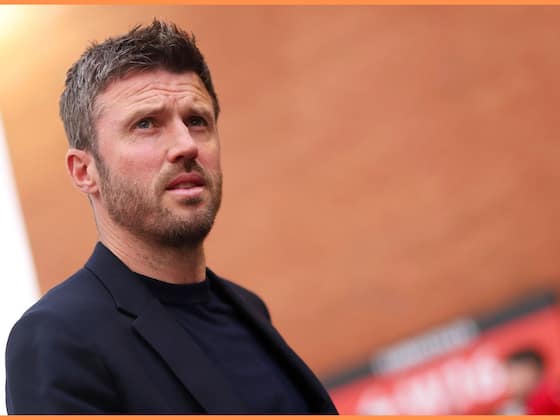
Michael Carrick may be the head coach of Manchester United, but his authority over the club’s transfer dealings is shared rather than absolute. As reported by Tyrone Marshall of the Manchester Evening News, the club has moved away from the traditional setup where the manager independently decided transfer targets and directed the overall recruitment approach.
While Carrick holds significant influence, the ultimate decisions are no longer solely his to make.
This distinction is crucial. Carrick can recommend players, outline the type of profiles he requires, and share views on whether a player fits his tactical vision.
However, Manchester United’s recruitment process now functions as a collaborative effort that involves the football operations team, data analysts, scouting staff, and senior management.
This modern structure is consistent with how most top-tier clubs operate today. The era of a single dominant manager controlling every aspect is gradually disappearing, as clubs seek to ensure long-term stability even when coaching changes occur.
United have learned from experience that tailoring signings purely to one manager’s preferences can lead to enduring challenges.
In previous years, the club frequently brought in players suited to a particular coach’s system, only to see that coach replaced, leaving successors with a mismatched squad.
The current framework marks a clear shift. Senior figures such as Jason Wilcox, Omar Berrada, and recruitment specialist Christopher Vivell are believed to play key roles in shaping United’s transfer philosophy.
Recent updates have also pointed to United’s adoption of a more disciplined and data-focused recruitment model, with Vivell taking a central role and Berrada emphasizing that agents will no longer be allowed to steer the club’s decisions.
This does not mean Carrick lacks authority — far from it.
The acquisition of Éderson from Atalanta for an initial £35 million has been seen as the first major signing under his tenure, and United continue to assess midfield targets such as Aurélien Tchouaméni, Carlos Baleba, Adam Wharton, and Elliot Anderson.
This collaborative structure represents a sensible direction for Manchester United. Carrick’s input remains essential, given his daily involvement in coaching and shaping the team.
However, granting a single manager unchecked control over transfers carries risks, particularly at a club that has previously spent inefficiently.
United must define a consistent footballing identity that extends beyond one managerial era. Carrick’s perspective is vital, but final decisions should emerge from a unified recruitment strategy that ensures long-term success.
-
Zepto IPO: Aadit Palicha, Kaivalya Vohra to hold stake; Nexus Ventures biggest seller in OFS
-
Jose Mourinho Poised for Return to Real Madrid with Club Legend Pepe Joining Staff
-
US Government Initiates Major Denaturalization Actions Against 17 Citizens

-
6.4 Magnitude Earthquake Hits Off Cuba's Coast

-
New York Knicks vs. San Antonio Spurs Game 3 preview: Starting lineup, injury report, how to watch and more