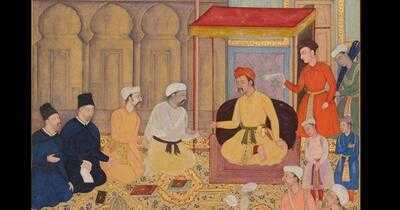
In recent years, the figure of the Mughal emperor Akbar has become a battleground in contemporary debates over Indian history. A growing body of popular writing and commentary, particularly from proponents of Hindutva historiography, seeks to portray the Mughal period as one of unrelieved religious oppression and cultural alienation.
In this narrative, Akbar appears either as a cynical politician whose gestures of tolerance masked imperial ambitions, or as a lone exception whose policies supposedly confirm the alleged intolerance of all other Muslim rulers.
More recently, commentators such as Vikram Sampath have revived arguments questioning the depth and sincerity of Akbar’s inclusivism. Drawing on a long tradition of skeptical scholarship, Sampath and others suggest that Akbar’s policies were primarily instruments of political expediency rather than expressions of a broader vision of governance, a perspective that has gained considerable traction in public discourse, particularly following his interviews on platforms like NDTV.
Such interpretations, however, tend to flatten a far more complex historical reality. No serious historian would deny that Akbar was an empire builder or that his policies were shaped by political calculations. Yet the same may be said of virtually every successful ruler in history.
The question is not whether Akbar’s policies were political, but what kind of...
Read more
-
2026 World Cup: Fan Excitement in Kotim and Match Results for Brazil, England, Germany, and Argentina

-
Late-night Pune party with over 150 attendees raided

-
Hina Khan, Rocky complete a year of love and togetherness

-
5 Hyderabadi Instagram creators guaranteed to make you laugh

-
TN govt mandates physical education for students in classes 6 to 12