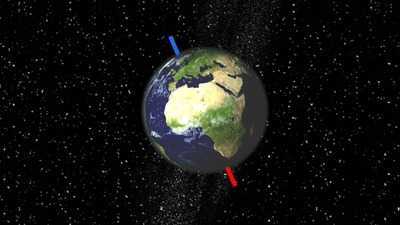
Earth's tilt will make June 21 the year's longest day
05 Jun 2026
Mark your calendars for June 21, 2026! It will be the longest day of the year in the Northern Hemisphere, including India.
This astronomical event, known as summer solstice or June solstice, occurs when one hemisphere is tilted toward the Sun at its maximum angle.
The phenomenon results in extended daylight hours and shorter nights for millions of people across this part of the world.
Why does it occur?
Astronomical alignment
The Earth isn't standing straight, but tilted at an angle of about 23.5 degrees. This tilt causes variations in sunlight distribution throughout the year.
On June 21, the Earth is tilted toward the Sun at its maximum angle. This makes the Sun take a longer path across the sky, resulting in longer daylight hours and shorter nights for those living in this hemisphere.
'Midnight Sun' phenomenon
Solar impact
During the June Solstice, the Sun is directly overhead at the Tropics of Capricorn and Cancer.
This means that areas north of this line get more sunlight. The farther north you go, the more pronounced this effect becomes.
Near the Arctic Circle, for instance, it can be daytime for almost 24 hours! This phenomenon is known as "Midnight Sun."
-
Bruno Fernandes' Manchester United future uncertain as CEO Omar Berrada hints at possible summer exit despite club's firm stance

-
Portugal National Team Poised as Strong Contender for 2026 World Cup Title with Star-Studded Squad

-
The Excitement of the 2026 World Cup Goes Beyond the Pitch

-
Sign Up for The Daily Drill Football Newsletter

-
Curaçao FIFA World Cup 2026 Jerseys: Home and Away Kits, Launch Dates, and Prices