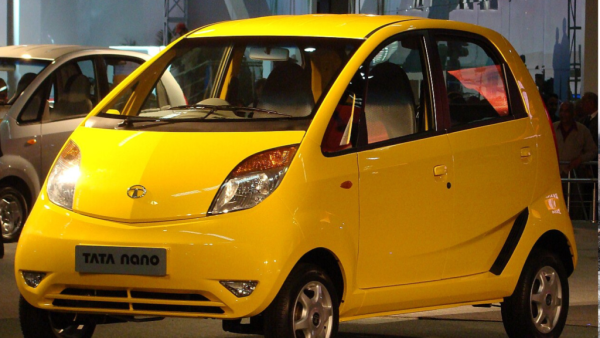
Many cars come and go in the Indian auto market every year. Some gain popularity from the masses, while some are unable to recover their lost capital. There is one thing in between these two situations Tata of the Nano Car. In 2008, Ratan Tata named the Tata Nano as the ‘world’s cheapest car’. His dream was to provide an affordable four-wheeler to Indian families traveling on two-wheelers. However, despite the huge buzz and excitement, the Nano did not meet the expectations and due to false popularity, the car could not take hold in the market. Today let us see in detail why Tata Nano failed in the Indian market,
1. ‘World’s cheapest car’ advertisement
Tata Motors introduced the Nano as the “World’s Cheapest Car”. But they remained unaware of the fact that for Indian consumers, a car is not just a means of transportation but a symbol of prestige. So many prefer to buy a second car by paying a little more than driving a ‘cheap car’.
Tata Motors: A discount of 30 to 55 thousand is available on ‘these’ cars…
2.Misunderstanding by customers
The Nano was primarily designed for two-wheeler families. But Indian consumers wanted not just a cheap car, but a car that represented progress and social prestige. So many people opted for other new cars other than the Nano.
3. Security concerns
After the launch of Tata Nano in the market, incidents of some Nano cars catching fire came to light. Although these incidents were few and minor, they spread like wind. Customers started to doubt about the safety of the car due to this. As a result, the sales of the car plummeted.
Tata Motors Launch of India’s most economical four-wheeler mini-truck from…
4. Few features and simple design
A lot of cost cutting was done in the early models to make the car cost effective. However, this has led to the perception of consumers that it would be more convenient to pay a little more for a car with better features.
5. Time in production and increasing competition
The manufacturing plant of Nano had to be shifted to Sanand in Gujarat due to the dispute over the Singur project in West Bengal. This caused delays in production and consequently in delivery; This also dampened public enthusiasm for the Nano.
in the market Maruti The 800, Alto and other entry-level cars posed a serious challenge to the Nano. As consumers have more reliable and reputable options available at slightly higher prices, they have given up on the Nano.
In short, the Tata Nano was a good and socially responsible idea in terms of engineering and society, but its marketing and branding failed more than the product. The image of “the cheapest car” did not match the expectations of consumers. The Nano is therefore considered to be an important but commercially unsuccessful example of Indian automobile history.
-
Cong, BJP welcome Kerala HC dismissing CMRL appeal against ED probe

-
Hearing deferred on MCC violation case against Kumar Vishwas, AAP leaders

-
Gurugram health dept busts illegal fetal sex determination racket in UP

-
Delhi: 543 lives lost in fire-related accidents in last six years, shows data

-
Revanth Reddy challenges KCR for debate on performance of govts headed by them