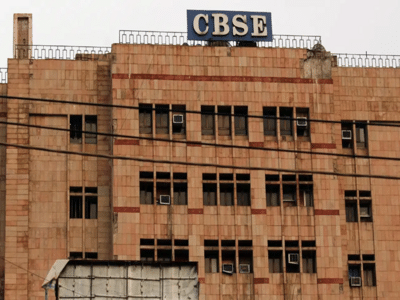
This has not been a good year for the Central Board of Secondary Education (CBSE). The board has faced significant embarrassment in recent times. First, the Class 12 board exam results hit a seven-year low, followed by questions raised regarding the board's On-Screen Marking (OSM) system. Subsequently, CBSE faced a barrage of allegations, leaving the board overwhelmed with the task of issuing clarifications. Students also encountered difficulties in obtaining their Class 12 answer sheets—with some even receiving answer sheets belonging to other students—leading to severe criticism of the board.
The board's troubles began on May 13, 2026, when CBSE released the Class 12 board exam results. The overall pass percentage stood at 85.20%, the lowest in seven years. This sparked questions about the reasons behind such a poor result. Online evaluation was cited as a major factor contributing to the decline in marks. Notably, CBSE had implemented online evaluation for the first time this year. Teachers were tasked with scanning Class 12 answer scripts to ensure a transparent and error-free evaluation process; however, this initiative landed the board in a difficult situation.
Given the poor CBSE results this year, there is speculation that the number of CBSE students securing admission to Delhi University (DU) might decline. While this is not a certainty—since DU admissions are primarily based on the CUET exam—students can also be admitted based on their Class 12 marks if seats remain vacant.
**CBSE Students' Dominance at DU**
CBSE students have historically dominated admissions at Delhi University (DU). Reports indicate that CBSE students account for 50–60% of all admissions at the university. Data from recent years shows that CBSE students account for more than half of the applications received annually for undergraduate courses at Delhi University.
**Impact of CUET on DU**
The Common University Entrance Test (CUET) was introduced in 2022. It was implemented by the Ministry of Education and the NTA to conduct a unified entrance exam for undergraduate admissions across central, state, and other universities nationwide, thereby centralizing the competition. Before this, however, admission was granted solely based on Class 12 marks. This is why CBSE students historically dominated admissions at DU.
**Students from Other Boards Also Secured Admission at DU**
Beyond CBSE, students from boards such as Haryana (HBSE), Kerala, and Uttar Pradesh (UPMSP) also used to secure admission to Delhi University in large numbers, as these boards had also begun awarding high marks to their students.
**Why Is There a Race Among Boards to Award Higher Marks?**
Much like CBSE, other state boards have also entered a race to award higher marks to students. Experts attribute this primarily to competition, the need to maintain student morale, and the race for college admissions—especially since many colleges still base admissions on Class 12 marks. With cut-offs for prestigious colleges often soaring, boards award generous marks to ensure their students do not fall behind in this competitive landscape.
**Low Marks Could Cost Students Admission to Top Engineering Colleges**
Another reason for awarding higher marks is to ensure eligibility for students aspiring to pursue engineering at institutions like IITs, NITs, and IIITs; a key criterion for admission to these top institutes is securing a minimum of 75% marks in Class 12.
Disclaimer: This content has been sourced and edited from TV9. While we have made modifications for clarity and presentation, the original content belongs to its respective authors and website. We do not claim ownership of the content.
-
Hyderabad: Mumbai’s favourite Japanese restaurant Izumi launched
-
Odisha: Decomposed body of Dalit missing for a week recovered
-
UN report warns AI could soon use 3pc of world's electricity, more water than we need to drink

-
Environment wins of the week

-
Indian National Faces Backlash Over Alleged Online Grooming Incident in the UK