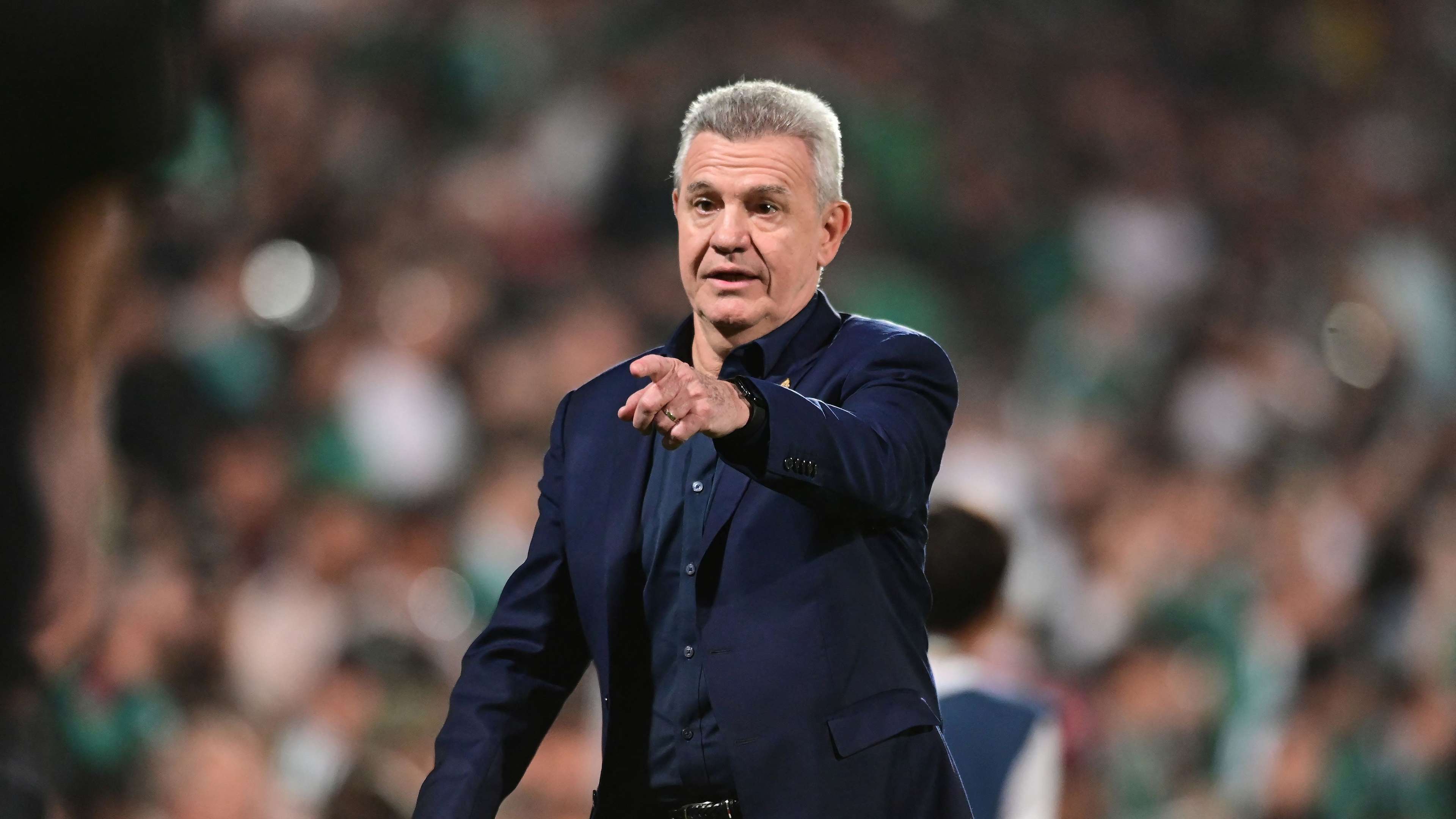
With Mexico’s World Cup opener against South Africa just around the corner, Javier Aguirre’s side will use their friendly against Serbia as one last opportunity to finalise the starting XI, sharpen their offensive play, and clarify unresolved questions around Alvaro Fidalgo, Alexis Vega, Roberto Alvarado, and Guillermo Ochoa.
As Mexico prepare for a sold-out clash with Serbia at Toluca’s Estadio Nemesio Diez, Aguirre—affectionately known as “Vasco”—has refused to let stress dominate the final build-up. Instead, he prefers to describe the team’s mindset as hopeful rather than anxious.
Aguirre understands the magnitude of what lies ahead: the tension of a home tournament, the burden of expectation, and the narrow line between a productive rehearsal and a concerning performance. Yet, when asked about the team’s morale, he chose to highlight optimism.
That optimism, however, does not mean all questions are answered. The Serbia contest will represent Mexico’s final genuine test before their World Cup opener against South Africa on June 11. Aguirre must strike a balance between maintaining rhythm and exercising caution, especially with players like Edson Alvarez, Santiago Gimenez, Cesar “Chino” Huerta, and Alexis Vega still regaining full fitness after injuries and recovery periods.
“I think the team is arriving in very good physical shape. I was just saying today, while reviewing Serbia’s footage, that we’re at our best physical, athletic, and even mental level. Imanol Ibarrondo, our mental and leadership coach, held a few sessions with the players this week. When I asked him how they felt, he said they were very eager, just like me. None of them has lived this experience before, and we’re all waiting for the moment to arrive and for the celebration to begin,” Aguirre said.
The positive mood surrounding El Tri is genuine. Now comes the challenge of transforming that energy into results.
Against Serbia, Mexico will look to refine their attacking movements, define roles, and give Aguirre a comprehensive view of the team he might rely on once the World Cup begins. This is not just another friendly—it is the final dress rehearsal before the real pressure begins.
Here are five key factors to watch as Mexico host Serbia in Toluca.
Where will El Tri’s attacking spark emerge from?
Will El Tri depend on the brilliance of Raul Jimenez and Julian Quiñones for goals, or could young Gilberto Mora—nicknamed Morita—make history by finding the net at just 17 years old, potentially becoming one of the youngest World Cup scorers ever and Mexico’s youngest in the tournament?
That scenario is possible, even though Mora cannot surpass Pele’s all-time record as the youngest World Cup scorer. Pele was 17 years and 239 days old when he scored against Wales in 1958, while Mora, born on October 14, 2008, will be 17 years and 240 days when Mexico face South Africa on June 11, 2026—just one day older than Pele was.
However, the broader question extends beyond Mora—it’s about identifying Mexico’s main source of attacking creativity.
In this fixture, Aguirre will expect a more incisive attacking display that boosts confidence before the opener. The starters in Toluca will shoulder the responsibility of converting possession into real scoring danger.
Across recent matches against World Cup-bound teams such as Portugal, Belgium, Ghana, and Australia, El Tri averaged 11.5 shots per match. While that figure is decent, the focus now must shift towards improving the quality of those chances.
That should be the plan against Serbia: maintain shooting volume but increase efficiency. The players who perform well in Toluca could strengthen their claim for a starting role on June 11.
Clarifying Alvaro Fidalgo’s role in the squad
Even before Alvaro Fidalgo made his debut for Mexico, Alexis Vega spoke glowingly about his influence within the team, much as he did about Quiñones.
“For me, both are players who make a huge difference. Whenever I faced Quiñones, I knew he was crucial; he’s been in Mexico for years. The same goes for Fidalgo—he defined an important era at Club America. Nobody doubts their talent,” Vega told Fox Sports.
At Club America, Fidalgo found mentorship in Jonathan dos Santos. Jonathan’s trajectory with the national team had mixed moments, but one stands out: the 2019 Gold Cup final against the United States, when his decisive strike following Raul Jimenez’s backheel sealed Mexico’s 1-0 victory.
Fidalgo does not need to replicate Jonathan’s exact path, but he can learn from that model. Mexico need him not to chase highlight-reel plays every time he touches the ball, but to bring composure, link midfield with attack, and dictate tempo intelligently.
If Fidalgo can control key phases of the match as Jonathan did that night, his importance will be clear. He could give El Tri the calm presence needed in the centre of the pitch when tension runs high.
He still requires more minutes to adapt fully to international tempo and spacing. After five seasons with Club America—many of them at Estadio Azteca—Fidalgo could soon play a World Cup match inside that same stadium, only this time wearing Mexico’s green jersey.
How challenging will this youthful Serbia side be?
Veljko Paunovic returns to Mexico familiar with Liga MX after coaching Chivas and Tigres. His understanding of Mexican football’s tempo and culture gives Serbia an informed edge heading into this friendly. Though his squad is youthful, it carries the potential to trouble Mexico.
This Serbia team is not packed with marquee names, but that does not make them harmless. Many players are eager to prove themselves to Paunovic, adding intensity to what might otherwise be a routine friendly.
Andrija Maksimovic stands out as one to watch—an inventive attacking midfielder who operates effectively between the lines. Aleksandar Stankovic, of Club Brugge, brings youthful energy to the midfield, while Kosta Nedeljkovic offers pace and drive from deeper positions.
For Mexico, the lesson is simple: Serbia, though youthful, can still test El Tri in the vital areas that matter in major tournaments—set pieces, second balls, physical duels, defensive organisation, and transitions.
If Mexico dominate possession but lose focus in transition, Serbia have enough hunger and athleticism to make things tricky.
Unfinished business for Alvarado and Vega
Roberto “Piojo” Alvarado and Alexis Vega share a deep friendship. In Pasadena, they were seen entering the locker room vibing to their favourite Mexican tunes. Their energy and camaraderie have been vital to the team’s atmosphere. But now, their influence must also reflect in tangible contributions.
Performance will speak louder than personality. Ahead of their second World Cup, both know that goals, assists, and defensive diligence must define their roles. They were part of Mexico’s bronze-medal-winning Tokyo 2021 Olympic squad and played in Qatar 2022. Now, the question is whether they can step up as leaders.
Vega’s 2025 Clausura campaign with Toluca showed leadership through performance—12 goals and 10 assists in 21 matches, leading his team to the league title. That version of Vega is what Mexico need—the creative, fearless playmaker capable of carrying the No. 10 shirt with authority.
Alvarado, meanwhile, brings tireless work ethic. His 2025 CONCACAF Nations League semifinal performance against Canada reminded fans of his two-way contribution. His early shot led to Jimenez’s opening goal, while his defensive discipline kept Alphonso Davies in check—tracking back, cutting passing lanes, and protecting Mexico’s right flank.
That balance makes Alvarado invaluable: productive in possession, aggressive in pressing, and dependable defensively.
Their challenge this summer is clear—Mexico need impact, not just chemistry or flair.
Will Aguirre rotate his XI during the group stage?
It’s not impossible that Guillermo Ochoa could feature as a starter in at least one group-stage match. Aguirre has a history of tactical flexibility—in the 2010 World Cup, he used three different captains across group games: Rafael Marquez, Gerardo Torrado, and Cuauhtemoc Blanco. His line-ups and leadership structure evolved with circumstances.
Given Mexico’s group opponents—South Africa, South Korea, and Czechia—it would not be surprising if Aguirre adjusts his selections depending on the opposition.
That’s why the Serbia friendly carries such importance. The choices Aguirre makes in Toluca—starting XI and substitutions alike—will offer insight into his World Cup blueprint.
For instance, another start for Guillermo Martinez could enhance his chances of earning significant minutes in the tournament. A strong showing from Fidalgo might shift midfield dynamics. Solid performances from Alvarado or Vega could strengthen the case for the Tokyo generation.
This friendly will not reveal every answer, but it will show how close Aguirre is to finalising his team before June 11.
-
Diabetes Tips: What will happen to diabetics who eat yam every day? Does it really reduce diabetes, what are the facts

-
Tech Tips: When and how to clean Solar Panel? 90 percent of people don’t know important rules… read more

-
Phone Battery Tips- If your phone battery runs out soon, then do not make these mistakes even by mistake.

-
Liverpool appoints former Bournemouth boss Andoni Iraola as manager
-
IND vs AFG Test 2026: Harsh Dubey or Manav Suthar? Ryan ten Doeschate Drops Big India Playing XI Hint