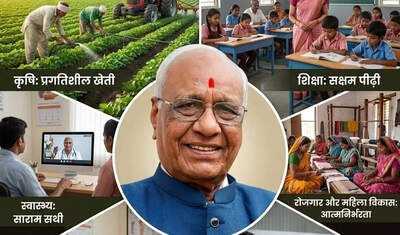
Recently, Maganbhai Patel, the president of the All India MSME Federation, communicated with Union Rural Development Minister Shivraj Singh Chouhan regarding the current state of rural areas in India. He acknowledged the significant improvements in rural conditions during the tenure of Prime Minister Narendra Modi and his team. However, he also highlighted ongoing challenges and presented several recommendations aimed at enhancing rural development, labor, employment, and health sectors.
The Importance of Agriculture in India
India is fundamentally an agrarian nation, with its culture, traditions, and economy deeply rooted in its villages. At the time of independence, a significant portion of the population resided in rural areas, with agriculture being the primary source of livelihood for about 85% of the populace. Although the contribution of agriculture to the GDP has decreased to around 15-18%, it remains a vital sector, employing a large segment of the workforce.
Current State of the Dairy Industry
In 1947, India's annual milk production was approximately 17 million tons, which was adequate for the population at that time. Today, Banaskantha Dairy is recognized as one of the largest cooperative dairy organizations in India, processing nearly 10 million liters of milk daily. Patel suggested establishing around 2,000 cooperative dairy units in rural areas, each processing 5,000 liters of milk daily, which could create substantial employment opportunities and enhance rural development.
Employment and Business Opportunities
Currently, many rural youth with master's degrees are employed in corporate sectors at low salaries, often below their qualifications. To address this, Patel proposed establishing minimum salary standards for skilled labor, suggesting starting salaries of ₹40,000 for postgraduates and ₹30,000 for graduates. This would incentivize around 400 million youth and positively impact productivity.
Micro, Small, and Cottage Industries in Rural Areas
To enhance rural economies, agro-processing units should be established to process agricultural products rather than selling them raw. This includes setting up small industries for products like snacks and spices. Additionally, creating cold storage facilities near villages would help preserve farmers' produce and reduce wastage.
Education and Health in Rural Areas
Improving education in rural areas is crucial. Establishing private schools with qualified teachers and modern facilities can foster interest in education among children. Furthermore, healthcare facilities need significant upgrades, including the establishment of blood banks and better-equipped primary health centers to ensure timely medical assistance.
Conclusion: A Call for Collective Action
Despite historical advancements in rural development post-independence, continuous efforts are essential to achieve complete self-sufficiency and prosperity in rural India. The development of villages is synonymous with national progress, necessitating collaborative efforts from the government, society, and citizens.
-
Quote Of The Day | Mac Donald's Founder Ray Kroc’s Motivation For Dreamers, Entrepreneurs And Go-Getters

-
IndiGo Suspends Flights To 6 International Destinations Till September 30

-
The Marked Woman OTT Release Date: When & Where To Watch Ana Rujas's Series

-
Diogo Dalot shares his dream of winning the World Cup with Portugal

-
Top 10 Away Jerseys for FIFA World Cup 2026 and Where to Find Them