 The Essence of the Bhagavad Gita
Himani Sharma
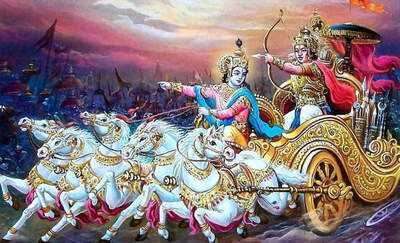
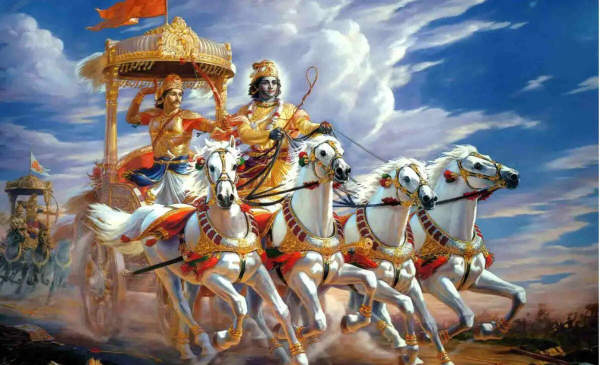
The Bhagavad Gita stands as a monumental spiritual and philosophical work. It is presented as a conversation between Lord Krishna and Arjuna on the battlefield of Kurukshetra, illustrating a journey from emotional turmoil to spiritual enlightenment. The text comprises eighteen chapters, each building upon the last, creating a cohesive narrative rather than isolated teachings.
Through its verses, the Gita leads individuals from despair to wisdom, from action to devotion, and from self-awareness to liberation. It opens with Chapter One, Arjuna Vishada Yoga, where Arjuna is engulfed in despair. In verses 1.28 to 1.47, he surveys the battlefield, seeing loved ones on both sides. Overcome with grief and moral uncertainty, he loses his resolve to fight, revealing a crucial truth: transformation often begins in moments of crisis.
The Journey from Despair to Wisdom
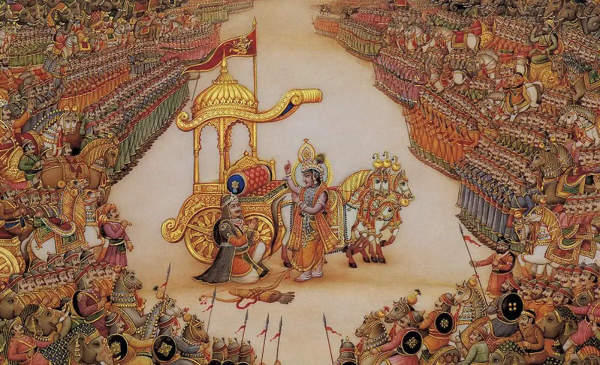
Human beings typically seek wisdom when certainty falters. Arjuna’s breakdown becomes the entry point for spiritual insight. In Chapter Two, Sankhya Yoga, Krishna addresses Arjuna’s sorrow. In verses 2.11 to 2.30, He explains the soul's immortality, teaching that just as the body transitions through life stages, the soul transcends physical death. Krishna asserts that the Self is indestructible, uncut, unburned, and unaltered.
This teaching shifts focus from the physical to the eternal. Krishna emphasizes duty in verses 2.31 to 2.38, urging Arjuna not to forsake righteous responsibilities due to emotional ties. One of the chapter's key teachings appears in verse 2.47, where Krishna states that individuals have the right to act but not to the outcomes of their actions, laying the groundwork for selfless work. The chapter concludes with verses 2.55 to 2.72, describing the Sthitaprajna, a person of steady wisdom who remains composed amidst desire, success, and loss. Verse 2.70 likens such a person to an ocean, unaffected despite the rivers flowing into it.
The Philosophy of Action
In Chapter Three, Karma Yoga, the philosophy of action is further explored. Arjuna questions the necessity of action if wisdom is superior. Krishna responds in verses 3.4 to 3.9, explaining that no one can remain inactive, as life is inherently dynamic. The focus should not be on avoiding action but on freeing oneself from selfish attachments. Verse 3.19 teaches that one should perform their duty without attachment to the results. Verse 3.21 highlights that society mirrors the behavior of influential individuals, indicating that personal actions shape collective ethics.
In verse 3.30, Krishna instructs Arjuna to dedicate all actions to the Divine, acting without ego or selfish desires. This chapter illustrates that actions become sacred when performed with a spirit of service. Chapter Four, Jnana Karma Sanyasa Yoga, reveals the intricate relationship between knowledge and action. In verses 4.7 and 4.8, Krishna states that He manifests whenever righteousness declines and chaos rises, affirming divine involvement in moral order.
The Path to Liberation
Verse 4.13 explains that social roles stem from qualities and actions rather than superficial labels. Verse 4.18 introduces a profound paradox, stating that the wise perceive action in stillness and stillness in action, suggesting that inner detachment can coexist with intense activity. Verse 4.34 encourages seekers to approach knowledge with humility and inquiry. Krishna teaches that true knowledge dispels ignorance and liberates individuals from bondage. Chapter Five, Karma Sanyasa Yoga, contrasts renunciation with action, explaining in verse 5.2 that selfless action is superior for most, allowing growth without withdrawing from life. Verse 5.10 compares the detached worker to a lotus leaf, untouched by water, illustrating that action need not lead to bondage. Verse 5.18 emphasizes equality, stating that the wise see all beings with equal vision. This chapter presents spiritual maturity as characterized by detachment, peace, and universal respect.
Meditation and Mastery of the Mind
Chapter Six, Dhyana Yoga, introduces meditation and mind mastery. Verse 6.5 teaches that one must elevate oneself through their own mind, as it can be both friend and foe. Krishna outlines meditation practices in verses 6.10 to 6.15, emphasizing discipline, posture, moderation, and focus. In verse 6.26, He instructs that whenever the mind wanders, it must be redirected repeatedly. Verse 6.35 states that the mind can be controlled through practice and detachment. The chapter concludes in verse 6.47, declaring that the highest yogi is one who lives with faith and devotion. Chapters Seven through Twelve reveal Krishna's divine nature and the path of devotion. Chapter Seven explains that all material and spiritual realities stem from the Divine, while verse 7.14 teaches that illusion binds individuals to worldly confusion.
The Culmination of Teachings
Chapter Eight discusses that one's consciousness at life's end reflects their lifelong inner state. Chapter Nine introduces devotion as the highest wisdom, with verse 9.26 stating that even a humble offering is accepted by the Divine, emphasizing sincerity over wealth. Chapter Ten reveals divine presence throughout creation, with verse 10.20 affirming that Krishna is the Self within all beings. Chapter Eleven presents a cosmic vision where Krishna unveils His universal form, identifying Himself as Time itself in verse 11.32, encompassing creation and destruction.
Chapter Twelve defines devotion through character, portraying the true devotee as compassionate, humble, peaceful, and free from hatred. Chapters Thirteen to Seventeen delve into deeper self-understanding and moral growth. Chapter Thirteen differentiates the body from the knower of the body, teaching that awareness transcends physical existence. Chapter Fourteen introduces the three gunas that shape nature: purity, passion, and ignorance, with verse 14.20 teaching that liberation comes from transcending these qualities.
Timeless Teachings
Chapter Fifteen compares worldly life to an inverted tree, whose roots lie beyond visible existence. Chapter Sixteen contrasts divine qualities like truth and compassion with destructive traits such as pride and anger. Chapter Seventeen explains that faith reflects one's inner nature, with verses 17.14 to 17.16 emphasizing purity in body, speech, and mind, indicating that spiritual growth necessitates disciplined conduct.
The Gita culminates in Chapter Eighteen, Moksha Sanyasa Yoga, where Krishna synthesizes all prior teachings. Verse 18.5 asserts that duty, discipline, and sacrifice should not be forsaken. Verse 18.46 states that fulfillment is achieved through service in one's own work. The famous conclusion in verse 18.66 invites Arjuna to surrender all limited dependencies and seek refuge in the Divine alone, representing the highest form of trust, wisdom, and spiritual surrender. In verse 18.73, Arjuna acknowledges that his confusion has dissipated, and he is prepared to act. Thus, the Bhagavad Gita unfolds a clear spiritual progression, beginning with despair and advancing through self-knowledge, duty, selfless action, meditation, wisdom, divine reality, devotion, character refinement, and ultimately liberation.
Its teachings remain relevant as they address universal human challenges: fear, desire, identity, duty, and peace. The core message of the Bhagavad Gita is both simple and profound: understand your true self beyond the physical, fulfill your duties without attachment, discipline the mind, live with truth and compassion, act selflessly, and cultivate devotion to transcend selfish desires. Through these teachings, the Gita transforms confusion into clarity and fleeting success into enduring inner freedom.
-
Shreyas Iyer Set To Replace Suryakumar Yadav As India's T20 Captain

-
Iran War Escalates As Hezbollah Rejects Lebanon-Israel Ceasefire Terms

-
Lufthansa Aircraft Suffers Nose Gear Collapse In Germany

-
Nagaland State Lottery Result: June 4, 2026, 8 PM Live - Watch Streaming Of Winners List Of Dear Fame Sambad Night Thursday Weekly Draw

-
'7 Medical Colleges Not Paying Stipends To Interns And Resident Doctors': NMC Tells Supreme Court