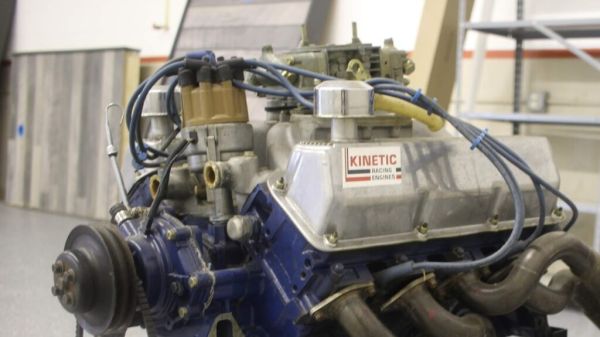
If you’ve spent any amount of time working on or tuning cars, you’ve likely spent a not-insignificant amount of that time tweaking, replacing, or modifying the system that delivers the spark to each cylinder. On older cars, this means messing with a distributor and its octopus-like tentacles all over the engine bay. In newer cars, it often entails replacing coil packs and all the “fun” that entails.
Those of you who regularly spend time in a garage probably already know why automakers moved from the former to the latter (in short, reliability). But for everyone else, it’s worth taking a bit of a trek into the exciting world of engine ignition systems.
Breaking it down to the simplest terms, a distributor sends sparks to each spark plug through a rotating assembly mechanically controlled by the engine’s camshaft. These systems had a single coil connected to the battery. In the 1980s, though, most automakers switched to electronic ignition systems. These did away with the mechanical distributor and instead used sensors placed around the engine to determine when to deliver spark. Instead of that mess of wires, engines would have neat coil packs, usually two per cylinder. Eventually, in 1996, Denso developed the stick-type coil-on-plug system that almost every car has today.
Coil packs are simpler and more efficient
Coil packs offer better reliability and power than distributors. The latter require constant monitoring and maintenance, with some components requiring replacement as quickly as 12,000 miles. In contrast, modern ignition coil systems can last 100,000 miles or more before they need replacing.
Additionally, coil-on-plug systems are just flat out more powerful and allow for a more sustained spark. A better spark leads to better ignition, which in turn improves engine efficiency. Coil-on-plug systems also make troubleshooting and repairs easier: pinpointing a problem with a mechanical distributor may take hours, as there are dozens of components working together to make the whole system function.
In contrast, a modern ignition system is virtually all-electrical. If you can’t narrow down the issue with a multimeter or OBD-II scanner, just replace the entire ignition coil. Overall, while there might be a certain romance to purely mechanical components, the computerized ignition systems of modern engines are just better for the vast majority of drivers, mechanics, and automakers alike.