A viral Everest Camp 4 video reveals the truth about a serious problem lurking in the mountain: Why it should be addressed immediately
ETimes | June 4, 2026 3:47 AM CST
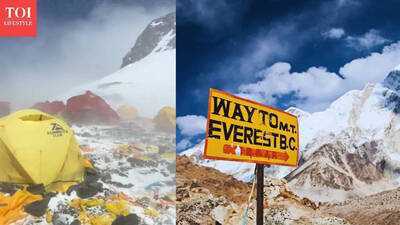
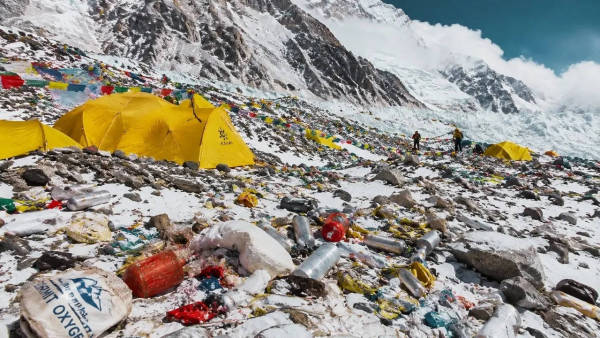
An Instagram video from mountaineer Angelina Angelova (@angelova__angelina on Instagram) recently brought attention to yet another recurring problem that appears at least once a year when Mount Everest is being climbed. The video shows camps filled with equipment left by other expeditions in a camp near the top of the world located at 7,900 meters above sea level.
For many, this sight was quite shocking. How can this be the highest peak in the world – a symbol of adventure, wild nature and exploration?
However, this question doesn't reflect the whole situation surrounding the problem. While Everest is indeed one of the most famous cases of waste pollution among tourists and mountaineers, describing it as "just a litter" is far from true. It is what it is because of many factors.
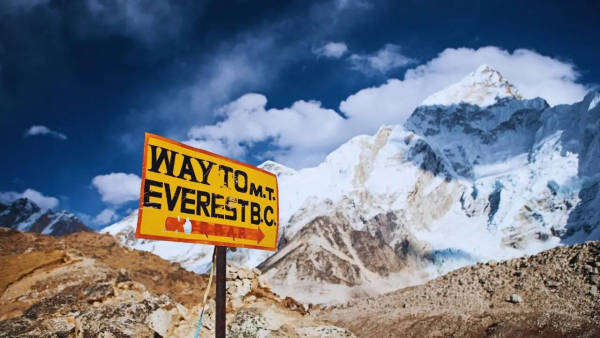
The total number of Everest climbing permits issued by Nepal for the 2026 spring climbing season was 494, breaking all previous records in terms of permits. As most of these foreign mountaineers have at least one Sherpa guide, the number of people that have gone through the camps of Mount Everest during this climbing season is in excess of 900 summits. The magnitude of such an operation was best reflected on May 20th, where a record-breaking 274 mountaineers managed to summit the mountain within a single day, beating the old record set in 2019. The spring climbing season has thus become one of the busiest in the entire history of Mount Everest, reigniting debates about both overcrowding and environmental pollution caused by so many people working on the mountain simultaneously.
Behind each climber there is an extensive support system consisting of guides, Sherpas, cooks and other expedition employees. By the peak climbing period, a temporary city emerges on the mountain, complete with kitchens, sleeping quarters, communication systems and medical facilities.
Everything needed for survival must be brought up there.
Food, fuel, rope, ladders, oxygen bottles, tents, batteries, solar panels, and medical equipment must all pass along an ascending trail of camps from Base Camp to the top.
As is always the case, such an arrangement produces waste.
One thing most people do not realize is that while the problem on Mount Everest may be the production of waste, the real issue is getting rid of it.
It is fairly easy to remove garbage at lower elevations. At Camp 4, however, everything is much different.
Nestled within what climbers have referred to as the Death Zone, where the air pressure amounts to just one-third of what it is at sea level, physical exertion becomes difficult. Arriving at Camp 4, the climber is exhausted due to dehydration and lack of sleep. The climber’s only worry is survival and making it to the top.
This explains the reason why waste tends to build up in sites such as Camp 4 much faster than it is cleaned.
The litter that you will see from the pictures and videos is not confined to things like food wrappers or plastic bottles. The litter of Mount Everest includes torn up tents, left-behind ropes, empty oxygen tanks, climbing equipment, fuel canisters, packing material, and most importantly, human waste.
Of all the forms of waste, human waste has emerged as one of the biggest environmental issues facing the mountain. In the past decades, many climbers have had to depend on crude ways of disposal at higher camps. However, unlike other forms of waste, human waste takes many years to decompose due to the freezing temperatures.
There has been implementation of strict waste management policies for the climbing expedition of 2026. Every climber is expected to carry back not less than 8 kilograms of waste collected from areas above Base Camp, of which at least 2 kilograms must come from locations above Camp II. To counter the problem of human waste that has persisted for many years on Mount Everest, the requirement to use SPCC -issued poop bags has been enforced, meaning that every climber must use these specialised bags provided by the committee to store their waste above the Base Camp. These specialised bags work in transforming human waste into solid waste, which is easier to transport out of the mountain. Nepal has also replaced the earlier refundable garbage deposit system with a non-refundable clean-up fee, with the funds being used to support immediate waste-removal operations at high altitude, including the deployment of drones and dedicated monitoring teams to ensure compliance.
These measures have improved the situation, but they have not eliminated the problem.
This is due to the fact that Everest’s waste crisis has existed since several decades ago. Indeed, the mountain still carries with it the burden of climbing throughout past decades. Commercial expeditions have been active on Everest since the late twentieth century; but not all measures which we take for granted nowadays were once implemented. Therefore, the debris left during many years of mountaineering activity can still be found throughout Everest.
Global warming has made this historical burden more evident than ever before.
With glaciers and ice melting away across the Himalayan range, objects that had been hidden for decades are becoming visible again. Climbers often find themselves coming face-to-face with objects such as oxygen tanks or ropes which emerged due to the melting of ice.
The people dealing with the consequences are often Sherpas and specialised clean-up teams.
Clean-up initiatives take place every year at Everest and other nearby peaks. Such operations include removal of gear, oxygen cylinders, and other kinds of garbage that accumulate in high altitude campsites. Several tons of trash were collected by the mountaineers in recent years, but little attention was paid to the results of the clean-ups compared to their successes in summiting.
It might sound funny, but the fact is that reaching Everest's peak gets worldwide attention each time it happens. However, removing the littered material doesn't usually make much noise.
Tourism and mountaineering are important sources of revenues for the Nepalese state budget. Climbing operations on the Everest provide jobs for guides, airlines, hotel operators, trekkers, equipment providers, and the residents of Khumbu area. Restricting the number of climbs might negatively affect the economy of the area.
However, growing problems with pollution and garbage accumulation on Everest remain serious. Supporters of regulated tourism counter that permit fees and expedition spending provide resources that can be used for conservation and clean-up efforts.
The debate has become one of balance rather than absolutes.
Is it possible to keep attracting thousands of climbers to Everest while minimizing the negative impact on the environment? Is it realistic to regulate garbage at such high altitude? What measures can be taken by individuals? Or is it necessary for the expedition organizers to ensure responsible actions?
This is all brought up again through Angelova's post, since her picture shows something different from the common images that come with Mount Everest. For most people, Mount Everest means success, perseverance, and adventurous activities. On the other hand, there is another story related to the management of garbage in Everest.
It must be stated that Everest's waste issue is indeed a problem. However, it is not because of irresponsible tourists throwing away their trash everywhere, but it's a result of trying to create a temporary community at such high altitudes.
For many, this sight was quite shocking. How can this be the highest peak in the world – a symbol of adventure, wild nature and exploration?
However, this question doesn't reflect the whole situation surrounding the problem. While Everest is indeed one of the most famous cases of waste pollution among tourists and mountaineers, describing it as "just a litter" is far from true. It is what it is because of many factors.
The total number of Everest climbing permits issued by Nepal for the 2026 spring climbing season was 494, breaking all previous records in terms of permits. As most of these foreign mountaineers have at least one Sherpa guide, the number of people that have gone through the camps of Mount Everest during this climbing season is in excess of 900 summits. The magnitude of such an operation was best reflected on May 20th, where a record-breaking 274 mountaineers managed to summit the mountain within a single day, beating the old record set in 2019. The spring climbing season has thus become one of the busiest in the entire history of Mount Everest, reigniting debates about both overcrowding and environmental pollution caused by so many people working on the mountain simultaneously.
Behind each climber there is an extensive support system consisting of guides, Sherpas, cooks and other expedition employees. By the peak climbing period, a temporary city emerges on the mountain, complete with kitchens, sleeping quarters, communication systems and medical facilities.
Everything needed for survival must be brought up there.
Food, fuel, rope, ladders, oxygen bottles, tents, batteries, solar panels, and medical equipment must all pass along an ascending trail of camps from Base Camp to the top.
As is always the case, such an arrangement produces waste.
One thing most people do not realize is that while the problem on Mount Everest may be the production of waste, the real issue is getting rid of it.
It is fairly easy to remove garbage at lower elevations. At Camp 4, however, everything is much different.
Nestled within what climbers have referred to as the Death Zone, where the air pressure amounts to just one-third of what it is at sea level, physical exertion becomes difficult. Arriving at Camp 4, the climber is exhausted due to dehydration and lack of sleep. The climber’s only worry is survival and making it to the top.
This explains the reason why waste tends to build up in sites such as Camp 4 much faster than it is cleaned.
The litter that you will see from the pictures and videos is not confined to things like food wrappers or plastic bottles. The litter of Mount Everest includes torn up tents, left-behind ropes, empty oxygen tanks, climbing equipment, fuel canisters, packing material, and most importantly, human waste.
Of all the forms of waste, human waste has emerged as one of the biggest environmental issues facing the mountain. In the past decades, many climbers have had to depend on crude ways of disposal at higher camps. However, unlike other forms of waste, human waste takes many years to decompose due to the freezing temperatures.
There has been implementation of strict waste management policies for the climbing expedition of 2026. Every climber is expected to carry back not less than 8 kilograms of waste collected from areas above Base Camp, of which at least 2 kilograms must come from locations above Camp II. To counter the problem of human waste that has persisted for many years on Mount Everest, the requirement to use SPCC -issued poop bags has been enforced, meaning that every climber must use these specialised bags provided by the committee to store their waste above the Base Camp. These specialised bags work in transforming human waste into solid waste, which is easier to transport out of the mountain. Nepal has also replaced the earlier refundable garbage deposit system with a non-refundable clean-up fee, with the funds being used to support immediate waste-removal operations at high altitude, including the deployment of drones and dedicated monitoring teams to ensure compliance.
These measures have improved the situation, but they have not eliminated the problem.
This is due to the fact that Everest’s waste crisis has existed since several decades ago. Indeed, the mountain still carries with it the burden of climbing throughout past decades. Commercial expeditions have been active on Everest since the late twentieth century; but not all measures which we take for granted nowadays were once implemented. Therefore, the debris left during many years of mountaineering activity can still be found throughout Everest.
Global warming has made this historical burden more evident than ever before.
With glaciers and ice melting away across the Himalayan range, objects that had been hidden for decades are becoming visible again. Climbers often find themselves coming face-to-face with objects such as oxygen tanks or ropes which emerged due to the melting of ice.
The people dealing with the consequences are often Sherpas and specialised clean-up teams.
Clean-up initiatives take place every year at Everest and other nearby peaks. Such operations include removal of gear, oxygen cylinders, and other kinds of garbage that accumulate in high altitude campsites. Several tons of trash were collected by the mountaineers in recent years, but little attention was paid to the results of the clean-ups compared to their successes in summiting.
It might sound funny, but the fact is that reaching Everest's peak gets worldwide attention each time it happens. However, removing the littered material doesn't usually make much noise.
Tourism and mountaineering are important sources of revenues for the Nepalese state budget. Climbing operations on the Everest provide jobs for guides, airlines, hotel operators, trekkers, equipment providers, and the residents of Khumbu area. Restricting the number of climbs might negatively affect the economy of the area.
However, growing problems with pollution and garbage accumulation on Everest remain serious. Supporters of regulated tourism counter that permit fees and expedition spending provide resources that can be used for conservation and clean-up efforts.
The debate has become one of balance rather than absolutes.
Is it possible to keep attracting thousands of climbers to Everest while minimizing the negative impact on the environment? Is it realistic to regulate garbage at such high altitude? What measures can be taken by individuals? Or is it necessary for the expedition organizers to ensure responsible actions?
This is all brought up again through Angelova's post, since her picture shows something different from the common images that come with Mount Everest. For most people, Mount Everest means success, perseverance, and adventurous activities. On the other hand, there is another story related to the management of garbage in Everest.
It must be stated that Everest's waste issue is indeed a problem. However, it is not because of irresponsible tourists throwing away their trash everywhere, but it's a result of trying to create a temporary community at such high altitudes.
READ NEXT
-
Full Schedule of Germany in Group E of the 2026 World Cup! West Kalimantan Deputy Governor Backs Germany to Lift the Trophy

-
World Environment Day Special: Inside India’s Highest-Range Electric Car

-
Want millions of views on Instagram? First, understand the '125-Character Viral Formula.'

-
No More 'Memory Loss' for ChatGPT: It Will Now Remember Everything You Say for Free

-
IFSO Steps into CBSE Portal Hacking Case: Know Its Capabilities