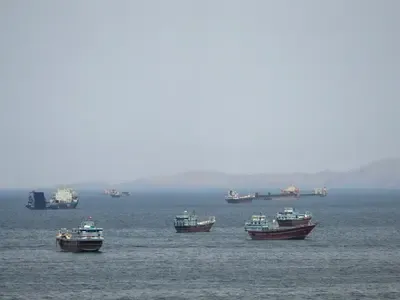

Iran’s Islamic Revolutionary Guard Corps (IRGC) has claimed that 28 commercial vessels, including oil tankers and container ships, successfully passed through the strategically important Strait of Hormuz during the last 24 hours under the coordination and security supervision of the IRGC Navy. The announcement comes amid heightened tensions in the region and increased international attention on one of the world’s most critical maritime trade routes.
According to a statement released by the IRGC Navy’s Public Relations Office and carried by Iranian state media, all vessels were permitted to transit through the waterway after obtaining authorization and coordinating with Iranian authorities. The IRGC emphasized that it continues to maintain constant monitoring and security oversight of maritime activities in the Strait of Hormuz to ensure safe navigation for commercial shipping.
The statement described the Persian Gulf as a strategic maritime zone belonging to the countries of the region and accused the United States of contributing to instability in the area. Iranian officials alleged that the presence and actions of American military forces have been a major factor behind recent security concerns in the Gulf region.
The IRGC further stated that it is conducting what it described as “intelligent control” of the Strait of Hormuz around the clock. Iranian authorities asserted that the force remains committed to safeguarding commercial shipping and maintaining maritime security despite ongoing geopolitical challenges.
The latest announcement follows a similar statement issued by the IRGC a day earlier. On Saturday, Iranian authorities reported that 20 commercial vessels had passed through the Strait of Hormuz under the supervision and coordination of the IRGC Navy. The back-to-back announcements appear aimed at highlighting Iran’s role in managing traffic through the vital shipping corridor.
The Strait of Hormuz remains one of the most strategically important waterways in the world. Situated between Iran and Oman, it serves as a crucial passage for global energy supplies. A significant percentage of the world’s crude oil exports and liquefied natural gas shipments pass through the narrow maritime route every day, making its stability essential for international trade and energy markets.
Iran has recently introduced a new mechanism to oversee maritime operations in the Strait of Hormuz. According to Iranian media reports, the country has established a dedicated authority known as the Persian Gulf Strait Authority (PGSA), tasked with monitoring and regulating activities linked to the strategic waterway.
The creation of the new authority was officially announced earlier this month through Iran’s Supreme National Security Council. Iranian officials stated that the body would be responsible for managing developments in the Strait of Hormuz and enhancing oversight of maritime traffic passing through the region.
The launch of the PGSA has drawn international attention, particularly from the United States. Shortly after its establishment, the U.S. government imposed sanctions on the authority, accusing Iran of using the organization to exert pressure on commercial shipping and generate revenue that could benefit the IRGC.
The sanctions were announced by the U.S. Department of the Treasury’s Office of Foreign Assets Control (OFAC), which added the PGSA to its Specially Designated Nationals list. American officials alleged that the authority was being used to impose costs on vessels transiting through the Strait and channel funds to Iranian military-linked entities.
The sanctions form part of the broader pressure campaign pursued by the administration of U.S. President Donald Trump. Washington has continued to expand economic measures against Tehran amid ongoing disagreements over regional security, maritime activities, and broader geopolitical issues in the Middle East.
The developments come at a time when tensions between Iran and the United States remain elevated. Disputes over maritime security, military activities, sanctions, and regional influence have contributed to a volatile environment in the Persian Gulf and surrounding areas.
Despite these tensions, commercial shipping continues to move through the Strait of Hormuz, which remains a vital artery for global commerce. Energy markets closely monitor developments in the region because any disruption to maritime traffic could have significant consequences for global oil supplies and international trade.
Analysts note that the Strait of Hormuz handles a substantial share of the world’s seaborne oil exports, making stability in the region a matter of international concern. Shipping companies, energy producers, and governments around the world closely track security developments in the area due to its importance to global economic activity.
Iranian authorities maintain that the new maritime management framework is intended to improve oversight and ensure safe passage for commercial vessels. However, critics argue that the move could increase tensions with Western countries already concerned about freedom of navigation in international waters.
As geopolitical competition intensifies in the region, the Strait of Hormuz continues to remain at the center of strategic calculations for both regional powers and global stakeholders. The latest statements from the IRGC underscore Iran’s efforts to project control over one of the world’s most important maritime chokepoints while tensions with the United States continue to shape the broader regional landscape.
The post IRGC claims 28 commercial vessels passed through Strait of Hormuz amid growing geopolitical tensions | Cliq Latest appeared first on CliQ INDIA.
-
London Diary: Sonam Kapoor, hubby in Notting Hill redevelopment row

-
Kerala has vast untapped potential in blue economy: V.D. Satheesan

-
Argentina and Portugal Secure Wins in World Cup Warm-Ups

-
Indian Women's Football Team Triumphs at SAFF Championship

-
Illnesses mount as water contamination spreads across posh Delhi colony