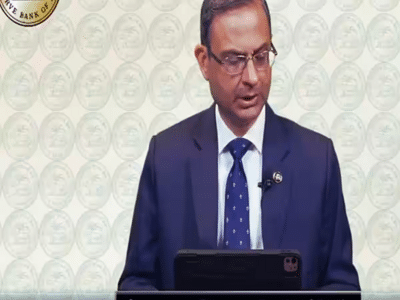
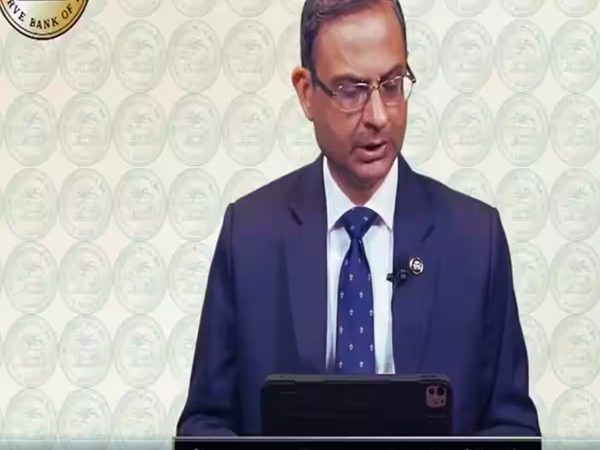
Given the prevailing energy crisis situation globally, the Reserve Bank of India (RBI) faces a significant challenge in maintaining economic stability. The RBI Governor is set to undergo a major trial by fire, as the crisis stemming from global tensions lies beyond the direct control of either the government or the RBI. If the conflict between the US (under Trump) and Iran persists, the situation could become even more critical. There is also apprehension regarding a potential hike in the prices of petrol, diesel, and gas cylinders. Against this backdrop, the decisions taken by the RBI during the Monetary Policy Committee (MPC) meeting—scheduled for June 3 to 5—will have a direct impact on the EMIs paid by the common people.
According to a survey conducted by *The Economic Times* (ET), 11 out of 15 economists believe that there will be no change in the repo rate during the MPC meeting scheduled for June 3–5. Conversely, four economists have predicted an increase of 25 basis points—that is, 0.25%. Most experts are of the opinion that the RBI is likely to keep policy rates unchanged in the June meeting. This stance is attributed to geopolitical tensions and adverse weather forecasts, factors that could potentially dampen economic growth and fuel inflation. Nevertheless, there are indications that interest rates could be hiked at a later stage.
**Rates May Rise Over the Course of the Year**
Among the same group of 15 economists, 13 have expressed the expectation that rates could rise by a cumulative total of 50–75 basis points over the entire financial year. The remaining two, however, believe that the RBI will refrain from making any changes to interest rates throughout the year. In its April meeting, the MPC had maintained the repo rate at 5.25%. The June meeting is taking place at a juncture when fuel prices are on the rise and the Indian Rupee has depreciated sharply due to the US-Iran conflict. Furthermore, the looming threat of an El Niño event—which could adversely affect the monsoon—remains a concern; this, in turn, could impact food production and food prices.
Economists who advocate for maintaining the status quo regarding interest rates argue that the current inflationary pressures are primarily supply-driven. Therefore, high interest rates will not have a significant impact on this. They argue that making borrowing more expensive at such a juncture will not make a substantial difference to inflation; however, it could certainly slow down economic growth.
**Focus on Inflation**
Gaura Sen Gupta, Chief Economist at IDFC First Bank, stated that the ongoing conflict in West Asia has dealt a major supply-side shock. According to her, monetary policy is not the most effective tool to address this situation, as it primarily impacts demand. Consequently, raising rates in such a scenario could further weaken demand. However, economists who anticipate a rate hike argue that the primary focus of monetary policy should be on keeping inflation expectations under control. Following the rise in petrol prices, inflation in FY27 is projected to range between 5% and 5.5%. There are also indications of potential further increases in fuel prices. Given this context, the RBI should consider taking action now rather than waiting for future developments.
Anubhuti Sahay, Head of India Economic Research at Standard Chartered Bank, also expects a rate hike of 25 basis points. She projects that the RBI may revise its inflation forecast for FY27 upward to 4.9%. She notes that a sharp depreciation of the rupee could exert additional inflationary pressure, thereby strengthening the case for a rate hike. In April, the RBI had projected that average inflation in FY27 would stand at 4.6% and that the economy would grow at a rate of 6.9%. Some economists anticipate that the RBI may announce measures designed to help mitigate the issue of foreign capital outflows, which are currently exerting pressure on the rupee.
**How Large Could the Hike Be?**
Institutions such as MUFG, Canara Bank, and Nomura expect that the limits under the Liberalized Remittance Scheme (LRS) may be tightened, and additional restrictions related to forward hedging could be imposed. In a research note, the State Bank of India (SBI) observed that the mounting pressure on the rupee underscores the need for sustained policy support amidst a period of global uncertainty. The rupee depreciated by approximately 11% in FY26 and has already fallen by over 3% so far in FY27.
Meanwhile, Aastha Gudwani, Chief India Economist at Barclays, stated in her report that the RBI initiated interest rate cuts in February 2025; a cumulative reduction of 125 basis points brought the repo rate down to 5.25%. Since the final rate cut in December 2025, the MPC has consistently maintained a status quo. She believes that even though CPI inflation remains above the RBI's 4% target, the MPC—viewing this as a supply shock—is likely to adhere to its "neutral pause" stance, a policy of waiting and watching for the time being.
Disclaimer: This content has been sourced and edited from TV9. While we have made modifications for clarity and presentation, the original content belongs to its respective authors and website. We do not claim ownership of the content.
-
Planning a 2026 World Cup Public Screening? Here Are TVRI’s Mandatory Rules: No Tickets and Must Involve Local MSMEs
-
India vs New Zealand 2026–27 Series: 40 Days, 12 Matches and Nonstop Action – Full Tour Schedule Announced
-
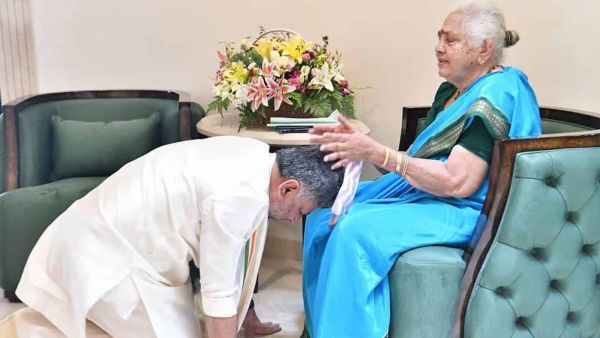
DK Shivakumar seeks mother’s blessings before CM oath
-
Haj pilgrims report stolen items from luggage at Lucknow airport

-
Hyderabad: Suspended CISF constable held for carrying 158 kg ganja