Moving away from years of geopolitical friction over the Lipulekh map row and their initial combative stance, Nepal’s newly elected young leadership is concentrating toward pragmatic development diplomacy with New Delhi
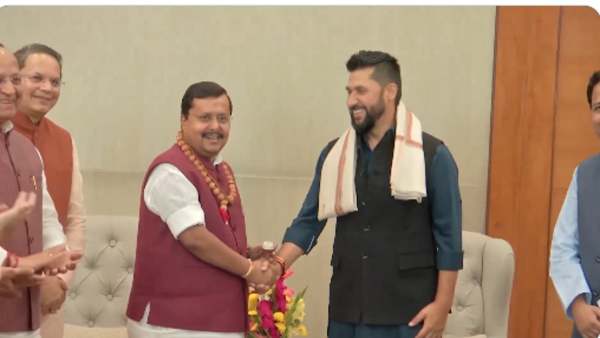
The historically tight yet frequently volatile relationship between India and Nepal is undergoing a quiet, pragmatic shift punctuated by major political milestones unfolding right now. On Tuesday, Rabi Lamichhane, president of Nepal’s ruling Rastriya Swatantra Party (RSP), arrived at the BJP headquarters in New Delhi to meet with national president Nitin Nabin under the 'Know BJP' initiative.
This unprecedented party-to-party engagement follows a historic address to parliament by Nepal’s newly elected, 35-year-old Prime Minister Balendra "Balen" Shah, who broke long-standing diplomatic taboos by acknowledging that border encroachment along their shared boundary is a mutual, technical issue rather than a one-sided Indian violation.
These developments signal that a new political reality in Nepal is fundamentally changing the conversation. Leaders in Kathmandu are increasingly recognising that sustained combative ties with India offer little practical return and that turning toward friendly, result-oriented diplomacy is the key to unlocking Nepal’s economic future. Driven by a younger generation of leaders who want to move past old grievances, both nations stand on the cusp of replacing "ultra-nationalist rhetoric" with high-impact economic collaboration.
What triggered recent friction between the neighbours
-
5 Foods That May Affect Testosterone Levels In Men And What To Eat Mindfully

-
When will Taylor Swift marry? Fans go into overdrive

-
Life Gets Better For Every Zodiac Sign When Venus Enters Leo The Week Of June 8 – 14, 2026

-
World’s 8th richest billionaire Jensen Huang enjoys Korean BBQ in Seoul

-
This May Be The Most Dangerous Man-Made Object Ever Produced