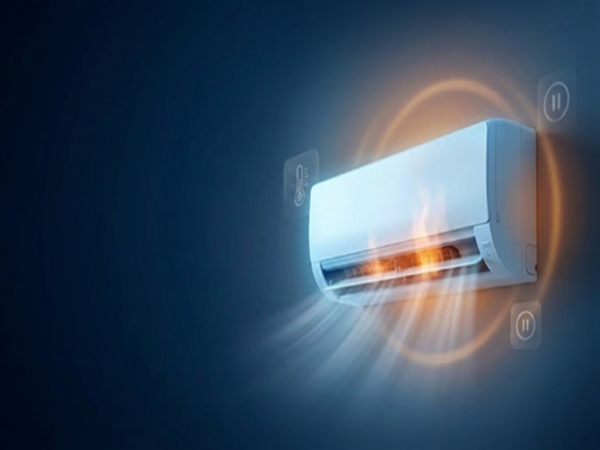
Electrical Short Circuits: Following the death of retired IAS officer Dhanendra Kumar in South Delhi's Hauz Khas area due to an AC blast, a new debate regarding AC safety has erupted across the capital and other regions. While air conditioners offer much-needed relief from the scorching heat on one hand, they are simultaneously becoming a fatal threat to people's lives on the other. Experts suggest that by adopting a few simple precautions, such accidents can be largely averted.
Why are electrical fire incidents on the rise in Delhi?
According to data from the Delhi Fire Service, it has been revealed that approximately 60 percent of fire incidents occurring in the capital are caused by electrical faults. Among these, short circuits, electrical overloading, overheating, faulty wiring, and the use of substandard electrical appliances are the primary culprits. As the demand for electricity surges during the summer months, these associated risks also escalate rapidly.
Why, specifically, does the risk of an AC blast increase?
Technical experts believe that running an air conditioner continuously for several hours places immense strain on its compressor and other electronic components. Consequently, if the unit is not given adequate time to cool down, its internal temperature can soar to dangerous levels. This, in turn, becomes the catalyst for incidents such as fires and explosions.
Voltage Fluctuations Can Also Be a Major Cause
During the summer season, the surge in electricity consumption often exacerbates the problem of voltage fluctuations—surges and dips—in various localities. This has a direct and adverse impact on the sensitive electronic components of an air conditioner. If the Miniature Circuit Breaker (MCB) is defective or the wiring is loose, the unit's safety mechanisms may fail, potentially leading to a major accident.
How Dangerous is a Refrigerant Gas Leak?
According to experts, a refrigerant gas leak is also considered a significant cause of fires involving air conditioners. When a gas leak occurs, the AC's cooling efficiency diminishes, forcing the unit to operate under excessive pressure. This can cause the system's internal temperature to rise rapidly. Common indicators of a gas leak include the emission of a distinct hissing or whistling sound. Reduced cooling efficiency, warm air blowing from the vents, and ice accumulation on the cooling coils—if such signs appear, you should immediately have the unit inspected by a technician.
**Dirty Air Filters Also Increase the Risk**
Many people neglect the regular cleaning and servicing of their AC units. Dirty air filters obstruct airflow, causing heat to build up inside the machine. Consequently, this places excessive strain on the compressor and other components, thereby increasing the risk of malfunctions or fire hazards.
**Be Alert Immediately If You Notice These Signs**
If your AC unit exhibits any of the following signs, it could be a warning signal. Therefore, be vigilant the moment you observe such warnings—for instance: a burning smell, the AC frequently switching on and off, unusual noises, smoke emitting from the unit, or a sudden loss of cooling. If any of these signs appear, switch off the AC immediately and have it inspected.
**How to Keep Your AC Safe?**
Here are some simple yet crucial tips for ensuring the safety of your AC unit:
**Maintain the Temperature Between 24°C and 26°C**
Running the AC continuously at very low temperatures places undue strain on the machine. A temperature range of 24°C to 26°C is considered the safest and most energy-efficient setting.
**Avoid Running the AC for Many Hours Continuously**
If possible, give the AC a brief rest period occasionally to help maintain a normal operating temperature within the system.
**Schedule Regular Servicing**
Clean the filters periodically and have the unit serviced by an experienced technician. This helps detect potential malfunctions promptly.
**Use High-Quality Wiring and MCBs**
Always use an MCB (Miniature Circuit Breaker) with the appropriate rating and high-quality copper wiring for your AC unit. Loose or old wiring can pose a significant safety hazard.
Disclaimer: This content has been sourced and edited from Amar Ujala. While we have made modifications for clarity and presentation, the original content belongs to its respective authors and website. We do not claim ownership of the content.
-
Sikkim State Lottery Result: June 2, 2026, 6 PM Live - Watch Streaming Of Winners List Of Dear Prestige Tuesday Weekly Draw

-
Shiv Sena's Aaditya Thackeray Conducts Toss With Ajinkya Rahane & Suryakumar Yadav In T20 Mumbai League 2026

-
WhatsApp To Roll Out On-Device Scam Alert Feature To Combat Rising Fraud: Here's How It Works

-
Nvidia CEO Jensen Huang Backs Higher Pay For Employees Amid AI Boom

-
JoSAA 2026 Registration And Choice Filling Live At josaa.nic.in; Check Step-By-Step Process Here