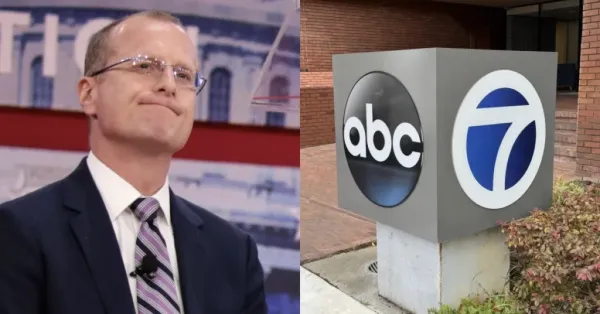
ABC’s eight broadcast TV stations filed early license renewal applications under protest on Monday, accusing the Federal Communications Commission (FCC) of using its authority to pressure a media company over speech and editorial decisions.
The move marks a sharp clash between Disney-owned ABC and FCC Chairman Brendan Carr, who has pushed several investigations involving networks that President Donald Trump often criticizes.
The FCC recently ordered ABC’s stations to seek license renewals years ahead of schedule. The agency linked the order to claims that Disney’s diversity, equity, and inclusion policies may violate federal anti-discrimination rules.
ABC rejected that reasoning. In filings submitted by stations in New York, Los Angeles, Chicago, Philadelphia, Houston, San Francisco, Fresno, and Durham, the company argued that the FCC’s action lacks a lawful basis and raises First Amendment concerns.
ABC said the agency is using the broadcast license process to punish speech it does not like.
“The only plausible reason to issue the Order is to punish the Station for speech the government does not like,” the company wrote in its filings.
The broadcaster described the order as highly unusual. ABC noted that the FCC has not demanded early renewals in more than 50 years and has never required simultaneous filings from a group of stations owned by one network.
“The Order has no legitimate purpose,” ABC said.
FCC Issues Public Interest Warning Amid Investigation Into Disney/ABC
According to Carr, Disney filed the license applications only after the FCC informed the company that its earlier replies were “disingenuous, deficient, and improper.”
ABC disputed that account. The company said it already provided more than 11,000 pages of material to the FCC in response to several requests for information.
ABC argued that the early renewal process adds little to the investigation. The company said the FCC never clearly identified what legal violation it believes occurred. It also pointed out that, after issuing the order, the FCC’s Enforcement Bureau sent another information request with a deadline that came less than a day after the new filing.
“The early renewal procedure is not an investigative tool,” ABC said.
The broadcaster framed the dispute as a wider threat to press freedom. ABC warned that broadcasters may begin weighing regulatory risks before making editorial choices if the government ties licensing decisions to content concerns.
“When a broadcaster must weigh regulatory retaliation before making editorial decisions, the public loses access to journalism that is free from government influence,” the company wrote.
FCC Scrutiny of ABC Sparking Free Speech Concerns and Claims of Political Retribution
Legal experts who have examined the case say ABC may hold a strong position under current law. A 1996 change to communications law created a high barrier for the FCC when it seeks to deny broadcast license renewals. ABC’s stations remain scheduled for renewal dates between 2028 and 2031, despite the early filing order.
The dispute also reflects a broader pattern of scrutiny involving ABC programming. Carr previously raised concerns about “Jimmy Kimmel Live!” under the FCC’s rarely used news distortion policy. He also launched an inquiry involving “The View” and whether parts of the program qualify for an exemption under equal-time rules.
FCC Commissioner Anna Gomez, the agency’s lone Democrat, strongly criticized both the ABC order and the new public notice.
She called the FCC’s actions “naked political retribution” and an attack on free speech and a free press.
“The ‘public interest’ does not mean this administration’s interests,” Gomez wrote.
She urged broadcasters to resist political pressure, arguing that strong opposition is the only way to stop misuse of regulatory power against independent reporting.
-
Census enumerators face FIR for refusing duties in Noida, Greater Noida

-
Firing at builder's house in Delhi's Saket; extortion bid suspected

-
Flying cash, car chase and gunfight: UP Police arrests drug trafficker in Sonbhadra

-
Rajasthan: Om Birla inaugurates Rs 14.5 crore worth projects in Sultanpur

-
'Historic Moment': Congress MP Shashi Tharoor Hails Inclusion Of 2 Players Of Indian Heritage In FIFA World Cup 2026 Squads