It’s crunch time for Liverpool — another underwhelming season could allow their Premier League rivals to pull away further.
Arne Slot departed the club last weekend following a disappointing campaign that failed to build on Liverpool’s 2024/25 Premier League title triumph.
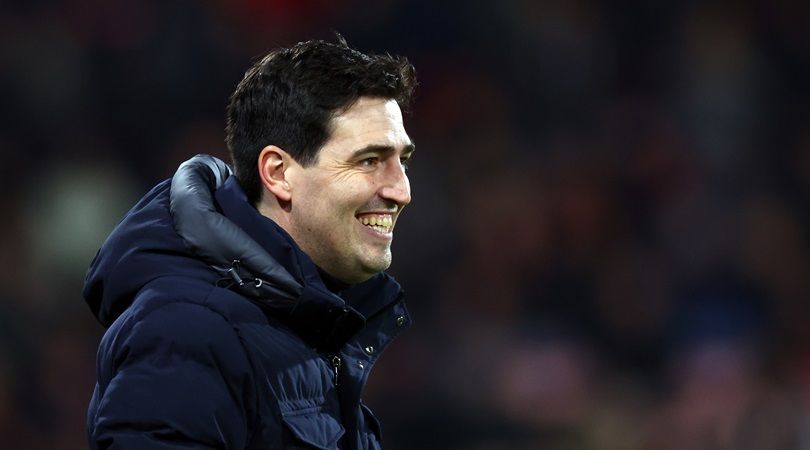
Andoni Iraola, who recently left Bournemouth, is strongly tipped to take over at Anfield with the mission of improving upon the Reds’ fourth-place finish last season.
Anfield has already seen the exits of iconic figures Mohamed Salah and Andy Robertson, along with one of their standout defenders, Ibrahima Konate. Iraola’s first challenge will be deciding how to respond to such major departures.
Though the phrase “first season tasks” might sound procedural, Iraola’s debut campaign as Liverpool manager will be anything but straightforward.
Florian Wirtz, one of Liverpool’s most expensive signings, endured a frustrating debut season at Anfield — not only because of his technical struggles and physical inconsistencies but also due to a visible dip in confidence.
Jurgen Klopp once transformed Liverpool’s mentality, turning the team from doubters into believers and creating a group of ‘mentality monsters’ who refused to give up.
Among those who embodied that spirit most were Salah and Robertson, both of whom departed in late May. It’s now on Wirtz to adopt that same attitude and lead by example.
The German playmaker must operate higher up the pitch, dictate play through central areas, and create the chances that Alexander Isak — another record signing — will expect.
But before anything else, Wirtz must rediscover the belief he appeared to lose under Slot — the conviction that he is among the best players in world football and can perform accordingly.
Although Salah’s departure casts a long shadow, if Iraola can restore Wirtz’s confidence, the young midfielder could become Liverpool’s key difference-maker in the Egyptian’s absence.
This next challenge, however, may depend less on Iraola himself. His influence over Liverpool’s transfer dealings remains uncertain, as does the willingness of the club’s owners to spend aggressively again.
If given the liberty, the former Bournemouth coach will need immediate reinforcements across the squad — midfield, defence, and attack — to refresh a side that looked stale last season.
Unless Alexis Mac Allister produces a sensational turnaround at the World Cup, his disappointing 2025/26 campaign could see him relegated to a rotational role or even moved on from Anfield.
Similarly, Cody Gakpo appears to have reached his ceiling at the club. Without Salah’s presence alongside him, a departure or reduced role seems increasingly likely.
Much like the transformation depicted in the opening of Rocky III (1982), where a complacent Rocky Balboa lost his edge while his rival Clubber Lang trained with hunger and grit, Liverpool must rediscover that same relentless drive.
Every player wearing the red shirt must approach each season as though they’ve never won before. Iraola must question whether the current group — many of whom are Premier League and World Cup winners — still possess that hunger needed for sustained success.
Experience remains vital, but not at the expense of desire. Too many within this Liverpool side now tread dangerously close to losing that crucial spark.
Perhaps Iraola’s toughest yet most defining challenge will be replacing Mohamed Salah’s influence ‘in the aggregate’ — collectively rather than individually.
Liverpool’s ownership group is no stranger to this concept. The “Moneyball” model, popularised by the Oakland A’s and noticed by Liverpool owner John W. Henry, was built on replacing output collectively rather than through a single superstar.
As owner of the Boston Red Sox, Henry once explored this idea through Billy Beane, who revolutionised baseball analytics by focusing on total team contribution rather than individual brilliance.
Players of Salah’s calibre are generational; Liverpool may never see another like him. But Iraola can still look to replace his output through a collective approach, maximising the value of his available assets and new signings.
In Liverpool’s 2024/25 title-winning campaign, Salah practically reversed that concept, compensating for the loss of Sadio Mane and Roberto Firmino by delivering a record-breaking 47 goal involvements himself — nearly replicating the combined output of the previous front three.
Back in the 99-point 2019/20 season, Liverpool’s front five shared 102 Premier League goal involvements, with Salah contributing 29 and Mane 25. The 2024/25 title-winning side achieved a similar total of 101, even without Mane and Firmino.
Those numbers underline Iraola’s target: to extract over 100 goal contributions from his top five attacking players next season. It’s ambitious but achievable.
With another 20+ goal season from Alexander Isak, a creative resurgence from Wirtz, and strategic summer additions, Liverpool could once again become a dominant attacking force.
And if Hugo Ekitike returns to contribute off the bench — much like a ‘sixth man’ in basketball — Iraola might just find the balance Liverpool need to thrive post-Salah.
-
Hyderabad’s iconic chai spot set to open another giant outlet
-
Congress MP criticises BJP for not cooperating with Telangana govt
-
Indian killed in Iranian drone attack on Kuwait airport
-
List of 12 Korean dramas you shouldn’t miss this June 2026

-
Aamir Khan’s 3rd wife-to-be Gauri Spratt: Age-gap to net worth