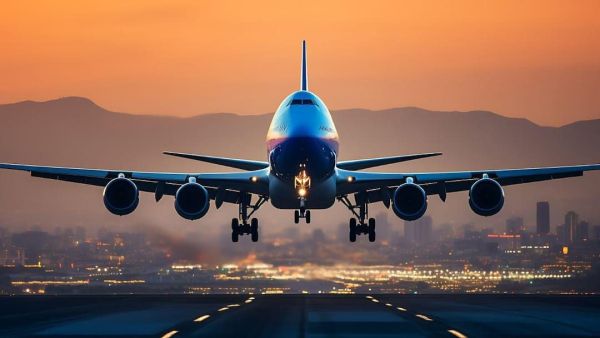
India’s state-run oil marketing companies (OMCs) are finding themselves in an increasingly difficult position as the fallout from the West Asia conflict continues to ripple through global energy markets.
While domestic airlines have been spared another increase in aviation turbine fuel (ATF) prices, public sector fuel retailers are now absorbing significant losses to maintain stability.
The latest figures suggest OMCs are losing around Rs 30 per litre on jet fuel sold to domestic carriers, even as international benchmark prices remain elevated, reported The Financial Express.
The development highlights a broader trend emerging across India's energy sector: fuel retailers are increasingly shouldering the burden of rising global energy costs while consumers and key industries remain partially protected.
Domestic Jet Fuel Prices Frozen Despite Rising Costs
For the second consecutive month, domestic ATF prices have remained unchanged despite continued volatility in global oil markets.
Domestic airlines will continue to pay Rs 104,927.18 per kilolitre for jet fuel, a rate that has remained in place since April 1. The price was left untouched in both May and June, despite international fuel benchmarks remaining significantly higher.
According to Sujata Sharma, Joint Secretary at the Petroleum Ministry, state-run retailers are currently facing under-recoveries of around Rs 30 per litre on domestic jet fuel sales.
“There is under-recovery of around Rs 30 per litre on domestic jet fuel, but this under-recovery is variable based on international prices,” Sharma said.
A Tale Of Two ATF Prices
While domestic airlines have been insulated from higher fuel costs, international carriers received a substantial price reduction in the latest monthly revision.
ATF prices for international airlines were cut by more than $400 per kilolitre, bringing rates down to around $1,100 per kilolitre.
The reduction follows a period of extreme volatility. International ATF prices had increased by $76.55 per kilolitre, or 5.33 per cent, to $1,511.86 per kilolitre on May 1 after surging to $1,435.31 per kilolitre in April amid a spike in global energy prices triggered by the West Asia conflict.
The latest revision has narrowed the gap between domestic and international jet fuel prices.
Why Airlines Wanted Relief
Domestic airlines had repeatedly sought government intervention as fuel costs surged following the escalation of geopolitical tensions in West Asia.
Carriers argued that rising ATF prices were putting pressure on profitability and sought parity between domestic and international jet fuel pricing structures.
Responding to these concerns, public sector OMCs chose not to pass on the full impact of higher international prices to domestic airlines.
“The aviation turbine fuel prices are determined based on international benchmark rates,” Sharma said.
However, keeping prices unchanged has come at a financial cost for fuel retailers.
The Pressure Extends Beyond Aviation
Jet fuel is not the only area where OMCs are absorbing losses.
According to the Petroleum Ministry, under-recoveries on domestic LPG cylinders remain substantial, with fuel retailers losing around Rs 650 on every household cylinder sold.
“There is still under-recovery of Rs 650 a cylinder on domestic LPG,” Sharma said.
Despite rising costs, household LPG prices have remained unchanged.
The price of a 14.2-kg domestic LPG cylinder continues to stand at Rs 913, a level that has remained unchanged since March.
Commercial LPG Gets Costlier
While household consumers have been protected, commercial users have not been spared.
OMCs increased the price of the 19-kg commercial LPG cylinder by Rs 42, taking the retail price in Delhi to Rs 3,113.50.
The latest increase comes after a steep Rs 993-per-cylinder hike implemented on May 1, which had already pushed commercial LPG prices to record highs.
Similarly, the price of a 5-kg free trade LPG cylinder was raised by Rs 11, taking the retail price in Delhi to Rs 821.50.
Petrol And Diesel Prices Hold Steady
There was no fresh revision in petrol and diesel prices this month.
This follows increases of around Rs 7.50 per litre implemented last month as fuel retailers sought to partially offset mounting losses linked to elevated crude oil prices.
Petrol currently costs Rs 102.12 per litre in Delhi, while diesel is priced at Rs 95.20 per litre.
Even after those revisions, fuel retailers continue to face financial stress.
The Bigger Concern For OMCs
The latest numbers underscore the scale of pressure facing state-run fuel retailers amid the ongoing energy crisis.
According to the Petroleum Ministry, under-recoveries on petrol, diesel and domestic LPG had reached around Rs 650 crore per day in May as OMCs moderated retail fuel price increases despite elevated international energy prices.
As tensions in West Asia continue and global crude oil markets remain volatile, the question for policymakers may no longer be whether fuel prices can remain stable, but how long OMCs can continue absorbing the cost of that stability.
-
Is your unclaimed money also stuck somewhere? Here is how to apply on the new portal—the process is quick and hassle-free..
-
PPF Funds: Unable to arrange money during an emergency? The funds lying in your PPF account can help—find out how..

-
Top 5 Mutual Funds: These 5 Mutual Funds Are Best for SIPs—Delivered Returns of Up to 23% in 3 Years; Get Full Details Here..

-
IRCTC SBI Premier vs. BOB Credit Cards: Which Is Better for Great Savings on Train Ticket Bookings?

-
Man Arrested For Links With JeM Planned Attack In India, Was Waiting For Orders