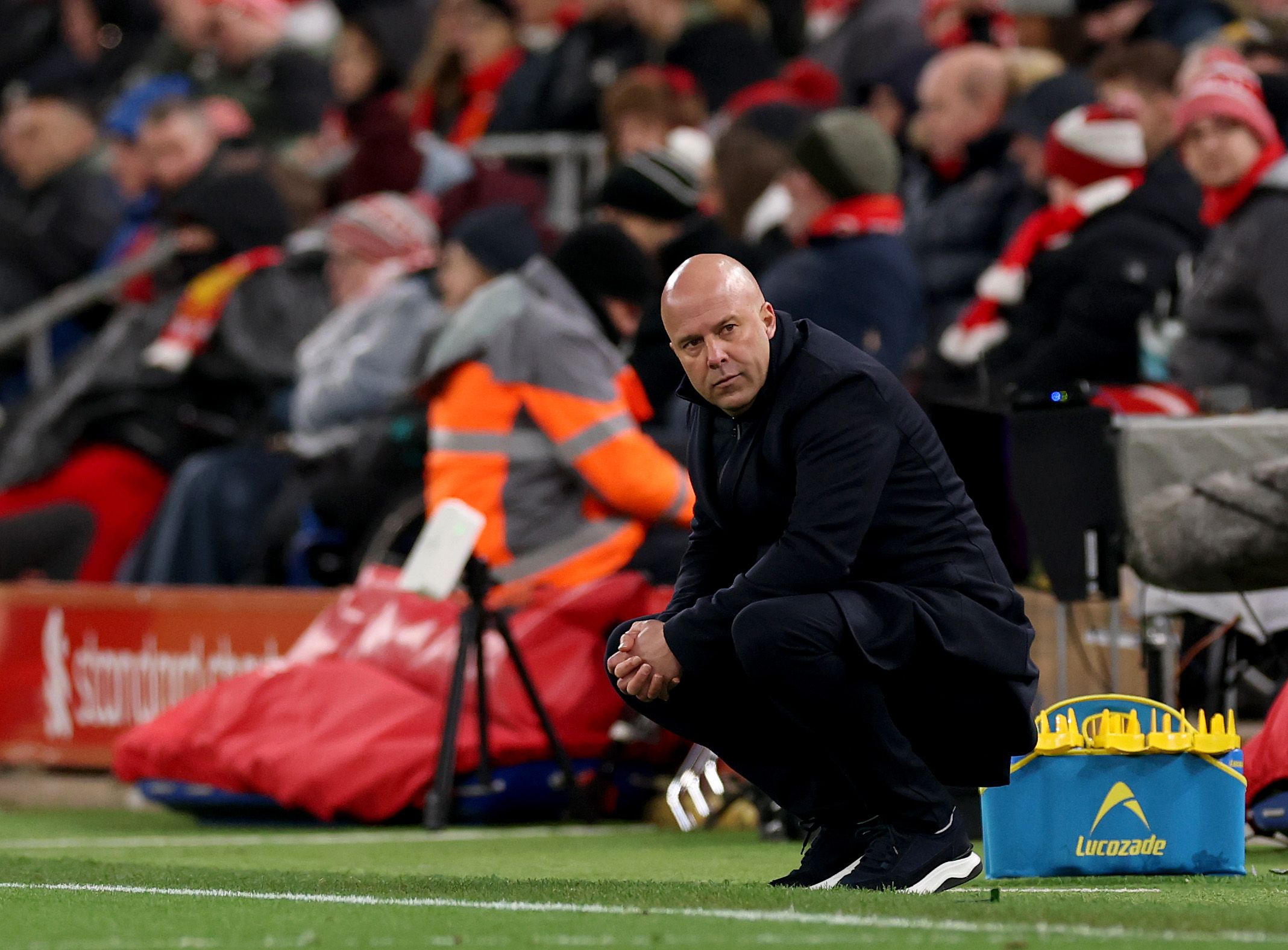
Few football clubs hold their managers in such high esteem as Liverpool do.
At most clubs, the manager isn’t the central figure in the same way they are at Anfield. Legends like Bill Shankly, Bob Paisley, and Jurgen Klopp have achieved near-deity status on Merseyside and beyond.
Rafa Benitez and Gerard Houllier shared similar affection from the supporters. They were seen, rightly, as individuals who understood the essence of Liverpool Football Club – its heritage, its fans, the city’s working-class roots, and its spirit.
Most importantly, they fully immersed themselves in every aspect of life as the club’s leader.
It’s much the same for the players. Those who embrace everything about Liverpool tend to be remembered not just for their achievements but for their connection with the club. Andy Robertson is a perfect example – described by both The Anfield Wrap and Klopp as “one of us” in their documentary about the Scottish defender’s departure.
As Mohamed Salah once perfectly summed it up after his final game alongside Robertson: “They (the fans) don’t care that much about the result as long as you sweat and give your blood here, they’ll love you forever. This is my message to you guys (other players), it’s not about talent – it’s probably why [Robertson] is loved more than anyone maybe! – you just give it all and the fans love you for that.”
However, a manager cannot demonstrate effort by running harder or scoring goals. Their commitment has to be shown in subtler, often unseen, ways.
That was a key problem for Arne Slot during his second season at Liverpool. He, and seemingly his coaching staff, didn’t fully grasp how much perception matters to supporters of a club like Liverpool.
When things are going well, everything is fine. But when results turn – and Liverpool lost 20 times across all competitions in Slot’s second campaign – every aspect of the manager’s behaviour is placed under scrutiny. Explanations start sounding like excuses, and even minor details are over-analysed.
Among the many fan discussions as Liverpool’s season went off course was Slot’s decision to live near Manchester Airport. He was frequently accused of taking too many holidays in Ibiza and Dubai, sometimes returning for press conferences in mid-winter with a tan.
Members of his backroom team also lived in central Manchester. As Liverpool’s struggles deepened, fans increasingly felt a disconnect between the management and the club’s core identity.
In contrast, Klopp’s shadow loomed large. Supporters fondly recall stories of him living among locals in Formby, walking his dog, chatting with fans, visiting pubs, or playing lawn bowls – all while his family integrated into the community. Benitez’s family, too, settled on the Wirral and continue to live there. Both men embraced the culture and heartbeat of Liverpool, making fans feel like they truly knew them.
Under Slot, Liverpool stopped holding pre-match press conferences for Carabao Cup fixtures. During Klopp’s tenure, assistant Pepijn Lijnders would handle those duties, using them as an opportunity to connect with fans. It felt like a missed chance for assistants Sipke Hulshoff and Giovanni van Bronckhorst.
Slot chose to reside in Cheshire’s ‘golden triangle’, home to numerous players from Liverpool, Manchester City, and Manchester United. While that might not seem problematic, appearances matter – especially when results start to falter. A word of advice for Liverpool’s next manager: live on Merseyside. The same advice applies to the club’s sporting director.
Things worsened late in the season when Slot was seen dining with his family in London on a day off. His family hadn’t moved to England with him, and this came right after Liverpool’s heavy 4-0 defeats in both the Premier League and FA Cup, during a run of just three wins in 11 matches. It didn’t sit well with supporters.
Adding to the perception problem was a photo of Slot posing with Wayne Lineker at O Beach in Ibiza during the campaign. Although taken after the title race was over, it resurfaced as evidence of his supposed lack of commitment. “He never seemed to fully buy into the club,” one supporter told FourFourTwo.
Reports from journalist David Lynch later revealed that some academy staff were frustrated with Slot’s lack of engagement. He rarely attended Under-21 or Under-18 matches, leading to concerns that he wasn’t paying attention to the youth setup. This disconnect was reportedly one of the reasons behind Liverpool’s decision to part ways with the Dutchman after just two seasons – the club wanted a clearer pathway for academy players to the first team.
Teenage midfielder Trey Nyoni, who debuted under Klopp at 16 and featured in the League Cup-winning squad, managed only 21 Premier League minutes this season. Slot’s hesitation to use Rio Ngumoha and his apparent unawareness of Jayden Danns’s injury setback – replying in a press conference that the striker was “getting back with the U21s” when he had just suffered a hamstring issue – further fuelled criticism.
Signs of disconnect had been there from the beginning. Slot was given the title of ‘head coach’ rather than ‘manager’, and even wore a tracksuit during his unveiling. It gave the impression of someone focused solely on training sessions rather than embodying the wider responsibilities of a Liverpool manager. Of course, no one could truly replicate Klopp’s all-encompassing approach, and even he admitted to making mistakes early on.
“When I came here, the players had a few days off,” Klopp recalled. “I changed it and said: ‘How can they have three or four days off or something?’ It was a silly decision. It’s only because I was not used to it. Now we are proper English coaches, we know about the fixtures, the intensity of the next few months. Each possibility for a little break, you have to use. That's what we have to do.”
While Slot’s policy on rest days wasn’t drastically different, fans still remembered stories of Klopp’s famously intense sessions and pre-season training. Perception, again, played a huge part. Klopp’s family lived nearby, and he rarely took time off himself. When asked in 2021 what he looked forward to after football, he said passionately: “Seeing the world. It’s easy. I have no time.”
Slot did address questions about his Ibiza trips, saying: “That’s the downside of being a Liverpool manager: if you are somewhere in public, then they can make videos.” He added, “If the sun shines and I can be with my family, then it’s my kind of place.” Ironically, his first words at Liverpool were about how energised he felt after “the holiday I had.”
There’s nothing inherently wrong with taking breaks, but perception matters deeply – especially at a club like Liverpool. Perhaps the fans’ deep connection with their managers is shaped by the fact that the club has had only 22 of them in its 134-year history, and just two in the post-war era – Brendan Rodgers and Roy Hodgson – failed to win a trophy. The next person in charge must ensure they don’t join that short and unwanted list, and learn from where Arne Slot went wrong.
-
Minor girl dies by suicide in Hyderabad, note reveals details

-
‘Fatherland over motherland?’ Congress jibes at PM on Israel offensive against Lebanon
-
American dream turns nightmare: 30 Indians arrested, face deportation

-
In the wake of Vijay taking office as TN CM Trisha declares May ‘magical’
-
Lalit Modi calls Sushmita Sen a ‘diamond’, reveals why they broke up