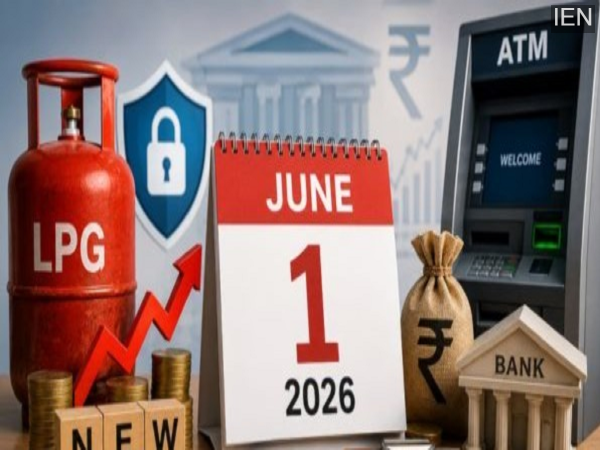
1 June Rule Changes: Starting today, several major rules have changed across the country. Here, you can understand exactly which new regulations have come into effect as of June 1, 2026, and how they will impact your daily life.
1 June Rule Changes: With the dawn of June, several significant regulations have undergone changes nationwide. These modifications could directly impact the finances of common citizens, as well as banking services, gas cylinder prices, digital payments, solar panels, and vehicle costs. Consequently, if you are planning to engage in banking activities, book a gas cylinder, make online payments, or purchase a car, it is essential to familiarize yourself with these new rules.
LPG Cylinder Prices Revised
On the first day of every month, oil marketing companies review the prices of LPG cylinders. Effective June 1st, price adjustments have been made to commercial gas cylinders and ‘Chhotu’ (small) gas cylinders; meanwhile, all eyes remain fixed on the rates for domestic gas cylinders. Fluctuations in crude oil prices and prevailing international conditions are currently influencing LPG rates. As a result, domestic consumers may also begin to feel the impact of these factors in the days to come.
New UPI System
To enhance the security of digital payments, several new measures have been implemented starting this June. Now, for many UPI transactions, the recipient’s name—as registered with their bank—will be displayed before the funds are transferred. This initiative aims to curb erroneous transfers and reduce fraud. The primary objective is to minimize cases where money is accidentally transferred to the wrong account or lost through online scams, thereby providing users with greater security and peace of mind while making payments.
PAN-Aadhaar Linking
The government continues to place strong emphasis on linking Aadhaar cards with PAN cards. Individuals who have not yet linked these two documents may face difficulties in accessing banking services and fulfilling tax-related obligations. A valid and active PAN card is a prerequisite for accessing numerous financial services; consequently, if the linking process remains incomplete, certain services may be disrupted or rendered inaccessible.
ATMs and Banking
The banking sector has also seen several changes take effect this June. Certain banks have revised their regulations regarding cash deposits, specifically altering the limits applicable to cash deposits and the acceptance of smaller-denomination currency notes. Additionally, customers are advised to keep an eye on updates regarding banking fees and service charges, as various banks periodically update their regulations.
HDFC Bank’s New Rules
If you hold an account with HDFC Bank, these changes are significant for you. The bank has revised its rules regarding cash deposits involving small-denomination notes and coins. The deposit limit for notes valued at ₹20 or less has now been capped at ₹10,000 per month. Similarly, the limit for depositing coins has been set at ₹5,000 per month; deposits exceeding this limit may attract an additional fee of 2%.
New Rules for Solar Panel Installers
If you are planning to install solar panels on your rooftop, this change is important for you. The government has clarified that for subsidized projects, only solar modules and cells supplied by companies included in the ‘Approved Models and Manufacturers List’ (ALMM) may be utilized. The government states that this measure will enhance quality standards and boost domestic manufacturing. However, there are concerns that this may also lead to an increase in the overall cost of certain projects.
Buying a Car Could Become More Expensive
With the onset of June, prospective car buyers have also faced a setback. Several automotive manufacturers have hiked the prices of their vehicles. Maruti Suzuki has raised the prices of several of its models by up to ₹30,000, while Hyundai Motor India has also announced price increases across various models. Consequently, those looking to purchase a new car may have to spend a higher amount compared to before.
Keeping an Eye on the Fuel Market: Petrol and Diesel
Amidst ongoing tensions in the Middle East and rising crude oil prices, public concern regarding petrol and diesel rates persists. Effective June 1st, certain new levies related to petrol, diesel, and Aviation Turbine Fuel (ATF) have come into force. Under these regulations, an export duty of ₹1.5 per liter has been imposed on petrol, ₹13.5 per liter on diesel, and ₹9.5 per liter on ATF. Oil marketing companies are continuously monitoring and reviewing market conditions. If crude oil prices remain elevated in the international market, an impact on fuel prices could be observed in the coming days.
Border Trade Resumes
India-China border trade is set to resume starting June 1st via the Shipki La pass in Reckong Peo, Kinnaur, Himachal Pradesh. The trade list includes 20 items eligible for import and approximately 36 items eligible for export.
What Will Be the Impact?
With the onset of June, changes across the gas, banking, automotive, fuel, and solar sectors could directly impact people’s finances. Consequently, if you are planning to book a gas cylinder, purchase a car, deposit cash at a bank, or install solar panels, it is essential to familiarize yourself with the new regulations in advance. Doing so will help you avoid facing any potential difficulties or unexpected expenses later on.
-
Top 10 Cult Heroes Who Stole Hearts at the 2026 World Cup

-
West Indies Legend And First Cricketer To Hit Six Sixes In An Over Dies Aged 89

-
WATCH: Camera Captures Deadly China Landslide As Buildings Crumble; 8 Dead, 34 Missing

-
Former Aston Villa striker Jhon Duran poised for surprise European return as Al-Nassr struggle concludes

-
FIFA World Cup 2026 Final Under Threat? Canadian Wildfires Spark Air Quality Fears In New York