A series of new rule changes will officially come into force at the 2026 FIFA World Cup.
The International Football Association Board (IFAB) has announced revisions to the Laws of the Game that will be implemented starting from the 2026/2027 season and beyond.
IFAB is an independent international body responsible for establishing and amending the Laws of the Game in football.
This organization is the only authority recognized by FIFA to create or update official match regulations worldwide.
IFAB has confirmed several rule modifications that will be introduced at the 2026 World Cup, set to be the first major tournament adopting these changes.
The 2026 World Cup is scheduled to take place across the United States, Mexico, and Canada from June 11 to July 19.
“IFAB has approved a set of significant amendments to the Laws of the Game, and the 2026 World Cup will be the first major tournament to implement them,” said FIFA’s Chief Refereeing Officer Pierluigi Collina, as quoted by Reuters.
“These amendments aim to combat discrimination, reduce time-wasting, increase match tempo, and enhance the experience for both players and fans,” he added.
Below is the list of rule changes that will come into effect at the 2026 World Cup:
Players Forbidden from Covering Their Mouths
Players who cover their mouths with their hands, arms, or shirts during confrontations will receive a red card.
This rule follows the incident involving Gianluca Prestianni of Benfica, who was accused of making discriminatory remarks toward Vinicius Jr while covering his mouth.
Prestianni was handed a six-match suspension by UEFA, which has been extended globally.
However, players will not be penalized if they cover their mouths during friendly chats with teammates or opponents.
Players Banned from Leaving the Pitch
Players who leave the field in protest against a referee’s decision will be shown a red card.
The same applies to any team official who encourages players to walk off the pitch in protest.
Teams that cause a match to be abandoned will forfeit the game.
This new rule was introduced following the incident where Senegal left the pitch in protest over a referee’s decision in the Africa Cup of Nations final.
Countdown for Throw-ins and Goal Kicks
Referees will initiate a visual five-second countdown by raising their hand.
If the ball is still not in play at the end of the countdown, the throw-in will be awarded to the opposing team.
If a goal kick is not taken within the countdown, a corner kick will be awarded to the opponent.
Substitution Protocol
Players will have 10 seconds to leave the pitch once the substitution board is displayed.
They must exit at the nearest boundary line.
If a player fails to leave within 10 seconds, the substitute can only enter after the next stoppage, at least one minute after play resumes, when the referee signals them to do so.
Exceptions apply in cases of player injury or safety and security concerns.
Treatment Outside the Pitch
Outfield players must leave the field for one minute after play resumes if medical staff enter the field to treat them.
Exceptions are made for goalkeeper injuries, collisions involving the goalkeeper and an outfield player, clashes between teammates requiring first aid, serious injuries (such as head injuries or concussions), or when the injured player is about to take a penalty.
Video Assistant Referee (VAR) Protocol
“We began using VAR in FIFA competitions in 2017 at the Confederations Cup before the 2018 World Cup in Russia,” said Collina.
“Therefore, we believe it’s time to revisit the protocol that was written when experience with VAR was still very limited,” he added.
VAR will now be allowed to intervene in the following situations:
- A red card issued due to an obviously mistaken second yellow card.
- Cases of mistaken identity where one player is cautioned or sent off for an offence committed by another.
- Incorrectly awarded corner kicks, if the error can be corrected immediately without delaying the restart of play.
- Offences that occur before play restarts (for example, when an attacker fouls a defender before the ball is played from a free kick).
“VAR will recommend an on-field review, after which, if the referee determines that the offence occurred before the ball was in play, appropriate disciplinary action will be taken and the corner or free kick will be retaken,” explained IFAB.
Drinks Breaks
Each half will include a three-minute drinks break.
The break will be taken around the midpoint of each half (approximately the 22nd minute), though referees will have flexibility in timing.
For instance, if a player is injured and requires treatment in the 20th minute, the referee may signal the drinks break at that point.
Goalkeeper Injuries
If a goalkeeper is receiving treatment on the pitch, players from both teams must remain on the field and take a short rest with their respective coaches.
-
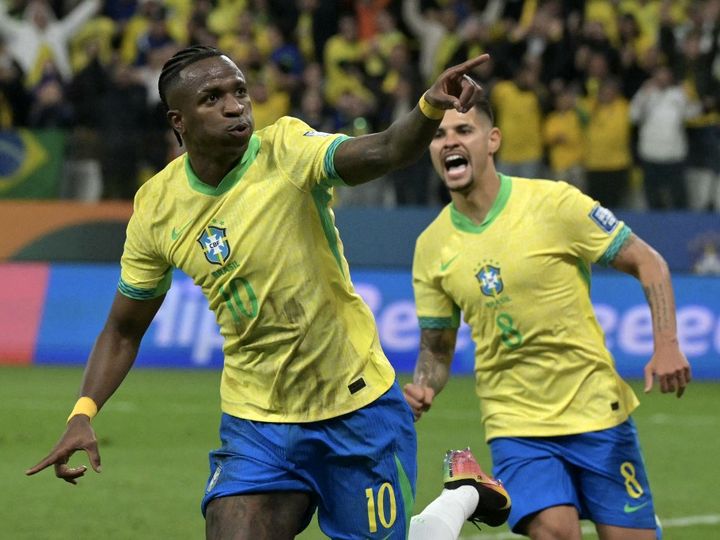
Brazil’s Second-String Squad Outshines Main Team, Leaving Carlo Ancelotti with a Selection Dilemma
-
2026 World Cup as a Learning Platform, West Sumatra Governor Encourages Youth to Adopt Positive Values from Football
-
Macron urges swift US-Iran deal, calls for reopening of Strait of Hormuz

-
Iran seeks changes to draft US deal, says nothing is final
-
US says Hezbollah blocking efforts to secure Israel-Lebanon truce