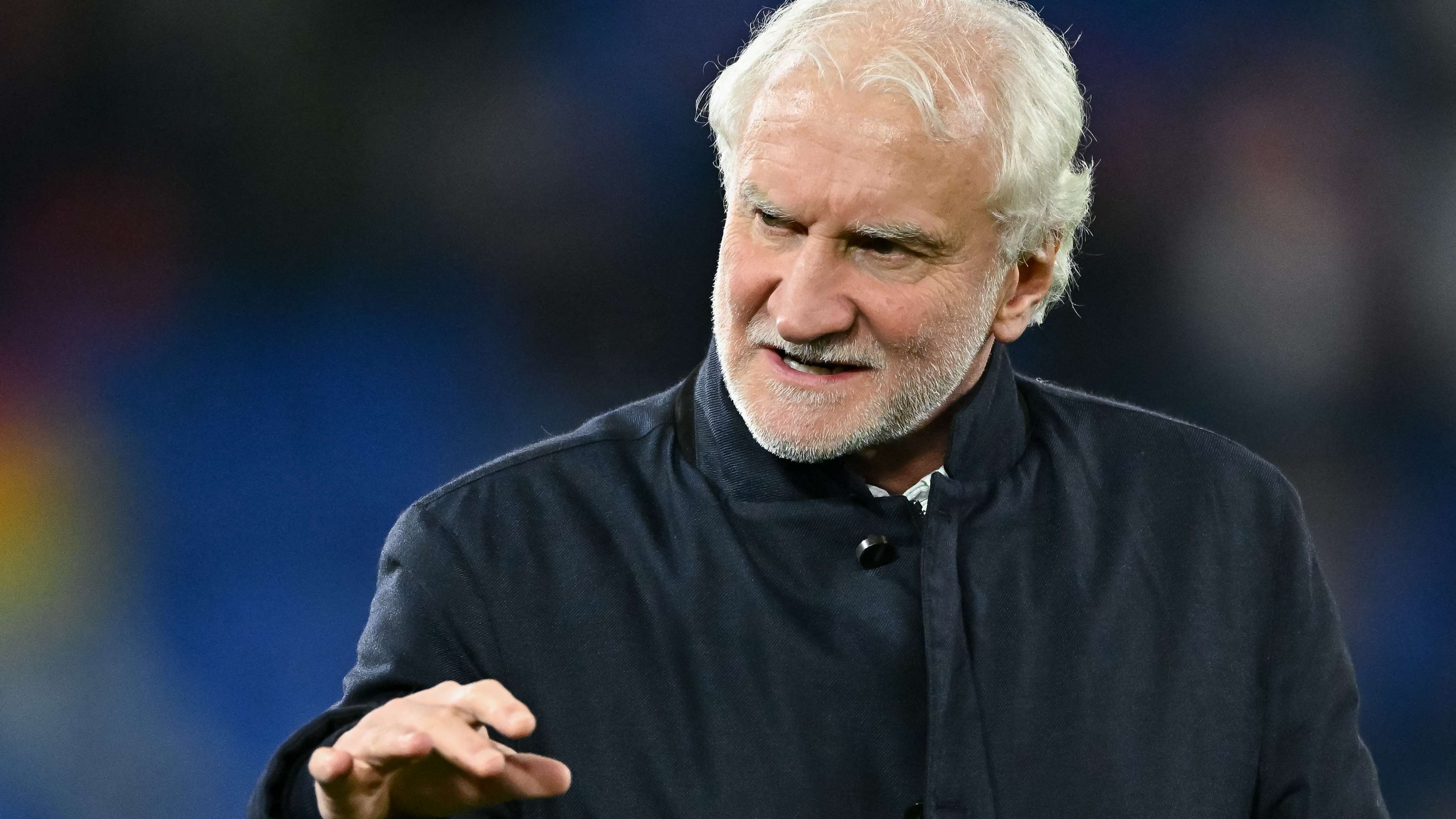
DFB sporting director Rudi Völler has demanded tougher regulations concerning player transfers between national teams, arguing that the current system weakens international football.
Speaking to the Funke Media Group, Völler stated, "This 'nation-hopping' is a very bad thing and also undermines the national teams."
He criticised FIFA's current eligibility rules, saying, "It is unacceptable that players can constantly choose which national team they wish to play for. That’s not right." His comments refer to changes introduced in 2020, when FIFA allowed players to switch national teams if they had played no more than three senior international matches (excluding tournaments) before turning 21, and if their last appearance had been at least three years earlier.
Previously, a player's participation in a competitive match for one country permanently tied them to that nation, except for friendlies, where a switch was already possible before 2020. One notable case is former Bundesliga player Jermaine Jones, who played three friendlies for Germany in 2008 but later switched to the United States in 2010, earning 69 caps for his adopted country.
Völler calls for simple and clear regulations
The former Germany striker, who made 90 appearances for the national team, believes the current rules fail to build a deeper sense of identification with a country. "Either you want to play for that country because your heart and your home are tied to it, or you don’t," he said. "Allowing players to make this decision so late is wrong."
Völler proposed a straightforward solution: "You must decide by the age of 18 at the latest which country you will represent. That would be the best solution. That is my firm conviction."
He also expressed concern about national federations investing heavily in youth development only to lose players to other nations later. He cited the example of Bayer Leverkusen midfielder Ibrahim Maza, who represented Germany at U18, U19, and U20 levels before opting to play for Algeria, for whom he will now feature at the World Cup.
Similar scenarios may soon arise with Germany U21 striker Nicolo Tresoldi of Club Brugge—eligible to play for Italy or Argentina—and Werder Bremen defender Karim Coulibaly, who has represented Germany since the U17 level but is reportedly being pursued by the Ivory Coast Football Federation.
In contrast, Germany benefited from such flexibility in the case of Jamal Musiala.
National team head coach Julian Nagelsmann commented on the growing trend of nationality changes last November, adopting a pragmatic view. "We’ll see this issue more often in the future," he said when asked about Maza’s switch. Nagelsmann emphasised that the decision should come from the heart, adding, "I only want to convince players who genuinely feel they want to play for Germany. Otherwise, it doesn’t make sense. If Maza feels his heart lies with Algeria, I won’t stand in his way. Losing such a talent would be unfortunate, but representing a nation is about more than talent—it must feel right."
Jamal Musiala—one of Germany’s standout players—chose the DFB after representing England at youth level. The Bayern Munich playmaker, born to a German mother and Nigerian father, spent much of his childhood in England and played for the Three Lions’ U15, U16, U17, and U21 sides. In February 2021, shortly before his 18th birthday, he opted for Germany and made his senior debut under Joachim Löw.
Similarly, Felix Nmecha, who was raised in England, represented English youth teams (U16, U18, and U19) before later committing to Germany.
Ivory Coast once sought Jonathan Tah’s services
Alongside Musiala and Nmecha, several players in Germany’s World Cup squad could have represented other nations, including Aleksandar Pavlovic (Serbia), Jonathan Tah (Ivory Coast), Jamie Leweling (Ghana), and Deniz Undav (Turkey).
Tah disclosed that the Ivorian Football Association had once approached him. "That was before the 2014 World Cup. I wasn’t playing for Germany back then either. I was 17 or 18 when they contacted me, but I declined quite quickly—and two or three years later, I was here," the Bayern Munich defender said. Looking ahead to the World Cup group fixture against Ivory Coast, he added, "I have roots there and feel a connection to the country."
The Hamburg-born centre-back progressed through Germany’s youth ranks from the U16 level onward and made his senior debut in March 2016. Having earned 45 caps, he is expected to partner Borussia Dortmund’s Nico Schlotterbeck in the heart of Germany’s defence at the World Cup.
-
Telangana govt invites applications for minorities’ overseas scholarship

-
Vaibhav Sooryavanshi seen enjoying 2026 IPL final sitting alongside Jay Shah
-
Mom Got Her Hospital Bills Lowered By Using A Debt Collector’s Trick

-
Your Zodiac Sign’s Monthly Love Horoscope For June 2026 Is Here

-
The season of choice will tell you what kind of person you are! The research revealed surprising information