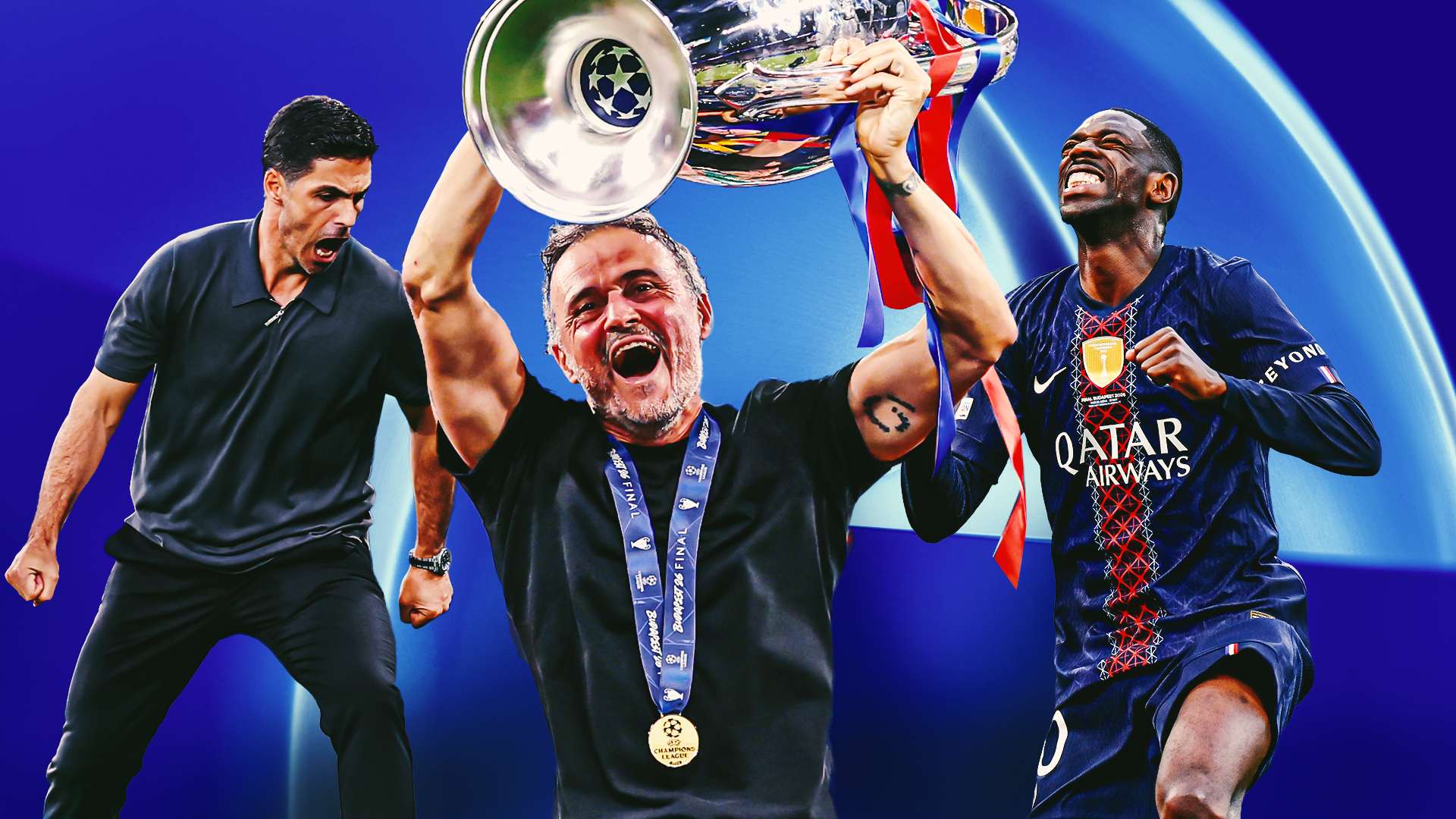
Paris Saint-Germain have done it again! Once mocked as perennial underachievers in the Champions League, the French giants displayed immense character by edging Arsenal 4-3 on penalties after a 1-1 draw in Budapest, successfully defending their European crown on Saturday night. Unlike their emphatic triumph over Inter last season, PSG had to dig deep this time to overcome Mikel Arteta’s disciplined Arsenal side, who took an early lead through Kai Havertz after a fortunate bounce of the ball.
For much of the first half, Luis Enrique’s men struggled to find a way past Arsenal’s superb defensive unit, with Gabriel Magalhaes and his backline teammates producing a near-flawless display to stifle one of Europe’s most lethal attacking forces.
However, the game turned on its head in the second half when Khvicha Kvaratskhelia burst into life. The Georgian winger was brought down clumsily by Cristhian Mosquera inside the box in the 65th minute, allowing Ousmane Dembele to confidently convert from the spot and bring PSG level.
PSG could easily have sealed the game in regulation time. Kvaratskhelia’s deflected shot struck the post after a vital touch from Myles Lewis-Skelly, while Bradley Barcola squandered a golden chance in stoppage time, slicing wide when one-on-one with the keeper.
Even after losing key players to fatigue in extra time, PSG showed immense mental toughness and technical excellence to prevail in the shootout and lift their second consecutive Champions League title.
Here are the key winners and losers from a tense, absorbing contest at the Puskas Arena:
WINNER: Luis Enrique
In TNT Sports’ post-match coverage, former Liverpool captain Steven Gerrard admitted he was running out of words to describe Luis Enrique’s brilliance — and it’s hard to disagree. The former Barcelona manager has always been one of football’s most admired figures: humble yet passionate, with a contagious enthusiasm for both the sport and life itself.
It’s no surprise, then, that his players are willing to give everything for him. At a club once accused of having flair without fortitude, Luis Enrique has instilled both style and substance. After claiming his third European Cup — with only Carlo Ancelotti ahead of him — Luis Enrique modestly downplayed talk of legendary status. But honestly, it’s hard to find a more fitting description for him now.
LOSER: Gabriel Magalhaes
When Gabriel blasted his spot-kick over the bar to hand PSG the trophy, the French side’s players sprinted towards their supporters to celebrate with goalkeeper Matvey Safonov — except one. Captain Marquinhos went straight to console his fellow Brazilian, embracing him warmly. Gabriel deserved that compassion. He had been a colossus for 120 minutes, repeatedly thwarting PSG attacks and single-handedly keeping Arsenal in the contest.
Had Arsenal triumphed in the shootout, Gabriel would likely have been named Player of the Match. But instead, he endured his own ‘John Terry moment’, one that will take time to recover from. Still, as Marquinhos himself knows from past heartbreaks, great players rise from such lows — and Gabriel certainly has the mentality to do so.
WINNER: PSG’s dynasty
After their dominant win over Inter last year, many predicted PSG’s next European triumph would come much sooner — and those forecasts proved accurate. This young, dynamic team continues to mature and adapt, winning matches in multiple ways. Even when their famed attacking trio misfired in Budapest, they found a way to prevail — a true hallmark of champions.
PSG are now firmly among the all-time great club sides. They are the first team since Real Madrid nearly a decade ago to retain the Champions League, and just the third ever to secure both their domestic league and the European Cup in back-to-back seasons.
What’s more, this PSG side had an average age of just 24 — the third youngest ever to win the competition. Luis Enrique, despite speculation linking him to the Premier League, already hinted at strengthening his squad this summer. That’s a chilling prospect for their European rivals. The Parisians have earned their place among football’s elite — and might just dominate it for years to come.
LOSER: Arsenal’s midfield
While the final was ultimately decided by penalties, one reason Arsenal fell short was their inability to control the midfield after taking the lead. Declan Rice, Myles Lewis-Skelly and Martin Odegaard cannot be faulted for effort — Rice ran tirelessly, while Lewis-Skelly impressed defensively with a heroic block to deny Kvaratskhelia. But in possession, both struggled. Lewis-Skelly completed only 12 passes in 90 minutes, while Rice gave the ball away 15 times — second only to goalkeeper David Raya’s 28.
Odegaard again went missing in a big game, leaving Arsenal outnumbered in midfield. The absence of Martin Zubimendi, who has looked fatigued in recent weeks, only compounded matters. Arteta clearly has work to do this summer to ensure his midfield matches the elite standard his defence and attack have reached.
Despite their depth helping them through a gruelling Premier League season, Arsenal’s record-low 24.7 percent possession — the lowest ever in a Champions League final — underlined their shortcomings in controlling major European matches. To conquer the continent, they’ll need far more creativity and composure in central areas.
WINNER: Harry Kane
The Champions League often shapes the Ballon d’Or race — but perhaps not this year. Declan Rice’s underwhelming display didn’t help his case, while Kvaratskhelia, though brilliant throughout the tournament, wasn’t at his best in the final, possibly due to a leg injury. Dembele converted his penalty with confidence but looked short of full fitness after his recent hamstring setback.
Vitinha’s Player of the Match award strengthens his credentials, but with the World Cup approaching, the Ballon d’Or race remains wide open. It’s bad news for Kvaratskhelia, who won’t feature in North America, but promising for contenders like Dembele, Vitinha, Rice, and those not in the final — including Lamine Yamal, Luis Diaz, Michael Olise, and current favourite Harry Kane.
LOSER: Arteta’s anti-football
From a neutral’s perspective, Arsenal scoring so early arguably ruined the spectacle. What followed was a cagey, defensive standoff — PSG probing patiently against Arteta’s deep-lying, disciplined block. As Declan Rice admitted later, Arsenal never planned to go toe-to-toe with Luis Enrique’s side: “If we’d gone out and played like that... that’s what they want. That’s when they score five or six.”
Still, Arsenal’s ultra-cautious approach wasn’t unique to this final. They’ve often prioritised control and containment over creativity, turning matches into endurance tests rather than entertainment. Even late in stoppage time, goalkeeper Raya appeared to delay restarts to run down the clock.
Yet for a squad valued at over £1 billion and arguably one of the strongest in Europe, such negativity was difficult to justify. Arsenal managed just one shot on target — their goal — and had less possession than they did in 2006 when they played most of the match with ten men. At times, they resembled a lower-league team clinging to a cup upset, and it would have been unjust had it succeeded.
Ultimately, while sympathy for Arsenal’s heartbreak is understandable — especially after going unbeaten throughout the tournament — purists will feel relief that the trophy went to the team that sought to play football rather than stifle it. PSG’s triumph was not only deserved but a victory for the spirit of the game itself.
-
Not Ishan Kishan! Mumbai Indians star becomes most expensive pick in Jharkhand T20 League
-
Nitish Kumar Reddy trains players ahead of APL season
-
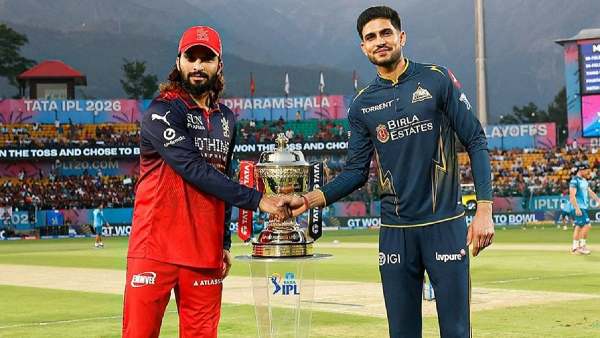
IPL 2026 Final: Rajat Patidar Wins Toss, Opts To Field At Narendra Modi Stadium
-
Nagaland State Lottery Result: May 31, 2026, 8 PM Live - Watch Streaming Of Winners List Of Dear Magic Sambad Night Sunday Weekly Draw
-
IPL 2026 Final: Kailash Kher Might Perform; Varun Dhawan, Mrunal Thakur, Pooja Hegde To Attend RCB vs GT Match In Ahmedabad