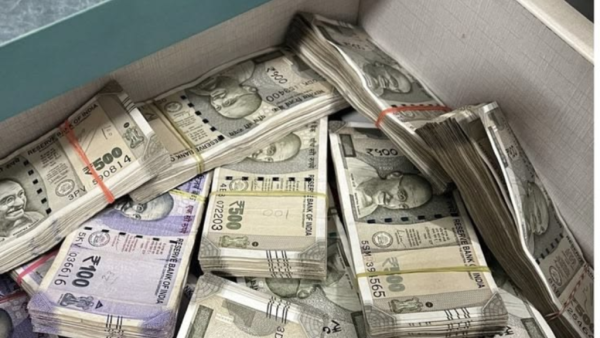
Plastic Currency: India’s rupee is currently in circulation as paper notes and coins. If you look at it, we use currency in digital form too but do you know that there is a lot of talk about introducing plastic notes in India soon. The Reserve Bank of India is once again considering a proposal to introduce ‘polymer’ currency notes. The proposal came up in the recent board meetings held in Patna and Mumbai. What exactly is the proposal and what are the chances of plastic notes coming to India? Let’s understand.
What are plastic notes?
Compared to paper currency, currency notes made from polymer or plastic are more durable.
Dust and moisture do not affect these notes much.
Given India’s climate and currency usage, these factors become particularly important.
As these notes have a longer lifespan, the need for frequent reprinting of notes is reduced.
As a result, although initial production costs may be higher, overall costs are likely to decrease over time.
Cost of currency printing
The cost of currency printing in India has remained consistently high, although there have been some fluctuations in the cost. According to the latest RBI data, the expenditure on printing of currency notes rose to a high of ₹6,372 crore in the financial year 2024-25. Subsequently, this amount reduced to ₹4,875 crore in FY 2025-26. Earlier, in the financial year 2016-17, this expenditure had increased to ₹7,965 crore. This was an exceptional situation created by demonetisation and the printing of new currency notes.
The biggest problem with paper currency
Printing of notes is only one aspect of the problem. An even greater challenge is posed by the huge stock of worn and damaged currency notes that have to be replaced constantly. Available RBI data on disposal or destruction of notes points out that the cycle continues due to the massive circulation of currency notes. According to recent data, in the financial year 2025-26, most of the total notes withdrawn from circulation comprised 598.3 crore notes of ₹500 and 581.1 crore notes of ₹100.
Plastic notes in circulation in these countries
Globally, this shift has already begun. Currently, more than 60 countries use plastic notes. Australia was the first country to introduce such notes. Other economies using polymer currency include Canada, Singapore, Malaysia, Thailand, Indonesia and Romania. Countries such as Australia, Canada and the United Kingdom (UK) have fully adopted polymer currency. On the other hand, many other nations have partially adopted it. But in large parts of the world including India. Paper currency remains the main medium of exchange.
-
CBSE OSM: Rahul Gandhi interacts with students who ‘exposed’ fiasco

-
Manoj Bajpayee reveals shocking threats after film backlash

-
Kanye West, Travis Scott Shows Canceled In Italy Amid Safety Concerns

-
CUET-UG 2026: Fresh trouble for NTA as thousands miss exam; agency announces retest

-
Uttarakhand: Kedarnath Yatra suspended amid orange alert for heavy rainfall