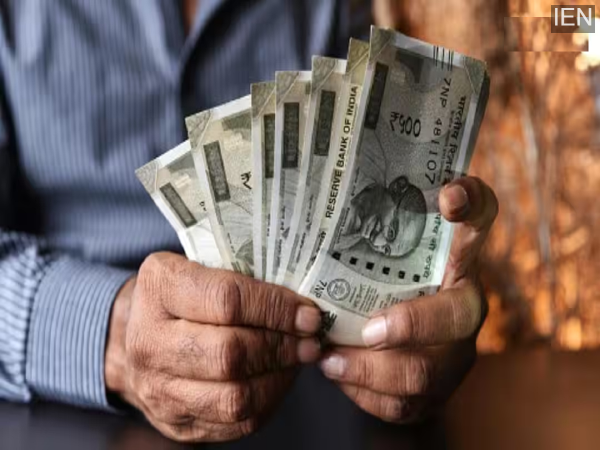
Indian Rupee Update: In light of rising cash demand and the increasing cost of printing currency, the RBI is considering the introduction of polymer banknotes, which are more durable than paper notes and have a longer lifespan.
RBI Currency Changes: It has been nearly ten years since the current form of the Indian Rupee underwent any changes. Following demonetization, another major shift regarding banknotes may soon be witnessed. Given the growing demand for cash and the escalating costs associated with printing currency, the Reserve Bank of India (RBI) is contemplating the introduction of plastic—specifically, polymer-based—banknotes.
According to sources, the issue of plastic or polymer notes has been a subject of discussion during recent RBI Board meetings. It is believed that these notes are significantly more durable than their paper counterparts and do not deteriorate easily over time, which could potentially lead to a reduction in printing and replacement costs.
What Are Plastic or Polymer Banknotes?
Polymer banknotes are manufactured using a specialized type of plastic. This category of currency is commonly referred to as "plastic money" or "plastic notes." They are primarily composed of Biaxially Oriented Polypropylene (BOPP)—a type of synthetic plastic. These notes are thin, flexible, and robust; unlike standard paper notes, they do not tear or degrade easily.
Furthermore, advanced security features can be more effectively incorporated into these notes. Additionally, existing ATM machines are expected to be fully capable of dispensing these polymer-based banknotes.
Why the Growing Emphasis on Plastic Notes?
According to RBI data, the cost incurred in printing paper banknotes during the financial year 2024-25 exceeded ₹6,372.8 crore, whereas the corresponding expenditure a year earlier stood at approximately ₹5,101.4 crore. A 2025 report by the Reserve Bank noted that the cost of printing currency is continuously rising, driven primarily by the increasing demand for cash.
Moreover, a significant proportion of paper banknotes tend to deteriorate relatively quickly. In 2025, millions of damaged paper banknotes had to be withdrawn from circulation, with 500-rupee and 100-rupee notes accounting for the majority. Consequently, durable polymer banknotes are now being considered a superior alternative.
Polymer Banknotes Already in Circulation in Many Countries
The idea of introducing plastic or polymer banknotes in India is not a new one. In 2012, the then UPA government decided to introduce such notes on a pilot basis; however, the plan could not be implemented due to technical reasons.
Today, polymer banknotes are in use in over 60 countries worldwide. Australia was the first to introduce them in 1988. Subsequently, countries such as Canada, Singapore, Indonesia, Thailand, Malaysia, and Romania also adopted them. Now, India, too, is considering taking steps in this direction.
-
Telangana Food Safety Team Seizes 990 Kg Snacks During Raid, Issues Advisory For Consumers
-
IPL 2026: Before RCB vs GT final, special snack seen in Virat’s hand, what is it and its benefits

-
Listening to music on Spotify is now more fun! Do you know about these three new features?

-
IPL 2026 Final: Fear of ‘hit wicket’ for the third time with Sai Sudarshan, will the streak be broken in Ahmedabad?

-
In the final battle, Rajasthan Royals batted first, GT entered with one change.