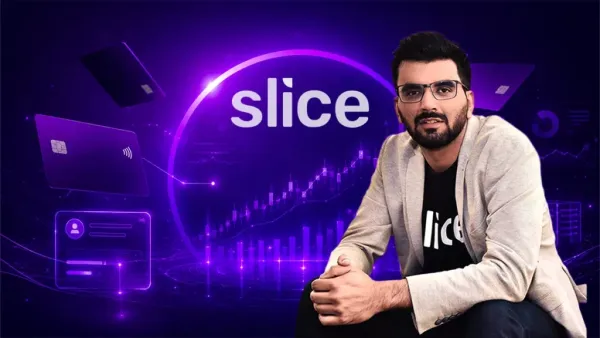
In a major milestone for India’s fintech ecosystem, Slice Small Finance Bank has reported its first-ever full-year profit after transitioning into a regulated banking entity. The Bengaluru-based digital-first lender posted a net profit of Rs 48.4 crore in FY26, marking a sharp turnaround from the Rs 217 crore loss it recorded in FY25.
The performance reflects not only a financial recovery but also the growing maturity of India’s new-age fintech players as they evolve into full-fledged banking institutions.
Credits: Entrackr
A Dramatic Turnaround for Slice
Slice’s latest financial results indicate a strong rebound in operational efficiency and profitability. Alongside its profit growth, the company also reported a 132 percent jump in revenue, which surged to Rs 1,403 crore in FY26.
The turnaround comes after a transformational year for the company following its merger with North East Small Finance Bank. The merger allowed Slice to move beyond its earlier fintech model and operate as a regulated small finance bank capable of accepting public deposits.
This shift significantly changed the company’s funding structure and improved its overall financial stability.
“This is a real turning point,” the company said in a statement. “Now we will expand access to credit for customers who have historically been underserved and keep building the bank the right way.”
The Merger That Changed Everything
The current banking entity was formed through the merger of digital lending startup Slice, officially registered as Garagepreneurs Internet Pvt Ltd (GIPL), and North East Small Finance Bank.
Before the merger, Slice primarily operated as a fintech platform focused on credit products for younger consumers. Like many digital lenders, it relied heavily on institutional borrowing to fund its operations — a relatively expensive model that often pressured margins.
However, becoming a small finance bank gave Slice access to retail deposits, dramatically lowering its cost of capital.
According to sources, the bank’s deposit base expanded to nearly Rs 4,500 crore by the end of FY26, underlining growing customer trust in the platform.
Lower Funding Costs Boost Profitability
One of the biggest reasons behind Slice’s improved profitability was the reduction in its cost of funds.
Earlier, the company depended on institutional credit lines, which carried significantly higher borrowing costs. After obtaining the ability to accept deposits, Slice replaced a substantial portion of these expensive borrowings with lower-cost public deposits.
The bank currently offers around 8 percent interest on deposits, while its lending products start at approximately 7 percent and increase depending on customer risk profiles.
This spread between borrowing and lending rates — commonly known as the net interest margin (NIM) — played a crucial role in boosting earnings.
The company also strengthened its balance sheet significantly during the year. Its debt-to-equity ratio improved sharply to 0.14 in FY26 from 0.97 in the previous fiscal year, indicating lower leverage and better financial discipline.
Building a Strong Deposit Franchise
Another encouraging sign for the bank was the growth of its CASA ratio — a key indicator of low-cost deposits in the banking sector.
Slice reported a CASA ratio of 39.8 percent, while retail term deposits and CASA together accounted for 94.2 percent of its total deposit base.
A higher CASA ratio generally helps banks maintain lower funding costs and improve profitability over time. For a relatively new banking entity like Slice, these numbers indicate early success in building a stable deposit franchise.
The company’s digital-first approach, combined with its focus on younger and underserved customers, appears to be helping it gain traction in India’s highly competitive banking landscape.

Credits: Crunchbase
What Lies Ahead
Slice’s profitability comes at a time when India’s fintech sector is undergoing a broader reset. Investors and regulators alike are increasingly prioritising sustainable growth, profitability and compliance over rapid expansion at any cost.
For Slice, the successful transition from fintech startup to profitable banking institution could become a defining case study in the industry.
The bank plans to continue focusing on secured and unsecured loans, merchant payment services and credit cards, while expanding credit access to underserved segments.
Although the company says it is still “very early” in its journey, FY26 may ultimately be remembered as the year Slice proved that digital-first banking models can move beyond growth stories and become financially sustainable businesses.
-
PM Modi meets Janjati Suraksha Manch, discusses development, empowerment

-
The distance is increasing in the death of deep love, are you not a victim of ‘puffer-fishing’?

-
Eating bad eggs can cause food poisoning! Learn the easy way to identify fresh eggs

-
The 8 Best Pizza Places To Order From In Delhi-NCR Right Now

-
Now infiltration of terrorists will stop on LOC, Indian Army will keep an eye on LOC with robotic mule Gujarati
