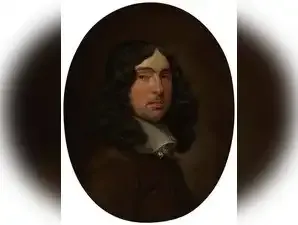
Some quotes survive for centuries because they capture emotions people never stop experiencing. Fear of time, missed opportunities, unfinished love and the pressure of mortality are feelings that continue to haunt every generation. Long before modern films and novels explored these themes, English poet Andrew Marvell expressed them in one unforgettable line that still resonates deeply today.
The quote comes from Marvell’s famous poem To His Coy Mistress, widely considered one of the greatest love poems in English literature. Written in the 17th century, the poem combines romance, urgency and mortality in a way that still feels surprisingly modern. Beneath its poetic beauty lies a simple but powerful truth: time never stops for anyone, so life should not be wasted on hesitation and fear.
What makes the line so memorable is the image itself. Humans cannot stop the sun from moving across the sky. They cannot pause ageing, death or passing moments. But Marvell argues that people can choose how intensely they live while time continues moving forward. If they cannot slow time down, they can at least make every moment count.
Andrew Marvell writes, “Thus, though we cannot make our sun stand still, yet we will make him run.”
The line appears near the end of To His Coy Mistress, a poem in which the speaker urges his beloved not to waste time pretending that life lasts forever. Earlier in the poem, Marvell reflects on youth fading, beauty disappearing and death eventually arriving for everyone. But instead of surrendering to despair, the poem transforms fear into urgency.
The speaker argues that because time moves quickly, people should live passionately and fully rather than cautiously waiting for the “perfect” moment.
That emotional honesty is why the quote still feels relevant centuries later. Many people spend years delaying happiness. They postpone relationships, dreams, forgiveness or difficult conversations because they assume there will always be more time later. Marvell’s words challenge that illusion directly. The future is uncertain, and time never slows down. What matters is how courageously people choose to live while they still can.
What does this quote teach us about time, love and human fear?
The emotional power of Marvell’s line comes from its understanding of something universal: people are terrified of time.
Everyone eventually realises that moments disappear faster than expected. Childhood ends. Relationships change. Opportunities vanish quietly. One day people suddenly notice that years have passed while they were waiting for certainty, confidence or permission to fully live their lives.
Marvell understood this fear deeply. Born in 1621 in Yorkshire, England, he lived during a turbulent political and cultural period marked by civil war, revolution and shifting power. Though known today primarily for his poetry, Marvell was also deeply involved in politics and public life. He worked alongside John Milton, served in Parliament and witnessed enormous political upheaval throughout England.
Yet despite his political career, his poetry endured because it explored deeply personal emotions beneath intellectual language. To His Coy Mistress remains famous not simply because it is romantic, but because it confronts mortality with unusual honesty.
The poem recognises that humans cannot escape time. Instead, Marvell suggests that meaning comes from refusing to live passively.
That is what makes the quote timeless. The line is not really about making the sun “run.” It is about refusing to let fear, hesitation or social expectation waste the little time people actually possess.
Modern life often creates the illusion that there will always be another opportunity. Another message can be sent tomorrow. Another apology can happen later. Another dream can wait until the timing feels safer.
But people frequently discover too late that time moves faster than expected. That is why Marvell’s quote continues appearing online whenever people discuss regret, lost relationships, ambition or personal growth. It captures the uncomfortable reality that life does not pause while humans overthink decisions.
At the same time, the quote is not pessimistic. It is strangely hopeful. Marvell does not suggest surrendering to time. He encourages people to live more intensely because time is limited. Love harder. Speak honestly. Take risks. Experience joy fully before opportunities disappear.
Over the years, Andrew Marvell became recognised as one of the greatest Metaphysical poets alongside writers like John Donne. His work blended philosophy, emotion and sharp imagery in ways that continue influencing literature centuries later.
But perhaps the enduring power of this particular quote lies in its simplicity. Everyone understands what it feels like to wish time would slow down. Everyone understands the fear of wasting precious moments.
Marvell’s words remind readers that although humans cannot stop time itself, they still control how boldly they choose to live within it. And perhaps that is the real meaning behind the line. The sun will continue moving no matter what. The only question is whether people will spend their limited time merely watching it pass, or truly living before the light disappears.
The quote comes from Marvell’s famous poem To His Coy Mistress, widely considered one of the greatest love poems in English literature. Written in the 17th century, the poem combines romance, urgency and mortality in a way that still feels surprisingly modern. Beneath its poetic beauty lies a simple but powerful truth: time never stops for anyone, so life should not be wasted on hesitation and fear.
What makes the line so memorable is the image itself. Humans cannot stop the sun from moving across the sky. They cannot pause ageing, death or passing moments. But Marvell argues that people can choose how intensely they live while time continues moving forward. If they cannot slow time down, they can at least make every moment count.
Iconic quote by Andrew Marvell
Andrew Marvell writes, “Thus, though we cannot make our sun stand still, yet we will make him run.”
The line appears near the end of To His Coy Mistress, a poem in which the speaker urges his beloved not to waste time pretending that life lasts forever. Earlier in the poem, Marvell reflects on youth fading, beauty disappearing and death eventually arriving for everyone. But instead of surrendering to despair, the poem transforms fear into urgency.
The speaker argues that because time moves quickly, people should live passionately and fully rather than cautiously waiting for the “perfect” moment.
That emotional honesty is why the quote still feels relevant centuries later. Many people spend years delaying happiness. They postpone relationships, dreams, forgiveness or difficult conversations because they assume there will always be more time later. Marvell’s words challenge that illusion directly. The future is uncertain, and time never slows down. What matters is how courageously people choose to live while they still can.
What does this quote teach us about time, love and human fear?
The emotional power of Marvell’s line comes from its understanding of something universal: people are terrified of time.
Everyone eventually realises that moments disappear faster than expected. Childhood ends. Relationships change. Opportunities vanish quietly. One day people suddenly notice that years have passed while they were waiting for certainty, confidence or permission to fully live their lives.
Marvell understood this fear deeply. Born in 1621 in Yorkshire, England, he lived during a turbulent political and cultural period marked by civil war, revolution and shifting power. Though known today primarily for his poetry, Marvell was also deeply involved in politics and public life. He worked alongside John Milton, served in Parliament and witnessed enormous political upheaval throughout England.
Yet despite his political career, his poetry endured because it explored deeply personal emotions beneath intellectual language. To His Coy Mistress remains famous not simply because it is romantic, but because it confronts mortality with unusual honesty.
The poem recognises that humans cannot escape time. Instead, Marvell suggests that meaning comes from refusing to live passively.
That is what makes the quote timeless. The line is not really about making the sun “run.” It is about refusing to let fear, hesitation or social expectation waste the little time people actually possess.
Why Andrew Marvell’s words still resonate today
Modern life often creates the illusion that there will always be another opportunity. Another message can be sent tomorrow. Another apology can happen later. Another dream can wait until the timing feels safer.
But people frequently discover too late that time moves faster than expected. That is why Marvell’s quote continues appearing online whenever people discuss regret, lost relationships, ambition or personal growth. It captures the uncomfortable reality that life does not pause while humans overthink decisions.
At the same time, the quote is not pessimistic. It is strangely hopeful. Marvell does not suggest surrendering to time. He encourages people to live more intensely because time is limited. Love harder. Speak honestly. Take risks. Experience joy fully before opportunities disappear.
Over the years, Andrew Marvell became recognised as one of the greatest Metaphysical poets alongside writers like John Donne. His work blended philosophy, emotion and sharp imagery in ways that continue influencing literature centuries later.
But perhaps the enduring power of this particular quote lies in its simplicity. Everyone understands what it feels like to wish time would slow down. Everyone understands the fear of wasting precious moments.
Marvell’s words remind readers that although humans cannot stop time itself, they still control how boldly they choose to live within it. And perhaps that is the real meaning behind the line. The sun will continue moving no matter what. The only question is whether people will spend their limited time merely watching it pass, or truly living before the light disappears.