“From tonight, we must begin to plan and build a new team. I don’t think we need to change too many players. We have about 10, 11, or 12 who are good enough to stay. Good enough as footballers, and more importantly, as people. Then, we have to bring in top-level players to complete the squad.”
Roberto De Zerbi wasted no time after Spurs secured their Premier League safety on the final day. He used the moment to remind the club’s hierarchy of the commitments made when he was appointed during a desperate fight against relegation — a disaster that once seemed inevitable for a team spiralling into chaos.
Tottenham ended the season with renewed momentum, collecting 11 points from their final six matches — an almost unthinkable turnaround from their earlier form. Many clubs have used such late-season surges as a springboard to success in the following campaign, and Spurs will hope to do the same.
But that will only happen if De Zerbi gets what he demands — and what he demands is something Tottenham rarely, if ever, deliver.
The phrase “Never again” is being repeated after Spurs narrowly avoided what could have been the most embarrassing relegation in Premier League history. Yet the same warnings were issued — and ignored — last summer. That negligence even cost a trophy-winning manager his job, because finishing 17th was simply unacceptable.
If Tottenham are to avoid another season of misery, sweeping change is essential.
The problem is that meaningful transformation seems nearly impossible under the current ownership, which has presided over steady decline.
Once a profitable club, Spurs are now haemorrhaging money and accumulating debt. Vinai Venkatesham was brought in to lead reform following Daniel Levy’s exit, along with his long-time allies. But those who replaced them have yet to inspire confidence in their ability to turn things around.
Vinai’s Arsenal past doesn’t help, especially when poor decisions make it easy for fans to joke that he’s acting like an Arsenal sleeper agent rather than a Spurs executive.
Many supporters still can’t believe how long it took to part ways with Thomas Frank, or that Igor Tudor was chosen to replace him. Convincing De Zerbi to take over was a stroke of luck for a club that looked to be in free fall.
Whether the club can deliver on the promises made to him remains to be seen — but deliver they must.
Fans have made their stance clear: they want Vinai and ENIC out. While understandable given the mismanagement, such changes are long-term goals. Selling the club is neither simple nor imminent, and there’s no sign it’s on the agenda. For now, ENIC and the Lewis family remain in control, and Vinai stays in place.
He probably shouldn’t be, but he is. Tottenham can still have some positives this summer, though expecting everything to change at once would be unrealistic.
However, change can and must happen at the operational level — where football decisions meet boardroom leadership. There is no justification for Johan Lange to remain as sporting director.
Lange joined Spurs when they were top of the Premier League in October 2023, and has been present throughout their collapse into mediocrity. Few of his transfer dealings have proven successful, and his legacy may be defined by his infamous remark after a quiet January window that he was “proud” the club hadn’t panicked — a statement that aged poorly.
Sometimes panic is the right reaction, and Spurs did eventually panic — when they turned to De Zerbi two months later. The fact that Lange didn’t recognise the crisis sooner shows how disconnected he was from the reality every fan already understood.
He has to go.
Lange briefly worked with Fabio Paratici before the latter returned to Italy, and rumours suggest Spurs will soon appoint another sporting director. Former Borussia Dortmund executive Sebastian Kehl, who left the club in March after four years, is now the leading candidate. His Dortmund experience aligns well with what Spurs aspire to be — a young, dynamic, and well-run side.
If Tottenham believe Kehl is the man to steer them back on course, they should back him fully and remove Lange rather than forcing an awkward partnership.
Meanwhile, a complete overhaul of Spurs’ medical department is already in motion. Non-executive chairman Peter Charrington mentioned it in his open letter to supporters after the season ended, acknowledging the need for accountability following an unprecedented injury crisis.
After three seasons of persistent injuries, it’s clear this isn’t just bad luck. Questions have also been raised about the stadium’s hybrid pitch design — a grass surface installed atop retractable trays covering the synthetic NFL field — which may be contributing to the problem.
Regardless, Spurs’ injury record dwarfs every other Premier League club’s, and their handling of those injuries has been poor. Dejan Kulusevski has missed over a year since what was called a minor “knock” against Crystal Palace in May 2025. James Maddison’s partial ACL tear became a full rupture after he was advised against surgery. Mohammed Kudus and Dominic Solanke also saw their seasons wrecked by mismanaged recoveries.
Tottenham are, at best, worsening their own bad luck — and possibly something far worse.
While fixing off-field issues can feel abstract, the real challenge lies on the pitch. Spurs must build a deeper, higher-quality squad for next season — and that means a busy summer ahead.
Outgoings are just as important as signings. Spurs showed encouraging signs by accepting a fair fee for Brennan Johnson’s January sale to Crystal Palace, a move that proved sensible. However, failing to replace him — especially after Kudus was injured immediately after — was a serious blunder.
Several departures are inevitable. Cristian Romero looks set to leave after a season marred by indiscipline and inconsistency. His red card against Manchester United highlighted his poor judgment, and his unauthorised return to Argentina before the final match caused further unrest. A move to Atletico Madrid would suit all parties.
Richarlison, despite scoring 11 vital league goals, may also move on. De Zerbi appears unconvinced by Solanke, who has struggled with injuries. Randal Kolo Muani’s loan will not be made permanent.
De Zerbi insists Guglielmo Vicario remains his number one goalkeeper, but the Italian looks likely to return home this summer. Antonin Kinsky’s resurgence late in the season has been one of the few bright spots.
De Zerbi’s view that only 10–12 current players are good enough for Tottenham is both harsh and accurate. Those likely to stay include Kinsky, Pedro Porro, Micky van de Ven, Kevin Danso, Rodrigo Bentancur, Conor Gallagher, Mathys Tel, Archie Gray, Lucas Bergvall, and James Maddison, along with a few recovering players.
Destiny Udogie and Radu Dragusin remain uncertain, though De Zerbi has praised Dragusin’s attitude in recent weeks. Joao Palhinha, currently on loan, could become a permanent signing if he agrees — his tackling, leadership, and clutch goals have been crucial to Tottenham’s survival.
Micky van de Ven’s retention is vital. Though he endured a difficult campaign, his form under De Zerbi’s guidance was outstanding during the run-in. He deserves a new contract and perhaps the captaincy — a far more logical choice than Romero last year.
Returning loan players Luka Vuskovic and Mikey Moore have impressed at Hamburg and Rangers respectively. Both should be given pre-season opportunities to prove themselves, especially with squad gaps to fill.
The success of Tottenham’s summer depends largely on recruitment. While De Zerbi’s tactical improvements have shored up the defence, the attack remains lifeless. The returns of Maddison, Kulusevski, and Kudus could feel like new signings, restoring creativity and drive.
Still, major signings are required. De Zerbi has outlined his “dream” of bringing in “first-level” players before pre-season. The World Cup complicates early deals, but Tottenham must act swiftly where possible.
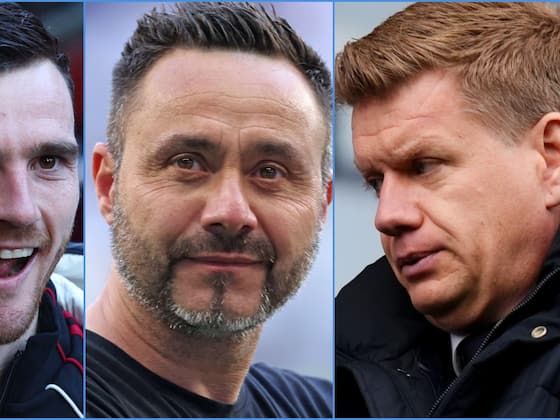
Personality fit is also crucial. Gallagher’s influence proves that character matters, which explains Tottenham’s interest in free agent Andy Robertson. His experience would be invaluable, even if he doesn’t start every week. Marcos Senesi is another target, though competition from Liverpool and Barcelona could complicate matters.
Tottenham also need a new goalkeeper — either to replace Vicario or compete with Kinsky. James Trafford remains an option but would likely demand assurances over playing time following his Manchester City experience.
The biggest challenge lies in attack. Tottenham need at least one, and probably two, new strikers unless young Will Lankshear is deemed ready after his strong season with Oxford. That seems unlikely, making forward recruitment the top priority.
With no European football next season, Spurs will play around 40 matches instead of 52, allowing a smaller squad. But they still need reinforcements — and quickly — along with improved luck and better injury management.
-
Aamir Khan brings Farhan Akhtar onboard as Pakistani cricketer?
-
Ranveer Singh visits temple after Kantara tow, Don 3 storm
-
Is The Heart-Shaped iPhone 18 Real? Here Is What Leaks Actually Say

-
Amit Shah Announces High-Level Committee On ‘Demographic Change’ And Illegal Immigration
-
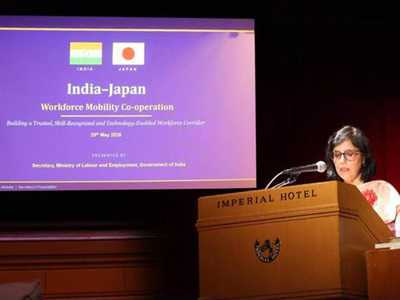
India, Japan discuss expanding skilled workforce cooperation at Tokyo Seminar