
Listen to this article in summarized format
Loading...
××
Subscribe to

Unlock AI Briefing and Premium Content
New Year Offer 24 Hours Left
Subscribe NowAlready a member? Sign In
What's Included
- Exclusive Stories
- Daily ePaper Access
- Smart Market Tools
- Curated Investment Ideas
- Ad-lite Experience
Subscription

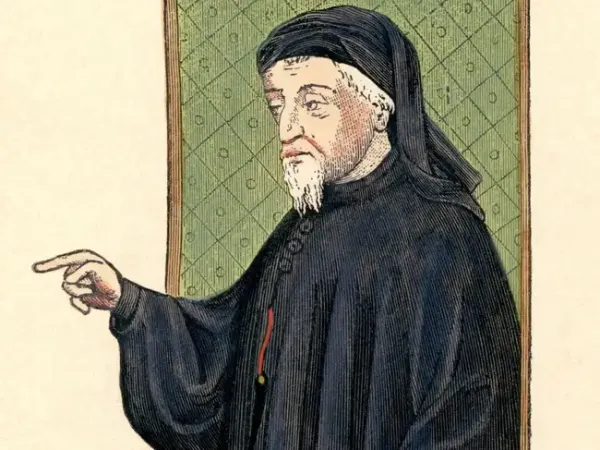
Relationships thrive not through control, but through mutual respect, trust, and understanding. This timeless idea is captured by none other than Geoffrey Chaucer in one of his most thought-provoking quotes. Chaucer, widely regarded as one of the greatest figures in English literature, explored the complexities of human emotions, love, and companionship with remarkable insight. His words continue to resonate in modern discussions on healthy relationships, emotional intelligence, and personal growth. Today’s quote of the day by the medieval poet reminds readers that genuine love cannot be forced or dominated. Instead, lasting bonds are built when partners value each other’s freedom.
Today’s quote of the day by Geoffrey Chaucer is this, ‘Love will not be constrained by mastery. Love is a thing as free as any spirit. Those bound by love must obey each other if they are to keep company long’. This powerful line is mentioned in Chaucer’s The Franklin's Tale, featured in his 14th-century masterpiece, The Canterbury Tales.
Quote of the day by Geoffrey Chaucer: Love fades with control
Geoffrey Chaucer’s quote of the day highlights a simple yet enduring truth about human relationships. Genuine affection cannot flourish in an environment dominated by control, possessiveness, or constant supervision. Every individual carries personal dreams, opinions, and emotional needs that deserve recognition. When one partner attempts to dictate the choices, behaviour, or identity of the other, resentment often replaces closeness. Healthy relationships are built on trust rather than authority. In today's world, where conversations around emotional well-being and personal boundaries are increasingly important, this message feels especially relevant. True connection grows when people feel respected, valued, and free to be themselves.
Geoffrey Chaucer quote of the day: Mutual respect in lasting relationships
Quote of the day by Geoffrey Chaucer also focuses on the importance of reciprocity in sustaining long-term companionship. Successful relationships are not maintained through one-sided sacrifice or unquestioned obedience. Instead, they rely on a willingness to listen, compromise, and consider each other’s needs. Mutual respect creates a foundation where disagreements can be resolved without damaging the bond. This principle applies not only to romantic partnerships but also to friendships, family ties, and professional relationships. In an age marked by busy schedules and digital communication, Chaucer’s insight serves as a reminder that enduring connections require cooperation, empathy, and a shared commitment to understanding one another.
All about The Canterbury Tales
Geoffrey Chaucer’s The Canterbury Tales remains a cornerstone of English literature that continues to be studied for its rich storytelling and timeless social commentary. Set against the backdrop of a religious journey to Canterbury, the collection follows a diverse group of travellers who pass the time by sharing stories, offering readers a fascinating glimpse into medieval society, culture, and human behaviour.
What makes The Canterbury Tales enduringly relevant is Chaucer’s keen insight into relationships, morality, ambition, and social dynamics. Through a colourful cast that includes knights, merchants, clergy members, scholars, craftsmen, and noblewomen, he explores universal human strengths and flaws with wit, satire, and emotional depth.
The Franklin's Tale centres on Arveragus and Dorigen, a couple whose marriage is founded on mutual respect and shared understanding. Rather than allowing authority to define their relationship, they choose a partnership built on trust, loyalty, and consideration for one another, a message that remains highly relevant in modern discussions about healthy relationships, equality, and emotional intelligence.
More about Geoffrey Chaucer
Geoffrey Chaucer, born in London around 1342 or 1343, emerged from a prosperous merchant family whose livelihood was closely tied to the city’s thriving wine trade. His father, John Chaucer, held a respected position connected to the royal household, giving the family access to influential social circles. Historical records indicate that Chaucer entered public service at a young age, joining the household of Elizabeth, Countess of Ulster, an experience that offered him firsthand exposure to noble society, courtly customs, and the political landscape of medieval England.
Beyond his literary achievements, Geoffrey Chaucer also built a distinguished career in diplomacy and government administration. His royal assignments took him across several European regions, including France, Flanders, and Italy, where he encountered the works of celebrated literary figures such as Dante Alighieri, Francesco Petrarch, and Giovanni Boccaccio. These cultural exchanges played a significant role in shaping his storytelling style, poetic voice, and contribution to English literature.
Today, Geoffrey Chaucer is widely recognised as one of the most influential medieval writers and a pioneering force in the development of the English language. Long before William Shakespeare transformed the literary landscape, Chaucer was crafting narratives that explored timeless themes such as love, ambition, morality, power, greed, faith, and human behaviour. His ability to blend sharp social observation with empathy for human flaws helped establish a new standard for literary realism and character development.
In addition to the renowned The Canterbury Tales, Geoffrey Chaucer’s work includes Troilus and Criseyde, The Book of the Duchess, The Parlement of Foules, and Legend of Good Women. Through these celebrated literary works, Chaucer examined romance, loyalty, destiny, ethics, and the complexities of the human condition, themes that continue to attract readers, scholars, and literature enthusiasts around the world.
Today’s quote of the day by Geoffrey Chaucer is this, ‘Love will not be constrained by mastery. Love is a thing as free as any spirit. Those bound by love must obey each other if they are to keep company long’. This powerful line is mentioned in Chaucer’s The Franklin's Tale, featured in his 14th-century masterpiece, The Canterbury Tales.
Quote of the day by Geoffrey Chaucer: Love fades with control
Geoffrey Chaucer’s quote of the day highlights a simple yet enduring truth about human relationships. Genuine affection cannot flourish in an environment dominated by control, possessiveness, or constant supervision. Every individual carries personal dreams, opinions, and emotional needs that deserve recognition. When one partner attempts to dictate the choices, behaviour, or identity of the other, resentment often replaces closeness. Healthy relationships are built on trust rather than authority. In today's world, where conversations around emotional well-being and personal boundaries are increasingly important, this message feels especially relevant. True connection grows when people feel respected, valued, and free to be themselves.
Geoffrey Chaucer quote of the day: Mutual respect in lasting relationships
Quote of the day by Geoffrey Chaucer also focuses on the importance of reciprocity in sustaining long-term companionship. Successful relationships are not maintained through one-sided sacrifice or unquestioned obedience. Instead, they rely on a willingness to listen, compromise, and consider each other’s needs. Mutual respect creates a foundation where disagreements can be resolved without damaging the bond. This principle applies not only to romantic partnerships but also to friendships, family ties, and professional relationships. In an age marked by busy schedules and digital communication, Chaucer’s insight serves as a reminder that enduring connections require cooperation, empathy, and a shared commitment to understanding one another.
All about The Canterbury Tales
Geoffrey Chaucer’s The Canterbury Tales remains a cornerstone of English literature that continues to be studied for its rich storytelling and timeless social commentary. Set against the backdrop of a religious journey to Canterbury, the collection follows a diverse group of travellers who pass the time by sharing stories, offering readers a fascinating glimpse into medieval society, culture, and human behaviour.
What makes The Canterbury Tales enduringly relevant is Chaucer’s keen insight into relationships, morality, ambition, and social dynamics. Through a colourful cast that includes knights, merchants, clergy members, scholars, craftsmen, and noblewomen, he explores universal human strengths and flaws with wit, satire, and emotional depth.
The Franklin's Tale centres on Arveragus and Dorigen, a couple whose marriage is founded on mutual respect and shared understanding. Rather than allowing authority to define their relationship, they choose a partnership built on trust, loyalty, and consideration for one another, a message that remains highly relevant in modern discussions about healthy relationships, equality, and emotional intelligence.
More about Geoffrey Chaucer
Geoffrey Chaucer, born in London around 1342 or 1343, emerged from a prosperous merchant family whose livelihood was closely tied to the city’s thriving wine trade. His father, John Chaucer, held a respected position connected to the royal household, giving the family access to influential social circles. Historical records indicate that Chaucer entered public service at a young age, joining the household of Elizabeth, Countess of Ulster, an experience that offered him firsthand exposure to noble society, courtly customs, and the political landscape of medieval England.
Beyond his literary achievements, Geoffrey Chaucer also built a distinguished career in diplomacy and government administration. His royal assignments took him across several European regions, including France, Flanders, and Italy, where he encountered the works of celebrated literary figures such as Dante Alighieri, Francesco Petrarch, and Giovanni Boccaccio. These cultural exchanges played a significant role in shaping his storytelling style, poetic voice, and contribution to English literature.
Today, Geoffrey Chaucer is widely recognised as one of the most influential medieval writers and a pioneering force in the development of the English language. Long before William Shakespeare transformed the literary landscape, Chaucer was crafting narratives that explored timeless themes such as love, ambition, morality, power, greed, faith, and human behaviour. His ability to blend sharp social observation with empathy for human flaws helped establish a new standard for literary realism and character development.
In addition to the renowned The Canterbury Tales, Geoffrey Chaucer’s work includes Troilus and Criseyde, The Book of the Duchess, The Parlement of Foules, and Legend of Good Women. Through these celebrated literary works, Chaucer examined romance, loyalty, destiny, ethics, and the complexities of the human condition, themes that continue to attract readers, scholars, and literature enthusiasts around the world.