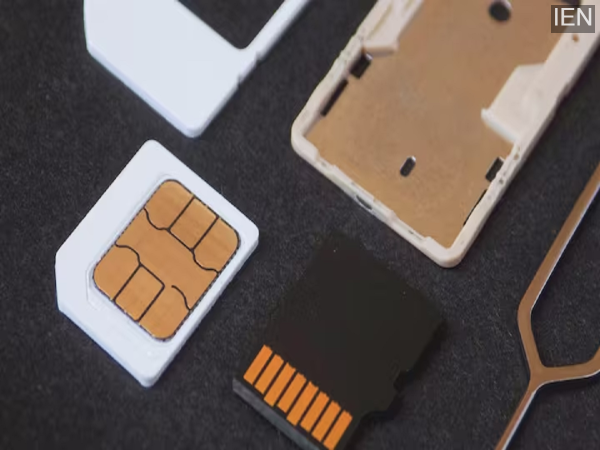
e-SIM: Internet speed is not directly linked to the type of SIM card used. Whether a phone houses a physical SIM or an e-SIM, network speed primarily depends on the phone's hardware and the quality of the network itself.
Nowadays, most premium smartphones entering the market are being launched with e-SIM support. Consequently, many people have begun to believe that using an e-SIM results in faster internet speeds and superior 5G performance. However, the reality is slightly different. If you are considering purchasing an e-SIM-enabled phone solely in the hope of achieving faster internet speeds, it is essential to first understand the truth behind this assumption.
In reality, internet speed bears no direct correlation to the type of SIM card being used. Regardless of whether a phone utilizes a physical SIM or an e-SIM, network speed is predominantly determined by the device's hardware and the quality of the available network. The superior 5G speeds observed in newer smartphones are attributable to their advanced modems, improved antennas, and cutting-edge chipset technology. This is precisely why newer devices offer a more stable and faster internet experience compared to older models.
Over the past few years, both 5G network technology and e-SIM technology have rapidly gained popularity. This convergence has led to the widespread misconception that phones equipped with e-SIMs inherently deliver faster internet speeds. However, the truth is that the simultaneous emergence of these two technologies is merely a coincidence.
Mobile operators, too, are continuously upgrading their networks. As 5G coverage expands, a corresponding improvement in internet speeds has been observed. Nevertheless, internet speeds may occasionally drop due to factors such as poor network coverage, weak signal strength, or network congestion caused by a high density of users in a specific area. In such instances, the culprit behind slow internet is not the e-SIM itself, but rather the prevailing network conditions.
Smartphone manufacturers are also consistently integrating superior 5G modems and powerful processors into their flagship devices. The advanced chips utilized in high-end phones are capable of capturing signals more effectively and providing a more stable internet connection. Concurrently, these companies have also begun incorporating e-SIM support as a new feature within their devices. The biggest advantage of an e-SIM is that it saves internal space within the phone. Since it eliminates the need for a physical SIM slot, manufacturers can utilize that extra space to accommodate larger batteries or create slimmer designs. This is precisely why many new smartphones are becoming lighter and more slender than ever before.
Furthermore, the elimination of the physical SIM slot makes it easier to engineer phones to be resistant to water and dust. This is the reason why e-SIM technology is being rapidly adopted in both compact smart devices and premium smartphones. Today, many phones offer dual-SIM support, typically comprising one physical SIM and one e-SIM.
Now, some companies are transitioning entirely toward e-SIM technology. Apple, for instance, began introducing e-SIM-only models—starting with the iPhone 14 series—in the United States. Meanwhile, newer iPhone models in various other markets come equipped with dual e-SIM support. Google's Pixel series is also increasingly featuring e-SIM-only variants, whereas Samsung continues to offer support for both physical SIM cards and e-SIMs.
-
As soon as Nautapa starts, the heat increases, do not eat brinjal even by mistake in these 9 days

-
Vietnamese residents in US’s Orange County anxious over risk of chemical tank explosion

-
My first love story that didn’t go as I expected

-
Why should we eat Gulkand in summer? A treasure of health along with taste…

-
4 Zodiac Signs Receive A Powerful Sign From The Universe On May 26, 2026