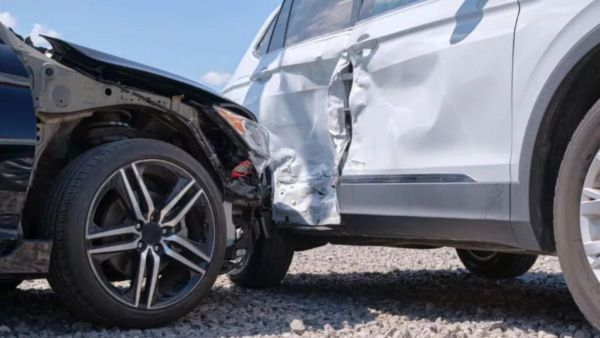
- The most common type of accident is when one vehicle hits another vehicle directly from behind (rear-end collision).
- Approximately 30 percent of all accidents are of this type.
- In general, the rear driver is held responsible for not maintaining a safe distance
Rear End Car Accident Traffic Rules : Thousands of vehicles ply on the roads every day. Due to increasing traffic, rush and traffic jams, minor accidents are now common. In particular, rear-end collisions with a vehicle are the most common. Often times the driver behind is assumed to be entirely at fault. However, this may not be true every time depending on the traffic rules and conditions. Therefore, in such accidents, it becomes important to know who is at fault, who is responsible for compensation and what the legal rules say.
Most common road accident
According to traffic experts, “rear-end collision” is the most common road accident. An accident occurs when a vehicle collides directly with another vehicle from behind. According to global statistics, about 30 percent of all road accidents are rear-end collisions.
iPhone 15 VS Samsung Galaxy S24: Android or iPhone? Which is the real money charging smartphone? Read the comparison to make the right decision
Who is more at fault in a rear-end collision?
Most traffic laws require the rear driver to maintain a safe distance from the vehicle in front. Therefore, in case of a rear-end collision, the primary responsibility falls on the rear driver. Because it is considered his responsibility to keep the vehicle under control in case of sudden braking.
However, in some situations, the driver in front may also be at fault. E.g. Accidents occur due to many reasons such as braking suddenly without any warning, changing lanes incorrectly, brake lights of the vehicle being off at night, stopping the vehicle in violation of traffic rules. In such a situation the responsibility of both the drivers can be determined.
If a car is rear-ended on a busy road or in a traffic jam, people often assume that the driver behind is always at fault, but in reality this is not always true. A rear-end collision is usually held responsible, as traffic laws require every driver to maintain a safe distance and drive carefully.
Sometimes situations like sudden braking by the vehicle in front, malfunctioning brake lights, changing lanes without signaling or stopping suddenly on the road can also lead to an accident. Also, if the rear-end driver was speeding, too close, or not paying attention, he or she may also be at fault. Hence, the entire case is investigated on the basis of police report, witnesses and road conditions.
Solo Travel Tips: Want to stay safe while traveling alone? These are the must-have smart safety gadgets in your travel bag
Who will pay the damages?
Who pays the damages in case of a rear-end collision depends entirely on who was more responsible. If the driver behind you is negligent, such as driving too close, speeding, or not paying attention, the driver who ignores safety measures usually has to pay a fine.
If the driver in front brakes suddenly, there is a malfunction in the brake light or the car stalls and causes an accident, the driver in front can also be held responsible and liable to pay a fine. Sometimes, both drivers are found equally guilty. Hence, police reports, witnesses, photographs and road conditions are examined to determine this.
What are the traffic rules?
1. Always maintain a safe distance from the vehicle in front to avoid collision in case of sudden braking.
2. Drive at a speed appropriate to the road and terrain.
3. Stay in your lane and do not change lanes without signaling.
4. Obey traffic lights and keep your brake lights and indicators on properly.
5. It is imperative to wear seat belts and use helmets.
6. Using a mobile phone or being distracted while driving is extremely dangerous.
7. Don’t drink and drive and always have a valid auto insurance policy.
-
How to Transfer a Sukanya Samriddhi Account to Another Bank: Step-by-Step Guide

-
Annapurna Scheme: ₹3,000 Assistance to Be Credited from June 3; Check Eligibility and Application Process
-
7th Pay Commission: Will Central Government Employees Get a 3% DA Hike in July 2026? Here's What Inflation Data Suggests

-
Despite UPI Boom, These 5 Indian States Still Rely Heavily on Cash Withdrawals

-
ITR Is More Than Just Tax Filing: 5 Powerful Benefits Many Taxpayers Often Overlook