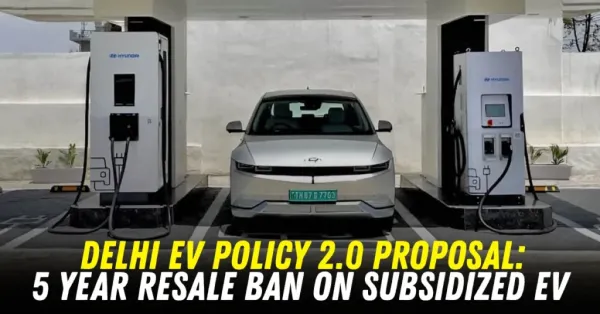
The Delhi government’s upcoming EV Policy 2.0 could bring one of the most significant changes to electric vehicle ownership rules in India. Under the proposed policy, EV buyers who receive government subsidies may not be allowed to sell their vehicles for five years after purchase. The move is aimed at ensuring that subsidies actually support long-term EV adoption rather than becoming a tool for short-term gains.
The proposal is part of a broader push under Delhi’s revised EV policy framework, which is expected to bring tighter rules, stronger adoption targets and more aggressive electrification mandates.
The draft policy also includes subsidies and tax benefits for EVs, incentives linked to scrappage and measures intended to accelerate Delhi’s transition to cleaner mobility.
At first glance, the five-year resale restriction may sound extreme. But the Delhi government appears to be targeting a specific issue: subsidy misuse.
Government subsidies are meant to reduce the upfront ownership cost of EVs and encourage people to permanently switch away from conventional vehicles.
Policymakers fear that without such restrictions, buyers could purchase subsidised EVs, claim incentives and then quickly sell them in the used-car market, effectively turning public money into an arbitrage opportunity. The proposal is therefore designed to ensure that subsidised vehicles remain with the original owner for a meaningful period.
The logic behind the move is relatively straightforward. The government spends taxpayer money to push EV adoption, improve air quality and reduce emissions. If owners sell subsidised vehicles within a short period, the subsidy’s intended benefit becomes diluted.
The rule could also reduce speculative buying. With several state incentives and road tax waivers available, there is a possibility that some buyers may see EVs as an opportunity to profit rather than as a long-term ownership decision. The proposed restriction attempts to prevent that.
There are potential benefits. First, it could reduce misuse of subsidies and ensure government funds go toward genuine buyers. Second, it may improve long-term EV retention and ensure vehicles remain in service long enough to deliver environmental benefits. Third, it may discourage opportunistic purchases driven solely by incentives.
However, the policy also carries obvious drawbacks. Vehicle ownership circumstances can change dramatically over five years. Buyers may relocate, face financial issues or simply want to upgrade. Restricting resale removes ownership flexibility.
It could also make some customers think twice before buying an EV in the first place. Ironically, a policy intended to accelerate adoption could end up creating hesitation among buyers worried about being locked into ownership.
Another concern is the used-EV market. India’s second-hand EV ecosystem is still developing. Restrictions on resale could slow growth of that market and reduce affordability for buyers looking to enter EV ownership through used vehicles.
The five-year resale proposal is only one part of Delhi’s ambitious EV push. The draft policy also proposes that only electric three-wheelers receive new registrations from 2027 onward, while new two-wheeler registrations could become EV-only from 2028.
These proposals have triggered strong reactions from sections of the automotive industry. Manufacturers and industry stakeholders argue that forcing a rapid transition away from petrol, diesel and CNG vehicles could disrupt the market. Concerns range from charging infrastructure readiness and affordability to consumer choice and supply chain challenges.
Many in the industry believe that pushing EV adoption through incentives is one thing; outright restrictions on internal combustion engine vehicles are another matter entirely.
Delhi’s EV policy appears to signal a broader shift: from merely encouraging electric mobility to actively steering the market toward it. Whether buyers and automakers accept that direction comfortably is another question altogether.
-
RCB's Rajat Patidar Credits Team Environment And Calm Mindset After Historic Second Consecutive IPL Title Win
-
Filmmaker Sanjay Gupta Takes A Dig At Chunnari Chunnari, Ucha Lamba Kad Remakes: 'What Will They Remix In 2046?'

-
Manchester United Speed Up £38m Transfer Talks for Mateus Fernandes Amid Interest from Arsenal, Chelsea, PSG and Inter
-
Iran Officially Announces 2026 World Cup Squad – ‘Persian Messi’ Left Out, Ragnar Oratmangoen’s Teammate Included
-
European Coach of the Year 2025–26: Luis Enrique, Mikel Arteta and the Top 20 Managers Ranked