
Listen to this article in summarized format
Loading...
××
Subscribe to

Unlock AI Briefing and Premium Content
New Year Offer 24 Hours Left
Subscribe NowAlready a member? Sign In
What's Included
- Exclusive Stories
- Daily ePaper Access
- Smart Market Tools
- Curated Investment Ideas
- Ad-lite Experience
Subscription

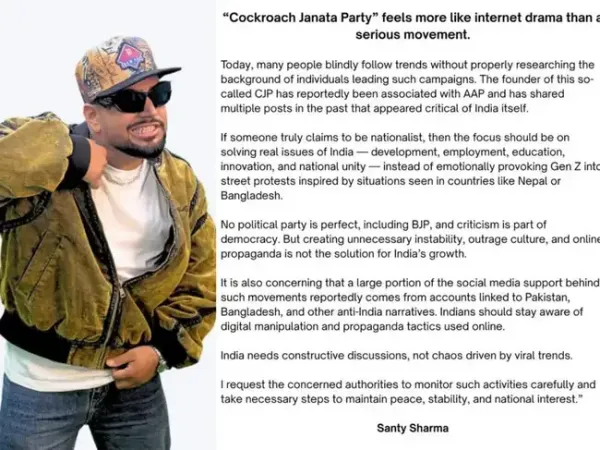
Santy Sharma, Indian independent rapper and internet personality, has stirred fresh controversy after sharing his views on the viral “Cockroach Janta Party” (CJP) trend. In a strongly worded Instagram post, the rapper described the movement as “internet drama” and warned users against blindly following viral campaigns without checking facts or understanding the background of people leading them. His comments quickly spread across Instagram, X and YouTube, where users reacted sharply to his statements on nationalism, online activism and digital propaganda.
Also read: Who is Shamir Chandran? Indian-origin cancer specialist doctor banned in UK says, ‘I will never work in that country again’
He has built an online following through his music, public opinions and discussions around influencer culture and viral controversies. Earlier, he had also attracted attention for supporting rapper Badshah during the controversy linked to the song “Tateeree.”
“Today, many people blindly follow trends without properly researching the background of individuals leading such campaigns. The founder of this so-called CJP has reportedly been associated with AAP and has shared multiple posts in the past that appeared critical of India itself.”
The rapper argued that national conversations should focus more on development and employment rather than emotionally charged internet movements.
“If someone truly claims to be nationalist, then the focus should be on solving real issues of India, development, employment, education, innovation, and national unity, instead of emotionally provoking Gen Z into street protests inspired by situations seen in countries like Nepal or Bangladesh.”
“ No political party is perfect, including BJP, and criticism is part of democracy. But creating unnecessary instability, outrage culture, and online propaganda is not the solution for India’s growth.”
The rapper said social media algorithms, meme culture and viral outrage are increasingly shaping political discussions among young people. According to him, emotionally driven campaigns without constructive direction can contribute to division and instability online.
“It is also concerning that a large portion of the social media support behind such movements reportedly comes from accounts linked to Pakistan, Bangladesh, and other anti-India narratives. Indians should stay aware of digital manipulation and propaganda tactics used online.”
Also Read: Who is Gurtej Sandhu, the IIT Delhi engineer who beat Thomas Edison in US patent count, sparks brain drain debate online
He concluded his note by saying, “India needs constructive discussions, not chaos driven by viral trends.
I request the concerned authorities to monitor such activities carefully and take necessary steps to maintain peace, stability, and national interest.”
Supporters say the trend reflects frustration among young Indians, while critics argue that it promotes outrage culture and online polarization.
Santy Sharma’s remarks have now added another angle to the debate, with some users supporting his concerns over digital propaganda while others defended internet-led activism as a reflection of genuine public sentiment.
Who is Santy Sharma?
Santy Sharma is an Indian rapper, singer and digital creator known for independent music releases and commentary on trending social and internet issues.Also read: Who is Shamir Chandran? Indian-origin cancer specialist doctor banned in UK says, ‘I will never work in that country again’
He has built an online following through his music, public opinions and discussions around influencer culture and viral controversies. Earlier, he had also attracted attention for supporting rapper Badshah during the controversy linked to the song “Tateeree.”
What did Santy Sharma say about ‘Cockroach Janta Party’?
In his Instagram statement, Santy Sharma wrote, “ Cockroach Janta Party” feels more like internet drama than a serious movement.” He also questioned the intentions behind the campaign and the way many young users engage with viral online trends.“Today, many people blindly follow trends without properly researching the background of individuals leading such campaigns. The founder of this so-called CJP has reportedly been associated with AAP and has shared multiple posts in the past that appeared critical of India itself.”
The rapper argued that national conversations should focus more on development and employment rather than emotionally charged internet movements.
“If someone truly claims to be nationalist, then the focus should be on solving real issues of India, development, employment, education, innovation, and national unity, instead of emotionally provoking Gen Z into street protests inspired by situations seen in countries like Nepal or Bangladesh.”
‘Criticism is part of democracy’
Santy Sharma also clarified that criticism of political parties is necessary in a democracy and said no party is beyond criticism.“ No political party is perfect, including BJP, and criticism is part of democracy. But creating unnecessary instability, outrage culture, and online propaganda is not the solution for India’s growth.”
The rapper said social media algorithms, meme culture and viral outrage are increasingly shaping political discussions among young people. According to him, emotionally driven campaigns without constructive direction can contribute to division and instability online.
Concerns over social media narratives
In the latter part of his statement, Santy Sharma expressed concern over what he described as foreign-linked online narratives connected to the movement.“It is also concerning that a large portion of the social media support behind such movements reportedly comes from accounts linked to Pakistan, Bangladesh, and other anti-India narratives. Indians should stay aware of digital manipulation and propaganda tactics used online.”
Also Read: Who is Gurtej Sandhu, the IIT Delhi engineer who beat Thomas Edison in US patent count, sparks brain drain debate online
He concluded his note by saying, “India needs constructive discussions, not chaos driven by viral trends.
I request the concerned authorities to monitor such activities carefully and take necessary steps to maintain peace, stability, and national interest.”
What is the ‘Cockroach Janta Party’ trend?
The “Cockroach Janta Party” trend started as satirical internet content before turning into a larger online discussion around unemployment, inflation, education pressure and governance. The movement has gained traction among Gen Z users across meme pages and social media platforms.Supporters say the trend reflects frustration among young Indians, while critics argue that it promotes outrage culture and online polarization.
Santy Sharma’s remarks have now added another angle to the debate, with some users supporting his concerns over digital propaganda while others defended internet-led activism as a reflection of genuine public sentiment.