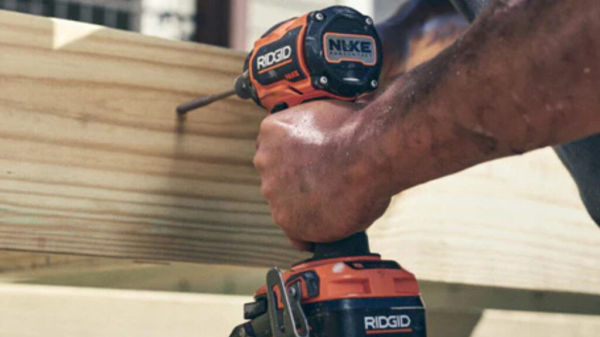
When it comes to power tools, many professionals wouldn’t think of using any other brand besides Makita. Even mechanics choose Makita and some other brands over Milwaukee, as Makita is known for producing premium-grade compact cordless tools with a strong reputation for reliability. Ridgid is now entering that same conversation with its own lineup of 18V brushless subcompact tools known as Nuke. But how does this lineup compare to Makita?
Ridgid’s Nuke 1/4-inch Impact Driver delivers up to 2,000 in-lbs of torque, hitting speeds up to 3,800 RPM and 5,000 IPM. The tool is positioned for higher driving speeds and increased output. In contrast, Makita’s LXT Sub-Compact Impact Driver delivers up to 1,240 in-lbs of torque, with a 2-speed, 0–1,300 / 0–3,000 RPM range and up to 4,100 IPM. This tool focuses more on controlled fastening and improved precision. A similar pattern continues with saws, as Ridgid’s Nuke SubCompact 4-1/2-inch Circular Saw features a lightweight design delivering up to 5,300 RPM with a 1-9/16-inch cutting depth. Meanwhile, Makita’s LXT Sub-Compact 6-1/2-inch Circular Saw prioritizes cutting depth and versatility, reaching up to 5,000 RPM with a larger 2-1/4-inch cutting capacity at 90 degrees.
This trend plays out across Ridgid’s Nuke lineup versus Makita’s Sub-Compact system. Both are in the same 18V cordless class, geared toward professional users with similar expectations for power and runtime. But Nuke focuses on pushing lightweight compact tools with higher output and more specialized features. Makita emphasizes the broader capability and consistency of an already established pro system.
Early stages vs an established system
The key difference between Ridgid’s Nuke lineup and Makita’s Sub-Compact line is that Nuke is a new platform. As of this writing, Ridgid has only a limited lineup of tools, with availability not hitting Home Depot until July of 2026. In contrast, Makita already has over 50 tools and accessories available in its Sub-Compact lineup. This alone shows the maturity divide between the two, with Makita as an established platform and Nuke still in the early rollout phase.
Makita’s robust platform may be the brand’s biggest advantage, thanks in large part to its 18V LXT ecosystem. The brand uses the same 18V battery system, an exclusive Makita technology, across an array of tools. This allows full cross-compatibility for both user convenience and reliability. The Nuke platform will also be compatible with Ridgid’s existing 18V battery system, which might not be compatible with Milwaukee tools without a third-party adapter. But Makita’s ecosystem offers a greater depth and flexibility that come from years of expansion across the platform.
For many users, it all comes down to the cost. Ridgid has outlined its MSRP for the Nuke platform in early-release materials, with individual tools starting at $79 and ranging up to $269 for combo kits. While these prices may sound fairly affordable compared to Makita, it’s still early. Pricing may change upon release, and Home Depot hasn’t yet listed the Nuke platform on its website, so its pricing isn’t confirmed.