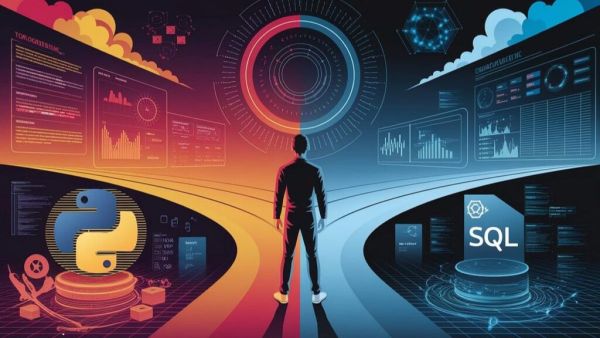
The pairing of Python and data science has been consistent for over a decade, which risks making it feel unremarkable. What is less commonly explained is precisely why this pairing has proved so durable, and why it continues to compound in value rather than being displaced by newer alternatives. Understanding the structural reasons helps make better decisions about where to invest learning time.
Why Python Succeeded Across Domains
Most programming languages optimize for one domain. Python succeeded simultaneously in data science, machine learning, AI engineering, automation, and web back-end development. This breadth reflects its design: readable syntax, a low barrier to first working programs, and a library ecosystem that extends capabilities into virtually any domain. NumPy and Pandas for data manipulation. Scikit-learn for classical ML. TensorFlow and PyTorch for deep learning. Hugging Face for transformer models. FastAPI for web APIs. LangChain for LLM orchestration. Each library represents years of accumulated engineering that practitioners access through a consistent interface.
Python appears as the required skill in 57 percent of data scientist postings and 73 percent of data engineering postings, appearing consistently across ML, NLP, and AI engineering roles. That cross-posting breadth means Python proficiency transfers across role types in a way specialized languages cannot.
The Data Science Workflow in Practice
In professional data science, Python provides the environment for the full analytical pipeline: data loading and inspection with Pandas, cleaning and transformation, exploratory analysis, feature engineering, model training and cross-validated evaluation with scikit-learn, and result visualization and interpretation. Understanding this workflow in depth — not just which functions to call but why each step matters and what mistakes at each step do to downstream analysis — is what separates practitioners producing reliable insights from those producing technically correct but analytically misleading outputs.
A data scientist course teaching data science rigorously within a Python context — covering statistical methodology that underlies the tools alongside Python implementations — builds integrated understanding rather than superficial familiarity. Entry-level data scientists earn $65,000 to $95,000; mid-career $100,000 to $140,000; senior roles $150,000 and above.
Why Dedicated Python Depth Is Worth the Additional Investment
The general data science curriculum covers Python as one element among several. A focused deep dive — advanced Pandas for messy real-world data, performance considerations for large datasets, object-oriented patterns making code maintainable, API development enabling models to be served as production services — builds qualitatively different proficiency.
A data science with python course covering the Python data science stack comprehensively — from core language features through advanced library usage, back-end development with Python frameworks, API design, and AI tool integration — produces professional-grade capability that the general curriculum develops at a shallower level. The two investments address different dimensions: breadth of conceptual landscape versus depth of technical execution. Together they produce a practitioner who both understands what to do and can execute it reliably.
The Road Ahead
The career landscape in 2026 rewards professionals who invest deliberately in both technical expertise and the strategic capabilities that translate that expertise into organizational impact. Whether you are entering this field for the first time, advancing within it, or transitioning from an adjacent role, the most effective approach is to combine structured training that builds recognized credentials with practical project work that demonstrates applied capability.
The skills covered in this guide do not exist in isolation — they compound with experience, with adjacent knowledge, and with the leadership capabilities that determine how far any technical skill can ultimately be leveraged within an organization. Professionals who invest in both the technical foundation and the organizational effectiveness layer consistently advance faster and reach higher career levels than those who develop one dimension in isolation.
Staying current matters as much as building the initial foundation. The fields covered here are evolving quickly, and professionals who treat learning as ongoing rather than front-loaded maintain the competitive advantage that initial training creates. The investment in structured education is not a one-time event — it is the beginning of a professional development practice that compounds across an entire career.
The combination of technical depth and strategic capability creates the professional profile that organizations in every sector are actively competing to hire and retain in 2026. The combination of technical depth and strategic capability creates the professional profile that organizations in every sector are actively competing to hire and retain in 2026. The combination of technical depth and strategic capability creates the professional profile that organizations in every sector are actively competing to hire and retain in 2026. The combination of technical depth and strategic capability creates the professional profile that organizations in every sector are actively competing to hire and retain in 2026. The combination of technical depth and strategic capability creates the professional profile that organizations in every sector are actively competing to hire and retain in 2026. The combination of technical depth and strategic capability creates the professional profile that organizations in every sector are actively competing to hire and retain in 2026. The combination of technical depth and strategic capability creates the professional profile that organizations in every sector are actively competing to hire and retain in 2026. The combination of technical depth and strategic capability creates the professional profile that organizations in every sector are actively competing to hire and retain in 2026. The combination of technical depth and strategic capability creates the professional profile that organizations in every sector are actively competing to hire and retain in 2026.
-
Two national records in 30 minutes, Gurindervir, Vishal shine in Ranchi

-
Mahesh Babu Films Special Song For SS Rajamouli’s ‘Varanasi’, Shoot To Wrap By August

-
Falta Repoll Result: BJP Scripts Record Win, TMC Suffers Crushing Defeat In Stronghold

-
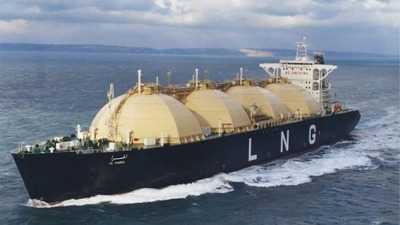
First-in-months: LNG tanker leaves Strait of Hormuz for India
-
UPI transaction limit might suddenly reduce: Here's how to avoid