She was warned she could be shot, kidnapped, or even killed, but she signed liability waivers to join the investigations because “I would rather die for conservation than from cancer.”
Read speaks with Trang, founder of WildAct, about her 16-year journey from being a little girl haunted by the sight of a bear being drained for bile, surviving illness and life-threatening undercover work, to building a conservation organization in Vietnam.
Today, the most valuable things she owns are her father’s old Honda Dream motorbike and a life spent deep in the forest.
|
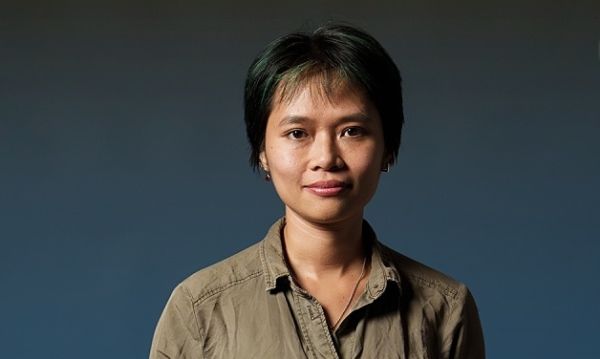
Nguyen Thi Thu Trang, founder of WildAct. Photo by Tien Phung |
Wildlife conservation remains a field few women choose to enter. You also founded WildAct, the first Vietnamese-led conservation organization to sign a formal cooperation agreement with the government. How did all this begin for you?
When I was 8, I came home from school one day and saw my neighbors extracting bile from a bear. Back then there was no modern equipment. They jabbed needles into the animal again and again until they hit the gallbladder. Watching the bear convulse in pain was horrifying for a child. It was the first time I had ever felt that angry. That was when I first thought about protecting animals.
After that, I begged my mother to let me study English because there were almost no books in Vietnamese on wildlife conservation. When I was 13, I learned about a wildlife rescue center from a program on VTV2 (a national TV channel). I called Vietnam’s 1080 directory service to ask whether any similar organizations existed in the country. The only place they could point me to was an animal rescue center in Soc Son (on Hanoi outskirts). I took the bus there alone and asked to volunteer.
That trip changed my thinking. I realized conservation required knowledge, methods, and scientific evidence, not just compassion.
Later, while attending Amsterdam High School in Hanoi, I had the chance to take part in international competitions. I entered one, won, and traveled to Sweden for a clean water project. At first I thought I was impressive too, but after seeing the projects created by students there, I realized my work looked childish. I came back determined to study properly if I wanted to work in conservation.
I called 1080 again to ask where I could study the field. They told me no university in Vietnam offered such a program. So I decided I had to study abroad.
At the time, my parents and teachers all thought I was out of my mind. They said it was a career with no money in it. But I already knew what I wanted, and so I did not listen.
What was the biggest obstacle you faced while pursuing this path?
In the 20 years I have worked in this field, my parents and friends tried many times to stop me. Once my father locked the gate and kept me inside the house so I could not go volunteer. I climbed from the balcony onto the neighbor’s roof to escape. He would say other people’s children traveled abroad and stayed at resorts, while his daughter buried herself in the jungle.
Even a few years ago, while I was already working on my PhD dissertation, my mother urged me to come home so she could help me become a teacher. But I think my parents eventually accepted it because they saw how deeply committed I was. If they had truly wanted to stop me, they would have found a way.
You chose a path that went against your family’s wishes and society’s usual definition of success. Were there moments when you doubted your decision?
At school reunions, I would see friends working at banks, buying houses and expensive things. Of course there were moments when I felt small or jealous. Sometimes I asked myself why I had chosen such a hard life. Even taking a bath meant walking down to the river, carrying water back and waiting for the sediment to settle. On unbearably hot days, if I craved an ice cream, I had to walk 6 or 7 kilometers just to find a ride into town.
But those feelings never lasted long. Whenever they came up, I thought about the animals I had encountered and remembered why I was doing this.
I will never forget one moment during research in South Africa. My boyfriend and I spent an hour watching a lion family hunt at dawn. When we finally decided to leave, we turned around and realized an elephant family had been walking right beside us the whole time without us noticing.
The sun was just rising and the whole landscape glowed orange. The elephants passed quietly without harming us. My heart was pounding. During that moment, I understood exactly what I was fighting for.
There were also times when the work haunted me so badly I wanted to quit. During research in Africa, I had to enter markets selling wildlife products. Animal body parts hung everywhere. The smell of decay was overwhelming. Even after showering, I still felt as though dead animals were beside me. I could barely eat.
Once, someone tried to sell me a tiny piece of ivory from a baby elephant whose tusk had barely emerged. My hands shook uncontrollably. I knew that to obtain that tiny piece of ivory, they must have slaughtered an entire herd. At moments like that, I told myself that if everyone walked away because the pain was too much, there would be no elephants left walking into the sunrise. So I refused to quit.
Fortunately, I won scholarships to study in the United Kingdom, where I completed my bachelor’s, master’s and PhD degrees at leading conservation universities such as Cambridge and Oxford. But alongside that good fortune came terrible news: I discovered I had cancer while studying for my master’s degree.
You had finally reached your dream of working in international conservation, and then everything suddenly stopped. How did you react to that shock?
Around 2013, while on a flight to the U.K., I developed severe stomach pain. I kept asking for painkillers until the crew refused to give me more. When the plane landed, my friend took me straight to the hospital. At first doctors thought it was appendicitis. About a week later, the hospital called and said they had found cancer cells.
The first thing I did was contact my university and ask to defer my studies because I was afraid of losing my scholarship. Cambridge and conservation had been my life’s dream. At that moment, my biggest fear was not being able to continue studying or return to the field. If my condition became too serious, I might end up stuck behind a desk forever, and I hated that idea.
Why, after hearing what felt like a death sentence, was your scholarship your main concern rather than your life?
I tried to stay positive. I kept telling myself I would recover somehow, return to the forest and continue doing what I loved.
But honestly, I did not know how I felt or how I was supposed to react. Nobody is born knowing how to face something like that.
My emotions kept spinning in circles. First came disbelief. Then the victim phase, asking: ‘Why me?’ Eventually came acceptance: ‘Fine, I too can get cancer.’
Whatever the doctors told me to do, I did. But the cycle repeated itself over and over. One night I would convince myself I had accepted it and would fight through it. The next morning I would wake up crying again, wondering why this tragedy had happened to me.
Luckily, my boyfriend’s mother stayed by my side. Every time we met with doctors, I had no idea what questions to ask. I would just sit there frozen. I was only 22 or 23 then, not really old enough to know how to handle something like that. Before each hospital visit, she researched everything in advance and carefully wrote down questions on paper. During the appointments, she asked them one by one and wrote down every answer for me.
Only one week passed between the diagnosis and surgery. Doctors said the cancer was treatable, and I never considered returning to Vietnam. My family and friends supported me from afar.
Looking back now, I think the greatest blessing in my life has been that whenever disaster struck, kind people always appeared and gave me strength to keep going.
I stayed in the hospital for about a month. It took another six months before my body and mind stabilized. After that, I immediately returned to work and started preparing ideas for my thesis. Soon after, I began assisting undercover investigations with the EAGLE Network, a coalition of NGOs operating across eight countries to combat wildlife crime.
How did you become involved in investigations targeting transnational wildlife trafficking networks?
During nearly a year of master’s research, I gathered a massive amount of information about illegal wildlife trade hotspots. But research ethics did not allow me to use that data directly against suspects in court.
During that time, I spoke with many experts. Then I met Julian, a conservation specialist in Africa. He suggested I contact the Crime Unit in Johannesburg if I genuinely wanted to dismantle transnational trafficking networks.
After I completed my thesis, the unit reached out to me. They had a case involving a Vietnamese wildlife trafficking kingpin. They needed help translating documents and piecing together timelines. That was my first operation.
After the first case, they saw I could stay calm around criminals and hold conversations with them. They started introducing me to other teams. Over the next three or four years, I moved through around 10 countries, including trafficking hotspots such as South Africa, Kenya, Mozambique, Ivory Coast, Cameroon and parts of Asia like Cambodia, helping with field investigations into ivory and rhino horn smuggling.
 |
|
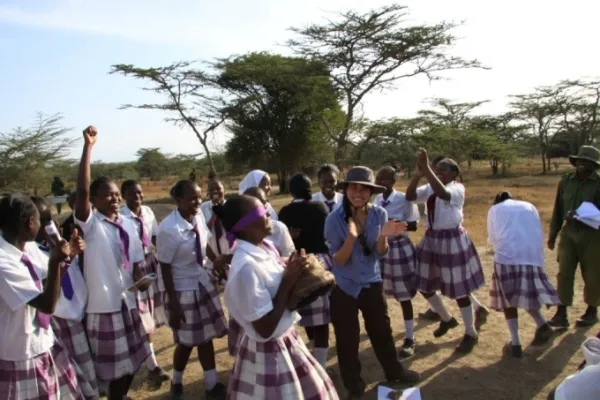
Nguyen Thi Thu Trang (5th, R) joins students in Kenya during a class about rhinocerus. Photo courtesy of Trang |
Before entering these sting operations, how dangerous did you imagine the work would be?
The South African police were very direct from the beginning. They laid out every worst-case scenario: getting shot, kidnapped, murdered, or dumped in a river. They told me to take a week to think before deciding whether to join. I did not even need a full day. I called back the next day and accepted.
You had just survived a life-threatening illness. Why deliberately step into work that could cost you your life?
After the cancer scare, I realized everyone dies eventually. Nobody knows when it will happen. It could be an accident. Cancer itself already felt like a death sentence hanging over me.
I thought that if I died from cancer, it would feel meaningless. One moment I would be happily living in England, and the next I would be stuck in a hospital bed before suddenly dying. What a dull ending that would be. But if something happened while helping an investigation, I would rather be shot than die lying in a hospital bed.
Fear only exists when you are afraid of death. I preferred choosing something deeply meaningful to me. Of course, I only agreed because there were safety measures in place and because I believed I was capable of doing the work.
What did you have to do before investigators approved your involvement?
First they checked my background thoroughly. They reviewed my education and experience to see whether I truly belonged in the field. They also checked whether I had any legal problems or history of fraud.
Then came interviews to test how I reacted under pressure. When dealing with criminals, situations can change within seconds. Something calm can suddenly turn dangerous. They needed to know whether I could stay composed and respond quickly. One mistake would not just endanger me, but also everyone working with me.
Finally, I had to sign a liability waiver covering the worst possible outcomes.
What went through your mind while signing it?
I knew my parents would panic if they found out, and so I told them nothing. Of course I thought about how guilty I would feel if something happened to me. But at that point, my desire to start over outweighed the guilt.
For the emergency contact form, I listed my older sister. Still, I believed fate would decide life and death. I kept thinking ‘I probably will not die.’ I doubted they would ever need to call anyone. I simply signed the paper. If I had overthought it, I never could have done the job.
What were your first operations like?
In the beginning, they did not assign me to extremely serious cases.
The main goal was to help me adjust, observe the environment and learn how to interact with suspects. I also had to complete training sessions. Together we would build detailed scenarios for dealing with criminals: fake identities, cover stories, contingency plans, the positions and roles of team members. Sometimes we prepared three or four possible outcomes in advance. If suspects became suspicious, what signs or phrases would they use? How should we respond? Everything had to be planned beforehand.
Gradually I began helping with field operations, posing as a buyer to trap traffickers. Before each mission, we tried to keep the mood as relaxed as possible. Sometimes we even ended up sharing jail cells with suspects for an entire week. Whenever someone knew they were about to ‘go to jail,’ the whole team would gather for a good meal first.
Were there moments when the danger exceeded anything you had imagined?
Many situations went off-script. There were moments when I thought ‘This could be the day I die.’
Once guns were drawn right in front of us. Another time, a colleague’s hidden camera fell directly in front of a suspect. If you panic, they notice immediately. Luckily my colleague stayed calm, picked it up and casually said it was just a battery pack. The suspects let it go and asked no more questions.
When things go wrong, you only have seconds to improvise. If you fail to fix the situation immediately, events can spiral out of control. The way you react shapes the other person’s reaction too.
Fortunately, we managed almost all those situations smoothly, partly because we had worked together for so long, trusted one another deeply and behaved professionally.
The work demanded emotional resilience and constant alertness. How did you maintain your mental stability through years of pressure like that?
Toward the end, I also began falling apart. The psychological toll of this work is brutal for everyone involved.
People in these investigations move constantly from place to place. Once trafficking networks operate across continents, their connections become enormous. They can learn who you are.
After spending too much time in one place, I started sensing the danger closing in around me. One investigation lasted more than a year. Strange things kept happening. I received phone calls in Vietnamese even though I was living in Africa. Rumors spread that I was dating the leader of one trafficking ring, even though I had not yet made contact with him. That network already had a history of kidnapping, murder and dumping victims by the coast.
At one point I became so paranoid that every time I left home, I checked both sides of the street. I constantly felt watched. Every approaching car made me think I was about to be dragged inside. To reach my rented room, I had to pass through two gates with six locks, plus another three locks on the back door. Even then, I could not sleep through the night. I always felt someone was breaking through the gate. That state lasted six months.
I spoke often with my professional mentor, who was required to oversee transnational investigations. They realized my mental state was starting to crack and immediately ordered me to withdraw from the project. Within one week, I had to pack up and disappear.
After that experience, I started taking my own safety more seriously. I turned down long-term field operations and focused more on remote cooperation.
When did your involvement in these investigations finally end?
Later there was an incident that completely exposed my identity. In Cambodia, police skipped part of the protocol and someone secretly recorded one of our operations. During my next field assignment, I walked into a shop and every employee suddenly froze. They started talking among themselves in the local language. Minutes later, the lights went out. My colleague and I had to run and squeeze through a closing metal door to escape.
In this field, losing your cover is extremely dangerous. No matter how useful you are, if you become a target, you also endanger your partners.
While I was debating whether to continue, I happened to meet Steve Greenwood, a producer for BBC “Planet Earth”. He invited me to join a documentary project. I thought that if this became my final mission, telling the story on such a major platform would be a fitting way to close the chapter. So I agreed.
Looking back, what did you gain from that journey?
I realized I was tougher and more stubborn than I thought. Many people asked why someone with a PhD would choose this kind of work. My answer was simple: If I believed something needed to be done, I did it. That period remains one of the proudest times of my life.
What did you sacrifice in order to pursue something so dangerous?
There are cities and countries I still cannot safely return to. Maybe in another 10 or 20 years it will be different. But honestly, that does not bother me much.
As for risks affecting my family or personal life in Vietnam, not really. I worked under different identities and never carried out similar operations in Vietnam. In major investigations, where you are only one link in a much larger chain, there are strict procedures designed to protect both participants and their families.
What was the most important lesson you learned from that experience?
At first I believed the more traffickers we arrested, the better. I thought they deserved whatever happened to them. But over time I realized that many hunters and low-level traders are just disposable pawns for larger networks.
Many people living near protected areas are desperately poor. Some cannot even earn the equivalent of one U.S. dollar a day. If someone offers them $1,000 to kill a rhino, of course many will do it because they see no other way to survive. It is difficult to ask someone to sacrifice their family’s survival.
That cycle keeps repeating itself. People need support before desperation pushes them to the edge.
After stepping away from the world of chasing traffickers, what did you see as the next chapter of your mission?
When I returned to Vietnam after more than a decade abroad, I was frustrated to see that not a single university offered a dedicated conservation degree. Vietnam takes pride in its forests, seas, and extraordinary biodiversity, but yet there was no formal program teaching Vietnamese students how to protect that heritage. Even Cambodia had already established such programs back in 2009.
One of the first things I did was work with universities to launch Vietnamese-language master’s programs in conservation. My hope is that within the next five years, 100 students will graduate. Even if only 5% remain in the field, I would still consider that a major success.
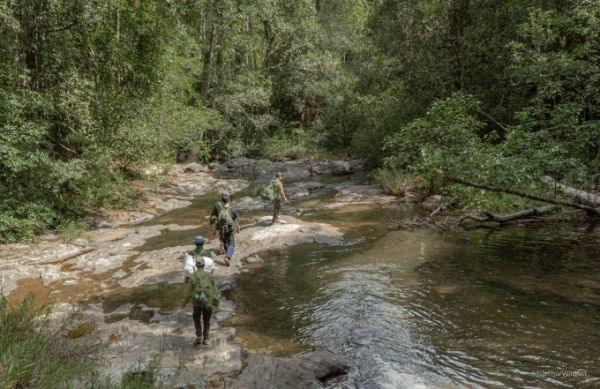
The second issue was livelihoods for people living around protected forests, so they would not be pushed into poaching as a last resort. At Chu Yang Sin National Park in Dak Lak Province, for example, we created jobs and convinced former hunters to become forest protection teams themselves.
 |
|
A WildAct’s patrol team at Chu Yang Sin National Park in Dak Lak Province in Vietnam’s Central Highlands. Photo courtesy of WildAct |
I also want to strengthen the connection between people and nature. If people do not understand nature, it is difficult for them to love it. Many people fear fireflies because they do not realize the insects only appear in clean, healthy environments. People often think an owl’s cry is a bad omen, when in fact owls help control rats. In the end, protecting nature also means protecting people.
If I had not become ill, I probably never would have started a wildlife conservation organization in Vietnam. Working for someone else would have been much easier. I could still follow my passion without carrying the burden of leadership. But after the cancer scare, I thought if I keep hesitating, these problems will remain. Nobody knows how much time they have left anyway. So I decided to just do it and go as far as I could.
After more than 10 years running WildAct in Vietnam, were there moments when things became so difficult that you wanted to quit?
At the beginning, I was full of idealism and saw the world through rose-colored glasses. Only later did I realize how difficult this work truly was.
After Typhoon Kalmaegi, for instance, the former hunters we had helped become forest rangers at Chu Yang Sin National Park lost everything. Their gardens were destroyed. Their motorbikes, often their most valuable possession and essential work tool, were buried in mud. In that situation, it became almost impossible to talk to them about forest protection. Our team had to shift toward fundraising to support them, but foreign funding dried up, government support was difficult to access, and businesses were struggling after the Covid-19 pandemic.
At one point the stress became overwhelming. I would come home from work and suddenly burst into tears as if I were dying. Some mornings I did not even want to get out of bed. But the animals and people I had encountered kept pulling me back.
I remember one forest ranger I knew who was shot by poachers. Seventeen bullet fragments remained lodged in his body. And yet, after recovering, he returned to the forest. When I asked why, he simply said he loved being in the forest and observing nature. Seeing people like him made me realize that what I was facing was just another hardship, something survivable like everything else.
There are many conservation organizations around the world, but animal species continue to disappear. Have you ever felt your efforts were meaningless?
Honestly, when conservationists gather together, the conversations are usually bleak. People say: ‘It is over. Everything is dying. There is nothing left.’
Climate change, overconsumption and rapid human development are realities we cannot avoid. No campaign can completely reverse species decline. Around the world there are movements promoting green energy, vegetarianism and sustainability, yet many of us still privately admit that we probably cannot fully save nature.
Even knowing that, I continue doing this work because it gives meaning to my life every morning when I wake up. The results cannot be measured in the short term. They may not even appear within my lifetime. But if I can help start something meaningful, that is enough for me.
For many young people, career success means money or social status. After 20 years in conservation, what do you feel you have gained?
If success means houses, luxury or money in the bank, then perhaps I have failed in that sense.
I still ride my father’s old Honda Dream motorbike. My greatest achievement is probably finally being able to live with my husband after 12 years in a long-distance relationship. Back then I was based in Africa while he worked rescuing bears in Cambodia. There were many lonely moments, especially when I was sick and nobody was beside me.
Now we have a small wooden house to come home to. Every evening, fireflies drift through it.
After all the places you have traveled, which moment stays with you most deeply?
I feel especially connected to elephants because they are intelligent and deeply emotional animals. One memory I always carry is of a herd crossing a road. One elephant had an injured leg and limped behind the others. By the time the herd crossed, that elephant had been left behind. It was struggling and clearly panicking.
Then the matriarch turned back. She gently rubbed her head against the injured elephant and wrapped her trunk around the younger elephant’s trunk, guiding it forward like a grandmother leading a child.
Sometimes I wish human beings could love and care for each other the way elephants do.
|
Nguyen Thi Thu Trang, 36, is the founder and executive director of WildAct, a nonprofit organization established in 2015 that focuses on wildlife conservation and environmental protection. In 2017, she was named among the Top 5 honorees for social contribution at the Women of the Future Southeast Asia Awards. In 2019, she was selected by the BBC as one of the world’s 100 most inspiring and influential women. In 2020, she was named to the Forbes Asia “30 Under 30” list in the social impact category. |
-
Will give instant relief to the body in summer! How to make cool Shikanji at home

-
Rashmika Mandanna dazzles in black sequin gown, steals the limelight at Anime Awards

-
Is it better to upgrade the old AC or buy a new one? Know these important things before buying

-
Stop switching your AC on and off repeatedly; It could raise your electricity bill

-
Gurinder Veer Singh’s record historic moment for Indian athletics: Lieutenant Governor