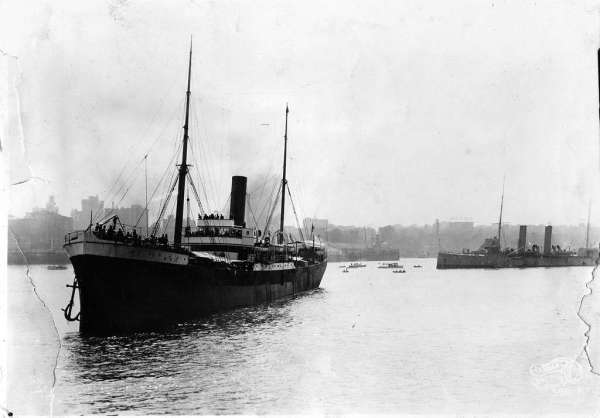
The Komagata Maru incident remains one of the most painful chapters in Canadian immigration history. On May 23, 1914, the Japanese steamship Komagata Maru arrived in Vancouver with 376 passengers from British India, most of them Sikhs from Punjab, along with Muslim and Hindu passengers. They came hoping to enter Canada as British subjects, but were denied entry under discriminatory immigration rules.
At the centre of the dispute was Canada’s continuous journey regulation, a policy designed to restrict immigration from India and other parts of Asia. The rule required migrants to arrive in Canada through a direct journey from their country of birth or citizenship, even though direct passage from India to Canada was nearly impossible at the time. This allowed the government to block South Asian migration while appearing to use administrative rules rather than openly racial bans.
The ship was kept offshore in Vancouver for nearly two months. Passengers faced harsh conditions, with limited access to food, water and medical care. Local members of the South Asian community formed a shore committee to support the passengers, raise funds and challenge the government’s decision, but the courts upheld the exclusionary immigration laws.
After weeks of tension, Canadian authorities forced the Komagata Maru to leave Vancouver on July 23, 1914, under naval pressure. Only a small number of passengers were allowed to disembark in Canada. The ship was sent back across the Pacific, ending the passengers’ hopes of starting new lives in Canada.
When the Komagata Maru returned to India in September 1914, British colonial authorities were waiting. At Budge Budge, near Calcutta, officials attempted to arrest several passengers, leading to a violent confrontation. Police opened fire, killing several passengers, while others were arrested, injured or imprisoned.
The tragedy became a powerful symbol of racial discrimination in Canada and colonial injustice in India. It also intensified political anger among South Asians and contributed to broader anti colonial movements, including the Ghadar movement, which sought to challenge British rule in India.
Over the decades, the Komagata Maru incident has been remembered through memorials, public education, books, films, plaques and community advocacy. It has also led to official apologies, including a formal apology in the House of Commons by Prime Minister Justin Trudeau in 2016.
Today, the Komagata Maru is remembered not only as a story of exclusion, but also as a story of resistance, dignity and the long struggle for justice. The incident continues to remind Canadians of the dangers of racism in immigration policy and the importance of building a country where fairness applies to all communities.
-
Top Skills Students Must Learn Before College to Land High-Paying Jobs and Bigger Salary Packages

-
Suriya Opens Up On ‘Karuppu’ Release Delay, Financial Struggles; Hints At Sequel After Rs 200 Cr Success

-
JEE Advanced 2026 Answer Key To Be Out Tomorrow; Check Objection Window, Download Steps And Result Date
-
Over 23,000 Candidates Opt For 3 Newly Added Centres In UPSC Civil Services (Preliminary) Examination-2026
-
Aishwarya Rai Bachchan Continues To Rule Cannes Film Festival 2026 In Embellished Gown With Flowing Feather Cape