
Uber has signed an agreement with JSW Group to develop and deploy electric vehicles built specifically for the ride-hailing market. The companies have confirmed the tie-up, but have not disclosed financial details or a clear deployment timeline yet.
The important part is the phrase “purpose-built”. EVs currently used on ride-hailing platforms are mostly standard retail models. They were designed for private owners first and fleet use later.
A ride-hailing car has a very different life. It can run 12 to 16 hours a day, cover high daily kilometres, carry multiple passengers through the day and spend far less time parked than a privately owned car. It also needs durable interiors, predictable charging, low maintenance downtime and a battery warranty that makes sense for commercial use.
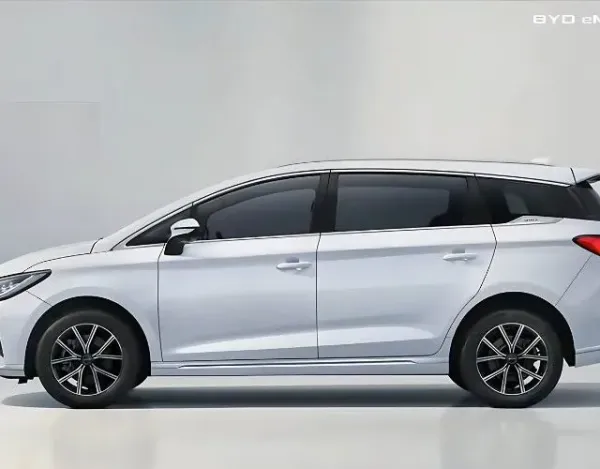
A private EV buyer may focus on features, design, range and brand. A fleet buyer looks at cost per kilometre, uptime, service support and resale value. That is why a ride-hailing EV cannot simply be a regular car with a taxi badge.
For ride-hailing use, the priorities are clear. The battery must handle frequent charging cycles. The cabin must be easy to clean and durable. Rear-seat comfort matters more than a long feature list. Charging speed matters because every hour off the road is lost earning time. Service access matters because a disabled cab affects the driver’s income directly.
If Uber and JSW get the vehicle specification right, the result could be a more suitable EV for cab operators than many existing retail-focused models.
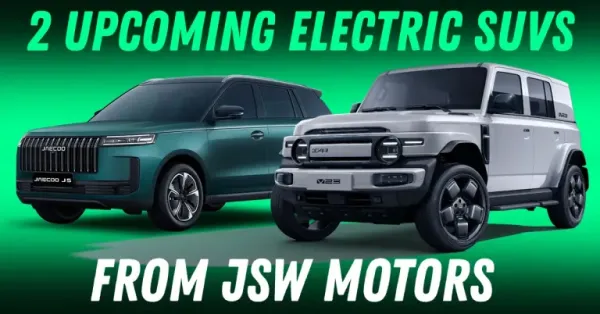
The Uber deal connects to JSW’s broader new-energy vehicle ambitions. JSW Motors recently secured Rs 8,000 crore in financing from State Bank of India for its greenfield facility at Chhatrapati Sambhajinagar in Maharashtra.
That plant is planned with an annual capacity of 3.5 lakh vehicles. JSW is also developing battery assembly capability and expanding R&D. This shows that the group is not treating EVs as a small side project.
Separately, JSW MG Motor, the joint venture with SAIC, plans to invest up to $440 million in India. The aim is to expand capacity and launch more hybrid and electric models. Its Halol plant capacity is expected to rise from about 1.2 lakh units to 3 lakh units annually.
That gives JSW access to both manufacturing ambition and existing EV market experience through the MG side.
The ride-hailing segment is a logical place for a new EV brand to begin. Fleet cars generate high daily usage and large amounts of operating data. A car deployed on Uber can quickly show how the battery, motor, suspension, cabin materials and software behave under heavy use.
This is valuable for JSW. A new retail car brand has to spend years building trust with private buyers. Fleet deployment can put vehicles on the road faster and in higher numbers, while also giving the company real-world feedback.
For Uber, the benefit is also clear. The company has been trying to increase the number of electric vehicles on its platform globally. In India, it had earlier announced a large EV partnership with Tata Motors. A JSW tie-up gives it another potential supply pipeline, especially if the cars are designed from the start for ride-hailing economics.
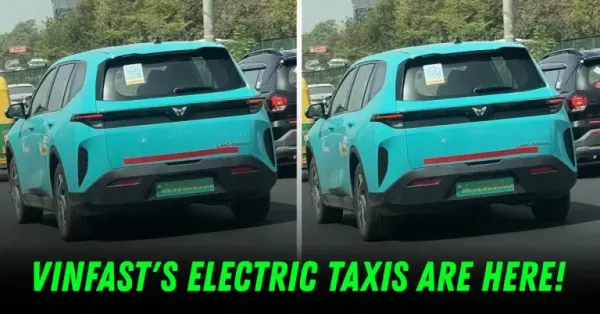
EVs are growing in India, but electric passenger cars are still a small part of total vehicle sales. As of Q3 FY26, India’s EV sales across categories stood at about 6.89 lakh units, with overall EV penetration at 7.29 percent. Two-wheelers and three-wheelers made up nearly 87 percent of EV volumes.
That means electric cars are still a much smaller slice of the EV market. Within ride-hailing fleets, the share is lower still because drivers and fleet operators face specific barriers.
The main issues are upfront cost, charging access, mid-shift range anxiety and uncertainty around long-term battery replacement cost. Cab drivers cannot afford unpredictable downtime. Fleet owners also need clear numbers on total running cost over several years.
A purpose-built ride-hailing EV could reduce some of these barriers. Fleet pricing, longer battery warranties, dedicated charging hubs and service packages for high-kilometre users can all make a difference.
But the agreement alone does not guarantee success. The companies still need to reveal the vehicle type, battery size, expected range, charging plan, service network, financing structure and deployment cities.
The opportunity is clear. India’s ride-hailing market needs cleaner vehicles, and EVs make sense for high-use urban driving if charging and cost are handled well. The challenge is equally clear. A ride-hailing EV has to earn money reliably every day. If JSW and Uber can build around that reality, this could become a game-changing partnership.
-
40,000 Students Apply for CBSE Re-evaluation 2026; Board Issues Major Update

-
Will Reels Now Appear as Episodes? Meta Tests a New Feature for Instagram and Facebook

-
mAadhaar App to be Discontinued! How to Set Up the New Aadhaar App? Here is the Complete Step-by-Step Guide

-
ChatGPT Makes History, Shattering All User Records

-
Inverter Battery Problem: Is Your Inverter Battery Draining Too Fast? These 5 Reasons Could Be Responsible