Delhi High Court School Fee Hike: The Delhi High Court has delivered a landmark and highly significant verdict regarding private and unaided schools in Delhi. The Court has clarified that these schools are not required to seek prior approval from the Delhi Government's Directorate of Education (DoE) in order to hike their fees. While this ruling by the High Court has brought a sigh of relief to private school managements on one hand, it could, on the other hand, heighten the anxieties of lakhs of parents across Delhi.
While hearing the matter, a bench of Justices observed that private unaided schools possess complete autonomy to manage their financial affairs and administration. The role of the Directorate of Education is not to interfere in the day-to-day operations or fee-fixation processes of these schools. However, the Court also made it clear that this does not, by any means, imply that schools are free to engage in arbitrary profiteering. The Directorate of Education still retains the authority to monitor whether schools are engaging in illegitimate profiteering.
**Court Affirms Schools' Autonomy and Rights**
During the hearings on petitions filed in the Delhi High Court, the Court explicitly acknowledged that schools that do not receive any form of financial aid from the government possess a fundamental right to determine their fee structure in order to improve their institutions and provide competitive salaries to their teachers. The Court reasoned that if schools were required to make repeated rounds of the Directorate of Education (DoE) for every minor or major fee hike, their administrative functioning would be adversely affected. The Court stated that, legally, schools have the liberty to finalize their fee structure before the commencement of the academic session.
**Major Clarification on the Role of the Directorate of Education (DoE)**
In this verdict, the High Court also provided a comprehensive clarification regarding the role of the Delhi Government's Directorate of Education. The Court stated that the DoE's regulatory control should be strictly limited to preventing 'capitation fees' (illegal exactions) and curbing the commercialization of education. The Directorate cannot proceed on the *a priori* assumption that any fee hike proposed by a school is inherently unjustified. However, if a specific complaint is received against a school alleging the charging of excessive fees or the pursuit of commercial gains, the Directorate is certainly empowered to intervene and order an audit. Will Private Schools in Delhi Become More Expensive Now?
Following this verdict, a fear has taken root among parents in Delhi that school managements will now arbitrarily hike fees at their own discretion. However, legal experts clarify that the court has merely removed the mandatory requirement for 'prior permission,' not the Directorate's oversight. Schools must still raise fees based on valid justifications and strictly within the framework of the Delhi School Education Act and Rules. If any school increases fees without a concrete reason or without making improvements to its infrastructure, parents' associations can raise their voices against it.
What Will Be the Impact on Future Admissions and Management?
According to a report published in *Hindustan*, this verdict will make it easier for private schools in upcoming academic sessions to pay their teachers' salaries in accordance with the recommendations of the 7th Pay Commission—a process that was often stalled due to the inability to raise fees. Conversely, competition among schools is expected to intensify, prompting them to vie with one another by promising better facilities. However, this decision is being viewed as a major blow to middle-class families, as they must now mentally prepare themselves for an annual increase in their children's education budget.
Disclaimer: This content has been sourced and edited from Amar Ujala. While we have made modifications for clarity and presentation, the original content belongs to its respective authors and website. We do not claim ownership of the content.
-
3,500 kg Of Saunf Adulterated With Unsafe Green Color Seized In Gujarat

-
Ebola Virus: Ebola virus hits India! Know its symptoms and what are the methods of prevention?

-
Google search glitch goes viral: Why did ‘Disregard’ trigger a chatbot reply?

-
Punjab Kings’ playoff at stake, will LSG play in Ekana? read the pitch report
-
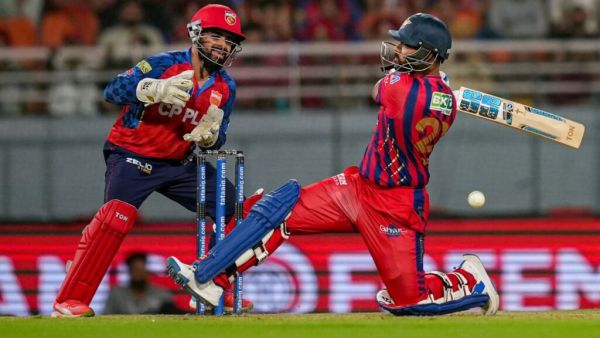
MI vs RR: Vaibhav Suryavanshi ready to roar against Mumbai, great battle of runs will be seen on batting friendly pitch.