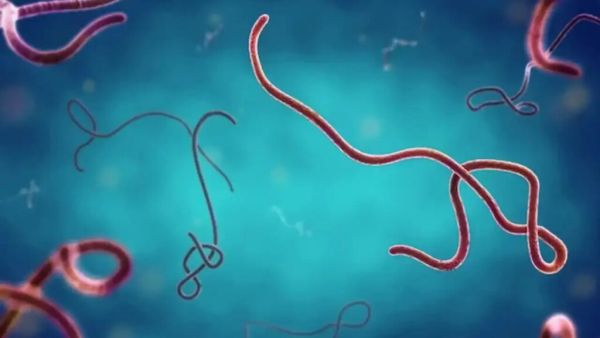
Ebola virus: a new concern
Ebola virus: Recently, the Ebola virus has again worried the global health community. New outbreaks of the Bandibugyo strain have emerged in the Democratic Republic of the Congo and Uganda in May 2026. The World Health Organization has declared it a public health emergency of international concern. There is no effective vaccine or specific treatment available for this strain, making the situation even more serious.
Ebola virus identification
Ebola is a highly infectious virus that belongs to the Orthoebolavirus family. Till now six types of it have been known. This virus spreads from animals to humans, and fruit-eating bats are considered its main carriers. When a person comes in contact with an infected animal, the virus begins to spread.
spread of ebola
Ebola virus does not spread through air. It is spread only by direct contact with the body fluids of an infected person (such as blood, vomit, diarrhea, saliva, sweat, semen).
It can also be spread by caring for an infected person, touching a dead body during a funeral, by contact with contaminated needles or clothing, and by having sex with an infected person. A person cannot infect others until symptoms appear.
symptoms of ebola
Symptoms of Ebola may appear within 2 to 21 days of infection. Initial symptoms are similar to those of common viral fever, making identification difficult.
Initial symptoms: High fever, fatigue, weakness, headache, muscle pain, sore throat.
Severe symptoms: Vomiting, diarrhea, stomach pain, body rashes, redness of eyes, liver and kidney problems, and in some cases internal or external bleeding. As the severity of the disease increases, the patient’s condition can deteriorate rapidly.
treatment measures
There is no definite treatment for Ebola. Mainly supportive treatment is provided, which includes: giving plenty of fluids and electrolytes, medicines for fever and pain, antibiotics to prevent infection (if necessary), oxygen and blood pressure control.
Note that there are some drugs and vaccines available for the Zaire strain, but there is currently no approved drug or vaccine for the Bandibugyo strain. Doctors treat only on the basis of symptoms.
History and outbreak
The first major outbreaks occurred in Sudan and Congo in 1976. The West Africa outbreak of 2014–16 was the worst, killing thousands. The current outbreak has resulted in hundreds of suspected cases and several deaths.
preventive measures
Avoid traveling to infected areas, wash hands regularly, maintain distance from infected individuals, and use correct PPE (protection kit).
Ebola can be fatal, but timely care and awareness can save many lives.
-
More than having maturity, it's about shot selection: Ishan Kishan

-
J-K education minister calls for adopting roadmap to curb drug abuse in educational institutions

-
Robbery, relative and husband: The plot thickens in Delhi double murder case

-
Labour contractor shot dead by unknown persons inside Faridabad warehouse

-
Various organisations, former civil servants oppose CJI’s environmental activists comment