

FM Radio Companies Seek Government Relief, Demand Mandatory FM Feature in Smartphones
India’s private FM radio industry is pushing for urgent government intervention as mounting financial pressures, falling advertising revenues and rapid digital disruption threaten the future of one of the country’s oldest mass communication platforms.
Radio broadcasters across the country have collectively sought a series of major policy reforms, including mandatory FM radio functionality in smartphones, removal of annual licence fees, lower GST rates and permission to broadcast news content independently.
Industry leaders warn that without immediate regulatory support, the sector could witness more station closures, job losses and declining regional media representation in the coming years.
The demands come at a crucial time for India’s media and entertainment landscape, where digital streaming platforms, podcasts and music apps have transformed audience habits and advertising trends.
Once regarded as one of the most influential and accessible media platforms in India, FM radio is now fighting for survival amid rising operational costs, policy restrictions and shrinking revenue streams.
Industry Faces Deepening Financial Pressure
Private FM broadcasters say the sector is currently navigating one of the most difficult phases in its history.
Advertising revenues, which remain the primary source of income for most radio companies, have slowed considerably over recent years. At the same time, operational expenses involving infrastructure, transmission, licensing and manpower continue rising steadily.
Industry executives argue that the existing policy structure no longer reflects present-day market realities.
Radio companies say a significant portion of their earnings is consumed by government-related charges including GST, annual licence fees, spectrum usage fees and tower costs, leaving limited room for investment in innovation, technology and expansion.
According to industry observers, the imbalance between rising costs and stagnant revenues has weakened the long-term sustainability of private FM operations.
Several broadcasters now believe that without structural reforms, the industry could face further contraction.
Push to Allow Independent News Broadcasting
One of the biggest demands raised by FM broadcasters involves permission to independently air news content.
Under current Indian regulations, private FM stations are not permitted to produce and broadcast independent news bulletins. Broadcasters largely remain restricted to music, entertainment and limited informational programming.
Industry representatives argue that this restriction has severely limited radio’s ability to compete in a modern media ecosystem dominated by digital content platforms and real-time information consumption.
Broadcasters believe allowing regulated news programming would significantly strengthen radio’s relevance, especially at the local and regional level.
Radio companies also point out that social media platforms currently allow millions of unverified users to share news and opinions without the same level of regulation faced by licensed broadcasters.
Industry executives argue that FM radio already operates under strict government oversight and therefore should be trusted with controlled news broadcasting permissions.
Supporters of reform say radio has the potential to become a powerful source of verified local information, especially in smaller towns and regional markets where digital penetration remains uneven.
Demand for Market-Linked Licence Renewals
Another major concern involves the future of FM Phase-3 licence renewals after 2030.
Broadcasters argue that the original auction-based licensing framework was created under vastly different market conditions and no longer aligns with the realities of today’s advertising economy.
The radio industry wants licence renewals to be based on market-linked pricing mechanisms rather than rigid legacy models.
Industry leaders believe more realistic pricing structures would encourage fresh investments and reduce financial pressure on broadcasters already struggling with declining profitability.
Analysts say the issue is especially critical because several stations are approaching future renewal deadlines while facing uncertainty over operational viability.
FM Feature in Smartphones Becomes Key Demand
Perhaps the most attention-grabbing demand from the industry is the call to make FM radio functionality mandatory in smartphones sold in India.
Many modern smartphones no longer activate built-in FM receiver chips, with manufacturers increasingly prioritizing internet-based audio platforms instead.
Radio broadcasters argue that removing FM access from phones has weakened one of the country’s most affordable and accessible communication mediums.
The industry says FM radio remains critically important during natural disasters, network failures, emergencies and power outages when internet-based communication systems may fail.
Broadcasters point to past emergencies where radio served as a reliable public communication tool when mobile networks or digital infrastructure experienced disruptions.
Industry groups are now urging the government to require smartphone manufacturers to keep FM receivers active in all devices sold in the Indian market.
Supporters of the proposal say such a move could significantly improve radio accessibility among younger audiences who primarily consume media through smartphones.
GST Reduction and Fee Removal Demands
The radio industry is also seeking major financial relief through taxation and fee reforms.
Broadcasters have demanded that GST on the sector be reduced from 18 percent to 5 percent, arguing that current tax structures place FM radio at a disadvantage compared to competing media segments.
Companies believe lower taxation could help broadcasters invest more heavily in content quality, regional programming and digital integration.
In addition, the industry has called for the complete removal of annual licence fees, which companies say consume a large share of operational revenue.
Executives argue that reducing regulatory costs would provide immediate relief to financially stressed broadcasters and encourage expansion into underserved markets.
Copyright and Digital Streaming Challenges
Beyond traditional broadcasting concerns, FM radio companies are also seeking clarity regarding copyright frameworks and digital simulcasting rights.
Many broadcasters want permission to stream their FM broadcasts digitally under existing royalty structures.
The industry argues that audiences increasingly consume audio content through smartphones and connected devices, making digital presence essential for long-term survival.
However, copyright-related complexities involving music licensing and royalty payments have created uncertainty around digital expansion models.
Broadcasters are now urging policymakers to establish clear long-term frameworks that allow FM stations to compete more effectively within the digital audio ecosystem.
Station Closures Signal Industry Distress
The financial strain within the sector has already started producing visible consequences across major Indian cities.
Several prominent media companies have reduced or shut down FM operations in recent years.
HT Media recently surrendered multiple FM licences in major cities including Mumbai, Delhi, Bengaluru and Chennai.
Earlier, TV Today Network also closed radio operations in several markets.
Similarly, Red FM shut one of its Mumbai stations, further highlighting the pressures affecting broadcasters.
Industry experts warn that continued closures could weaken regional media diversity and reduce local content creation opportunities.
Employment Impact Raises Concerns
The slowdown in the FM sector has also affected employment across broadcasting, production, advertising and technical operations.
Thousands of professionals connected to the industry — including radio jockeys, producers, engineers, sales teams and creative staff — have reportedly faced uncertainty due to downsizing and station shutdowns.
Industry leaders argue that supportive reforms could help revive investments, preserve jobs and stimulate fresh hiring across local media markets.
The radio sector historically created large employment opportunities in regional entertainment and localized advertising industries.
Broadcasters now fear that prolonged financial instability could permanently damage parts of the ecosystem.
Radio’s Cultural and Political Influence
Despite current challenges, radio continues to hold cultural and emotional significance across India.
The medium remains deeply embedded in daily life for millions of listeners, particularly in regional and rural markets.
Prime Minister Narendra Modi has frequently used radio as a communication platform through programs such as Mann Ki Baat, demonstrating the enduring influence of the medium in reaching mass audiences.
Industry leaders argue that if radio continues serving as a trusted public communication channel for governments and communities, then the sector itself deserves stronger policy support and modernization.
The growing crisis has therefore sparked broader questions regarding how India intends to preserve and evolve traditional media platforms within a rapidly digitizing environment.
Can Policy Reforms Revive FM Radio?
Media analysts believe the future of India’s FM radio industry may depend heavily on how quickly policymakers respond to broadcaster concerns.
Supporters of reform argue that radio still possesses unique advantages including affordability, local connectivity, language diversity and accessibility during emergencies.
However, critics say the sector must also innovate aggressively to remain relevant among younger audiences increasingly shifting toward streaming platforms and personalized digital content.
The coming years could therefore determine whether FM radio successfully adapts into a hybrid digital-era platform or continues losing ground to global audio competitors.
For now, broadcasters remain hopeful that government intervention, regulatory modernization and tax relief could provide the lifeline needed to stabilize one of India’s most historic media industries.
The post India’s FM Radio Industry Sounds Alarm as Stations Shut Down Across Major Cities appeared first on CliQ INDIA.
-
Cambodia Job Scam Exposed: Indians Trapped in Cyber Fraud Rackets Through Fake Overseas Offers

-
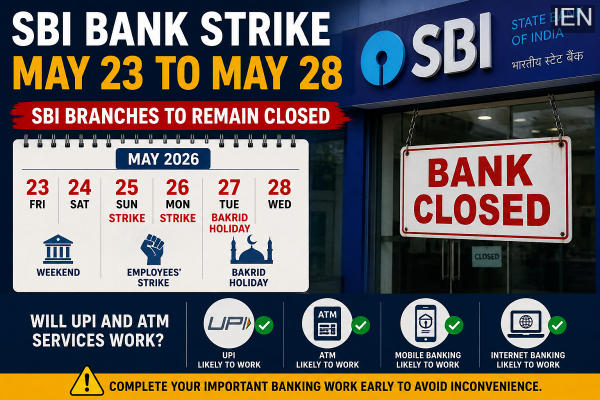
SBI Bank Strike Alert: SBI Services May Be Disrupted From May 23 to May 28; Will UPI and ATMs Continue Working?
-
Harbhajan Singh Vows To Name Bribe Takers, Alleges AAP Sold Punjab Rajya Sabha Tickets

-
Twisha's Husband Samarth Reaches Jabalpur Court To Surrender

-
Where Is Bhojshala? Everything You Need To Know About The Ancient Centre Of Learning