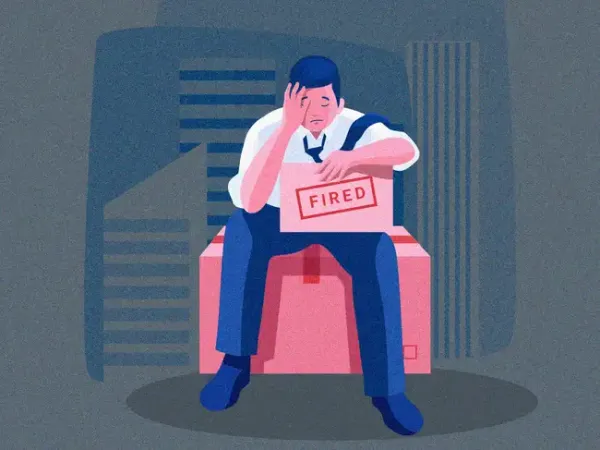
25-year Big Tech veteran reveals emotional toll on employees who survived layoffs.
As waves of layoffs hit the tech industry hard, much of the focus has remained on the employees losing their jobs. But according to one former Big Tech software engineer with over 25 years of experience, the workers who survive these cuts are often left dealing with another old set of crises with more severity.
His account comes at a time when layoffs continue to sweep across the sector. A New York Post report published in April stated that tech layoffs in the United States crossed 52,000 in the first three months of 2026, with many job cuts reportedly linked to AI-led restructuring.
In a deeply personal YouTube vlog, the software engineer opened up about his “worst burnout experience” of his career after surviving a brutal round of layoffs in 2023 before eventually losing his own job later.
“Another week passes and another wave of mass layoffs crashes through the industry,” he said at the start of the video. “Entire teams vanish overnight. Decades of institutional knowledge erased with a calendar invite and a severance package.”
The creator, who runs the Asian Dad Energy YouTube channel, described himself as an “unemployed ex big tech software engineer,” reflecting on the emotional cost of modern corporate culture, return-to-office mandates, and AI-driven workplace pressure.
The engineer recalled surviving a major layoff round in the summer of 2023, when nearly half of his organization, including many senior leaders, lost their jobs.
For him, the restructuring felt like a career setback. “I went from being a chief architect to being a senior enterprise architect,” he explained. “This is like going back in my career by five years.”
Soon after, he became involved in a high-pressure digital transformation project involving an outdated internal partner management platform that he described as a “Frankenstein monster” made up of around 30 different web applications built over 25 years.
The legacy system handled billions in revenue annually, but leadership wanted to replace it with a modern customer relationship management platform within just four months.
“The pressure almost immediately went up to the maximum level because of the large sums of money involved here,” he said, pointing to his large paycheck on which he was very much dependent.
The problem, according to him, was that the layoffs had already wiped out much of the institutional knowledge needed to understand the old system, while very few employees knew how to work with the replacement platform.
“So just to be able to do my job, I had to spend huge amounts of additional time every day learning about the codebase and learning about the new system,” he said.
The engineer explained that the company’s reorganization also changed the geographic distribution of teams, forcing him to split his time between North American and India-based squads.
That meant meetings as early as 6 a.m. and calls extending late into the night.
At the same time, executives introduced a hybrid return-to-office policy requiring him to travel three hours round-trip into New York City every other day on a bus.
“By the end of it, I was almost always nauseated,” he said about the bus commute.
He eventually found himself working 12-hour days, including weekends, while trying to hold together a massive corporate transformation project.
About two months into the project, the engineer said he experienced severe burnout symptoms. “What does burnout feel like? I just felt super tired, both mentally and physically,” he said. “And I felt tired all the time.”
Even after taking several days off during Labor Day weekend, he said the exhaustion never disappeared.
“When I try to focus on hard problems, my mind just felt foggy,” he explained. “I would forget important details and just lose my focus all the time.”
He also described becoming emotionally detached from the project and losing all motivation. “I had no passion for this project. Its goals felt pointless to me,” he said. “I was in this strange detached, desensitized, withdrawn state of being.”
The stress became so intense that he started experiencing recurring nightmares involving his coworkers working at a restaurant where catastrophic events kept happening.
“Every time I would wake up from the dream in a cold sweat,” he recalled.
After researching burnout recovery strategies, the engineer said he began making major changes to his routine.
He prioritized sleep, turned off electronic devices earlier at night, and aimed for seven hours of consistent rest. “I was able to get about seven hours of consistent sleep each night,” he said. “It made me feel way more energized and way less anxious every day.”
He also started exercising regularly, waking up at 5:30 a.m. to spend 30 minutes running on a treadmill.
“Even 30 minutes of exercise, it made a huge difference on my mental outlook every day,” he explained.
Another major step involved reconnecting with people outside work, including family, friends, church groups, and gaming communities. “Intentionally setting aside time to interact and socialize with people sort of pulled my mind out of this mental state where work was everything,” he said.
Finally, he enforced strict work-life boundaries by refusing weekend messages, stopping late-night calls, and limiting work communication outside office hours.
“Both physically and mentally having that kind of offline time and space away from work, it really helped me,” he said.
According to the engineer, those changes gradually reduced his anxiety, stopped the nightmares, and helped him regain focus long enough to finish the project successfully.
His account comes at a time when layoffs continue to sweep across the sector. A New York Post report published in April stated that tech layoffs in the United States crossed 52,000 in the first three months of 2026, with many job cuts reportedly linked to AI-led restructuring.
In a deeply personal YouTube vlog, the software engineer opened up about his “worst burnout experience” of his career after surviving a brutal round of layoffs in 2023 before eventually losing his own job later.
“Another week passes and another wave of mass layoffs crashes through the industry,” he said at the start of the video. “Entire teams vanish overnight. Decades of institutional knowledge erased with a calendar invite and a severance package.”
The creator, who runs the Asian Dad Energy YouTube channel, described himself as an “unemployed ex big tech software engineer,” reflecting on the emotional cost of modern corporate culture, return-to-office mandates, and AI-driven workplace pressure.
Massive layoffs turned surviving employees into dicey situations
The engineer recalled surviving a major layoff round in the summer of 2023, when nearly half of his organization, including many senior leaders, lost their jobs.
For him, the restructuring felt like a career setback. “I went from being a chief architect to being a senior enterprise architect,” he explained. “This is like going back in my career by five years.”
Soon after, he became involved in a high-pressure digital transformation project involving an outdated internal partner management platform that he described as a “Frankenstein monster” made up of around 30 different web applications built over 25 years.
The legacy system handled billions in revenue annually, but leadership wanted to replace it with a modern customer relationship management platform within just four months.
“The pressure almost immediately went up to the maximum level because of the large sums of money involved here,” he said, pointing to his large paycheck on which he was very much dependent.
The problem, according to him, was that the layoffs had already wiped out much of the institutional knowledge needed to understand the old system, while very few employees knew how to work with the replacement platform.
“So just to be able to do my job, I had to spend huge amounts of additional time every day learning about the codebase and learning about the new system,” he said.
Long commutes, global meetings and nonstop work worsened the stress
The engineer explained that the company’s reorganization also changed the geographic distribution of teams, forcing him to split his time between North American and India-based squads.
That meant meetings as early as 6 a.m. and calls extending late into the night.
At the same time, executives introduced a hybrid return-to-office policy requiring him to travel three hours round-trip into New York City every other day on a bus.
“By the end of it, I was almost always nauseated,” he said about the bus commute.
He eventually found himself working 12-hour days, including weekends, while trying to hold together a massive corporate transformation project.
‘I felt tired all the time’
About two months into the project, the engineer said he experienced severe burnout symptoms. “What does burnout feel like? I just felt super tired, both mentally and physically,” he said. “And I felt tired all the time.”
Even after taking several days off during Labor Day weekend, he said the exhaustion never disappeared.
“When I try to focus on hard problems, my mind just felt foggy,” he explained. “I would forget important details and just lose my focus all the time.”
He also described becoming emotionally detached from the project and losing all motivation. “I had no passion for this project. Its goals felt pointless to me,” he said. “I was in this strange detached, desensitized, withdrawn state of being.”
The stress became so intense that he started experiencing recurring nightmares involving his coworkers working at a restaurant where catastrophic events kept happening.
“Every time I would wake up from the dream in a cold sweat,” he recalled.
How he slowly recovered from burnout
After researching burnout recovery strategies, the engineer said he began making major changes to his routine.
He prioritized sleep, turned off electronic devices earlier at night, and aimed for seven hours of consistent rest. “I was able to get about seven hours of consistent sleep each night,” he said. “It made me feel way more energized and way less anxious every day.”
He also started exercising regularly, waking up at 5:30 a.m. to spend 30 minutes running on a treadmill.
“Even 30 minutes of exercise, it made a huge difference on my mental outlook every day,” he explained.
Another major step involved reconnecting with people outside work, including family, friends, church groups, and gaming communities. “Intentionally setting aside time to interact and socialize with people sort of pulled my mind out of this mental state where work was everything,” he said.
Finally, he enforced strict work-life boundaries by refusing weekend messages, stopping late-night calls, and limiting work communication outside office hours.
“Both physically and mentally having that kind of offline time and space away from work, it really helped me,” he said.
According to the engineer, those changes gradually reduced his anxiety, stopped the nightmares, and helped him regain focus long enough to finish the project successfully.