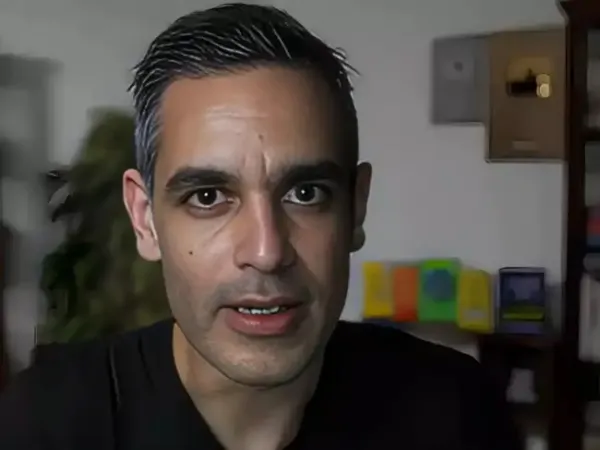
AI dependence, according to Ankur Warikoo, is when people no longer feel capable of functioning normally without AI assistance.
AI this, AI that, the new buzzword of the town has been AI. In fact, many people have been using AI in many different ways. While some are putting it to use by asking it to make a presentation, others are using it as a tool to make an app or something more useful. But, how do you know if you are too dependent on artificial intelligence, which can be slowing down your brain? Ankur Warikoo recently took to social media to share 3 warning signs of AI dependence.
Ankur Warikoo warned that while AI can be incredibly useful, overusing it could slowly weaken people’s ability to think independently, learn deeply, and function confidently without digital assistance. Warikoo began his post with a striking observation. “It’s possible that AI is becoming your biggest enemy and you have no idea,” he wrote, before listing what he believes are the three biggest warning signs of unhealthy AI dependence.
AI to think
The first sign, according to him, appears when people start using AI to think for them instead of using it to improve themselves. He pointed out that many users now rely on AI for everyday cognitive tasks. From writing emails, creating presentations, building websites, or structuring ideas, people are increasingly outsourcing their thinking process to AI. Its repercussions? Warikoo argued that this habit can slowly affect mental sharpness over time. “You have stopped working, so your mind has started to slow down,” he said, explaining that convenience often comes at the cost of active thinking and problem-solving.
AI should not be doing the cognitive work, but instead should assist the human effort, not replace it completely. It begins when people stop being creative and don't make decisions on their own anymore and because of their reliance on technology.
However, he believes many people are making the opposite mistake. Instead of researching, understanding concepts, or developing knowledge independently, they are depending on AI to provide instant outputs.
Warikoo questioned what happens when curiosity disappears from the process. “Who will think? Who will do the research? Who will understand?” he asked in his post, warning that excessive dependence on AI-generated content could reduce genuine learning.
He suggested that constantly skipping the effort required to learn something can create a shallow understanding. While AI may deliver quick answers, it cannot replace the value of struggling through a problem, researching details, or building original insight.
Cannot function without AI assistance
The third and “biggest sign” of AI dependence, according to Warikoo, is when people no longer feel capable of functioning normally without AI assistance. He described simple examples that many professionals and students may relate to today. From proofreading emails to rewriting sentences and correcting grammar, AI tools are becoming part of even the smallest daily tasks.
According to Warikoo, dependence becomes dangerous when people start feeling uncomfortable doing basic work on their own. He remarked that many users now find it difficult to send a normal email without AI checking it first. “You have forgotten how you operated when you didn’t have AI,” he wrote, highlighting how quickly technology has become psychologically embedded into routine workflows.
Is Ankur Warikoo against AI?
Warikoo clarified that he is not against artificial intelligence itself. Instead, his message focused on maintaining balance and awareness while using it. He acknowledged that AI can be a powerful companion when used correctly. It can save time, increase efficiency, and help people execute ideas faster. But he warned that blind dependence may slowly weaken critical thinking, creativity, and self-confidence. “AI can be your friend,” he concluded, while cautioning people not to turn it into their enemy.
Ankur Warikoo warned that while AI can be incredibly useful, overusing it could slowly weaken people’s ability to think independently, learn deeply, and function confidently without digital assistance. Warikoo began his post with a striking observation. “It’s possible that AI is becoming your biggest enemy and you have no idea,” he wrote, before listing what he believes are the three biggest warning signs of unhealthy AI dependence.
AI to think
The first sign, according to him, appears when people start using AI to think for them instead of using it to improve themselves. He pointed out that many users now rely on AI for everyday cognitive tasks. From writing emails, creating presentations, building websites, or structuring ideas, people are increasingly outsourcing their thinking process to AI. Its repercussions? Warikoo argued that this habit can slowly affect mental sharpness over time. “You have stopped working, so your mind has started to slow down,” he said, explaining that convenience often comes at the cost of active thinking and problem-solving.AI should not be doing the cognitive work, but instead should assist the human effort, not replace it completely. It begins when people stop being creative and don't make decisions on their own anymore and because of their reliance on technology.
Learning vs AI-generated answers
The second warning sign, Warikoo said, is replacing learning with AI-generated answers. He explained that AI works best when used by someone who already understands their craft deeply. Instead of using AI as a substitute for gaining expertise, it should be used as a tool to become better and hone your craft.However, he believes many people are making the opposite mistake. Instead of researching, understanding concepts, or developing knowledge independently, they are depending on AI to provide instant outputs.
Warikoo questioned what happens when curiosity disappears from the process. “Who will think? Who will do the research? Who will understand?” he asked in his post, warning that excessive dependence on AI-generated content could reduce genuine learning.
He suggested that constantly skipping the effort required to learn something can create a shallow understanding. While AI may deliver quick answers, it cannot replace the value of struggling through a problem, researching details, or building original insight.
Cannot function without AI assistance
The third and “biggest sign” of AI dependence, according to Warikoo, is when people no longer feel capable of functioning normally without AI assistance. He described simple examples that many professionals and students may relate to today. From proofreading emails to rewriting sentences and correcting grammar, AI tools are becoming part of even the smallest daily tasks.According to Warikoo, dependence becomes dangerous when people start feeling uncomfortable doing basic work on their own. He remarked that many users now find it difficult to send a normal email without AI checking it first. “You have forgotten how you operated when you didn’t have AI,” he wrote, highlighting how quickly technology has become psychologically embedded into routine workflows.