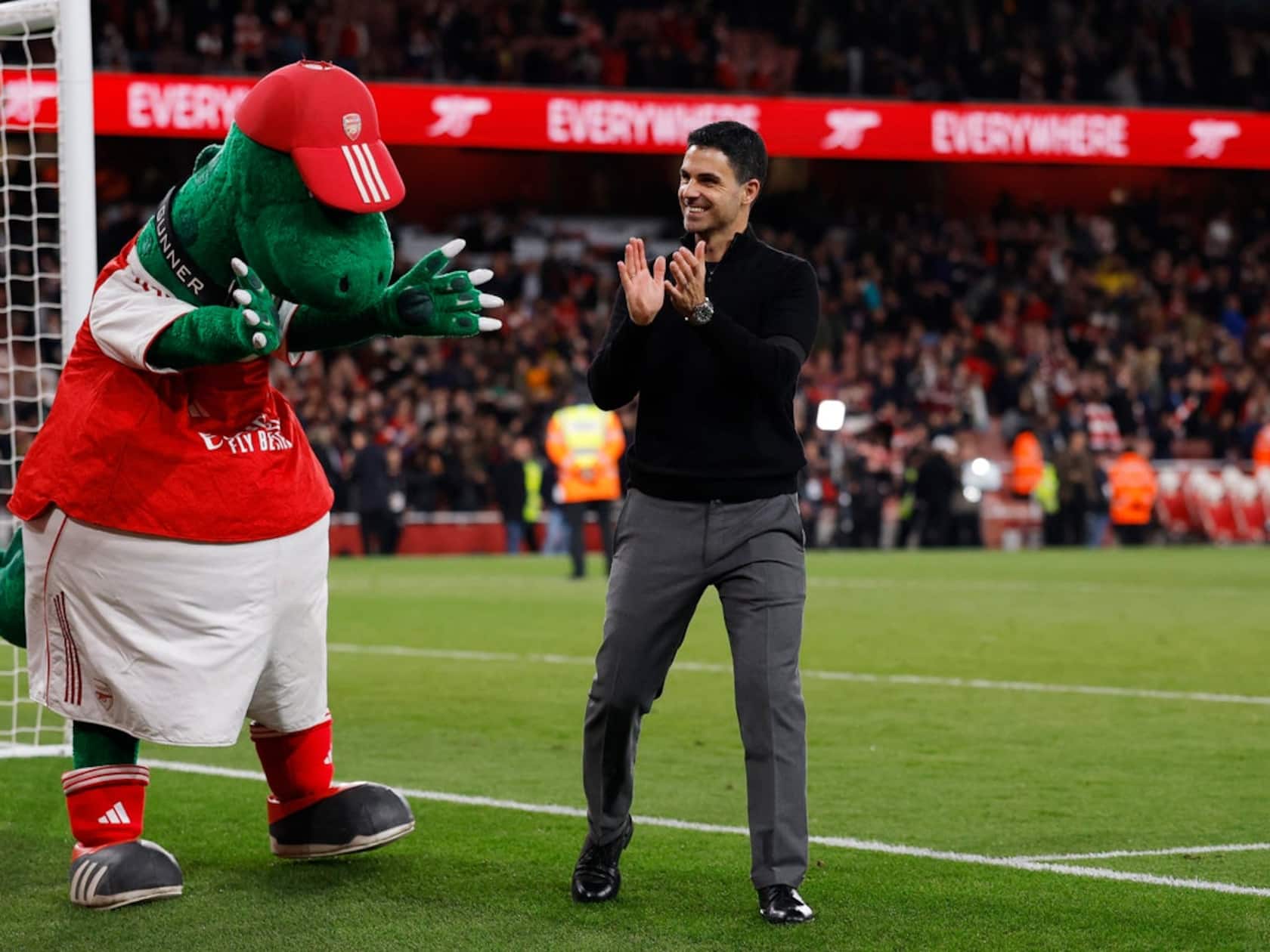
After several minutes of jubilant embraces and celebrations at London Colney on Tuesday, Arsenal’s players finally released their emotions as confirmation came through — they were champions once again. The relief of victory brought out a few primal roars before the entire squad leapt into the swimming pool.
Bukayo Saka, predictably, turned up with an inflatable, though not the unicorn from previous celebrations. Veteran staff members joked that this was a far cry from how Arsenal’s title-winning sides between 1998 and 2004 marked their triumphs. What mattered was that they were celebrating as champions again.
The players eventually headed to a club in central London. They had matured in many ways — and so had their manager.
Mikel Arteta’s fixation on fine details had finally paid off. Many of the jokes once made at his expense no longer hold weight.
The story of Arsenal’s 14th league crown is also the story of how their former captain, through a measured and long-term plan, transformed the club from a source of amusement into a serious contender once more. Arteta effectively ended Arsenal’s infamous “banter era.”
While Arteta, now 44, can often appear overly intense, those close to him consistently emphasise one thing — his extraordinary work ethic. Many within the club felt genuine happiness for him on that basis alone. Some compare him to the founder of a start-up — someone capable of working 90-hour weeks without realising it.
“He’s an obsessive,” said one source. Another recalled a similar remark made by Sir Alex Ferguson at a comparable stage of his career at Manchester United: “This isn’t just a job to me. It’s a mission.”
And indeed, for Arteta, this has always been a mission.
Arsenal might have benefited from his drive even earlier, had it not been for the dysfunction that plagued the club before his return. He had been on the shortlist to take over in 2018, but the hierarchy reversed course at the last moment and appointed Unai Emery instead.
Although Emery’s credentials were proven — and he reaffirmed them by guiding Aston Villa to Europa League glory against Freiburg on Wednesday night, his fifth triumph in that competition — he was eventually deemed ill-suited to a club of Arsenal’s stature.
Arteta, however, views the delay as beneficial to his own development. In hindsight, Arsenal’s transfer window in the summer of 2011, often seen as symbolic of the club’s decline, may have secured their future. That was when Arsène Wenger finally signed Arteta from Everton after initial hesitation.
As his bond with the club deepened, Arteta came to see managing Arsenal as his destiny. Even as a player, he was already a coach in the making — curious about tactical innovations elsewhere. From 2013 to 2014, he became engrossed with Pep Guardiola’s Bayern Munich and their tactical “U shape” that trapped opponents.
Arteta was aware of his own limitations as a player, but his adaptability foreshadowed his managerial philosophy.
Despite this, some Arsenal executives hesitated to appoint him in December 2019, wary of his lack of experience. They had also spoken to Patrick Vieira, Vitor Pereira, Max Allegri, and Ronald Koeman. Meanwhile, Mike Ashley had been attempting to lure Arteta to Newcastle United from his assistant role at Manchester City.
When Arsenal’s management finally sat down with him, what was supposed to be a one-hour meeting turned into a four-hour session. One executive later remarked, “I can see what the fuss is about.”
Arteta’s vision and meticulous detail impressed everyone. Arsenal desperately needed that clarity of purpose — the club, in the words of one senior source, was “a chaotic mess.”
The dressing room was described as “toxic,” filled with players who “just didn’t care.” Some were suspected of conveniently picking up injuries before unfavourable away games. “It was disjointed and selfish,” said one insider.
The organisation had become “a boys’ club,” with little drive for elite success. Many directors lacked ambition, assuming owner Stan Kroenke had little interest in footballing glory. The club’s so-called “banter era” became a running joke online, as rivals mocked Arsenal as “a laughing stock.”
Arteta, who retired as a player in 2016, had already identified the cultural rot. It infuriated him that Arsenal were routinely out of the title race by February, with players seemingly more interested in their summer holidays. Though he respected Wenger deeply, he felt preparation lacked structure — tactical instructions would even be scribbled on post-it notes. Rather than discourage him, this motivated Arteta to one day fix it.
He believed Arsenal had everything they needed — a huge fanbase, a magnificent stadium, and a great city — but had simply drifted. “You just need to grab everyone by the collar,” he once said. Yet he quickly discovered it would take far more than that. One executive even admitted the overhaul felt “overwhelming.”
The squad was mediocre, making it difficult to sell players, while early signings failed to meet expectations. Still, Arteta showed promise by leading that group to the 2020 FA Cup. When asked about a performance bonus, he instead requested a new office.
But the struggles persisted. Arsenal’s form remained inconsistent, with only flashes of the football Arteta envisioned. By winter 2020, several insiders said he was “in a very low place” and felt he had “made a terrible mistake.” He even contemplated resigning.
Tim Lewis, the executive vice-chair and long-time Arsenal supporter, played a pivotal role in convincing him to stay. Lewis established a “football leadership team” around Arteta and sporting director Edu to stabilise the club’s structure. He also arranged a meeting between Arteta and Stan Kroenke in Denver, where the manager outlined his footballing philosophy. Lewis emphasised the business value of a competitive team, which helped Arteta secure crucial backing.
That support gave him renewed energy. In July 2021, inside that same new office, Arteta drafted a five-year plan with a permanent marker. Understanding that the average age of a title-winning team was around 27 years and three months, he realised Arsenal couldn’t afford such experience. Their wage bill stood at only £125 million, compared to Manchester City’s £300 million-plus. The solution, he decided, was to emulate Borussia Dortmund — build a young, intelligent, and cohesive team. “That’s the future of Arsenal,” he declared.
Homegrown talents like Saka and Emile Smith Rowe were promoted immediately. Arteta questioned whether the long-suffering fanbase would accept the growing pains but resolved to frame it as a collective journey. The club began targeting “project players” with high football IQ. Initially sceptical of William Saliba, Arteta quickly recognised his immense potential.
He also developed a tactical system dubbed “the spin drier” — a relentless pressing style designed to disorient opponents. Yet it required total commitment, meaning there could be no passengers. Pierre-Emerick Aubameyang, despite his FA Cup heroics, was moved on. Gabriel Jesus’s arrival transformed the team’s attacking dynamic.
Arsenal’s resilience deepened with each setback. After a painful loss to Antonio Conte’s Tottenham Hotspur that cost them a Champions League spot in 2021-22, they rebounded stronger. Second-place finishes were turned into motivation.
By August 2022, after a 2-1 home victory over Fulham, Arteta felt the spirit he’d envisioned was finally alive. The Emirates roared with unity, and the team’s upward trajectory rekindled a rare sense of joy among supporters. It would take another four years to reach the summit, but progress was constant — 83 points in 2022-23, then 89 the following season, reaching the Champions League quarter-finals and later the semi-finals.
Manchester City remained the benchmark. When Arsenal signed Declan Rice in 2023, City matched with a bigger offer, but Rice was already convinced by Arteta’s project. “He knew he was going to be loved,” said one source. The midfielder’s insistence on joining Arsenal reportedly angered West Ham United’s hierarchy.
By 2024, the friendly dynamic between Arteta and Guardiola had vanished. Arsenal were no longer City’s understudies; they were direct rivals in an increasingly fierce title race. Arteta took the two consecutive runners-up finishes of 2022-23 and 2023-24 hard. “He was in the basement, and it was difficult to lift him,” said one insider. His relentless self-criticism evolved into deep strategic reflection on what Arsenal still lacked.
Team meetings shifted from tactical tweaks to discussions on how to actually win the Premier League. The process now demanded tangible results. Arteta noticed that the positional play dominating modern football was giving way to a more physical style. Arsenal’s attacks often faced packed defences, leading to more set-piece opportunities — so they began drilling them obsessively. Set-piece coach Nicolas Jover became increasingly influential, even if the extended sessions sometimes tested the players’ patience.
Key decisions proved justified. David Raya’s promotion over Aaron Ramsdale was controversial at first, but the Spaniard’s performances silenced doubts. A video of his crucial save against West Ham United drew cheers from teammates during Tuesday’s celebration.
Arteta also recognised the importance of squad depth in the expanded 2024-25 campaign. “The bench is what wins you games,” he often said. The result is a brand of football that may not always dazzle, but one that no opponent enjoys facing.
Arsenal are no longer a punchline. They are champions again — and Mikel Arteta’s mission is complete.
-
Banda Records Country’s Highest Temperature For Third Straight Day At 48.2°C

-
‘Only A Few Questions Were Leaked’: NTA DG Briefs Parliamentary Committee

-
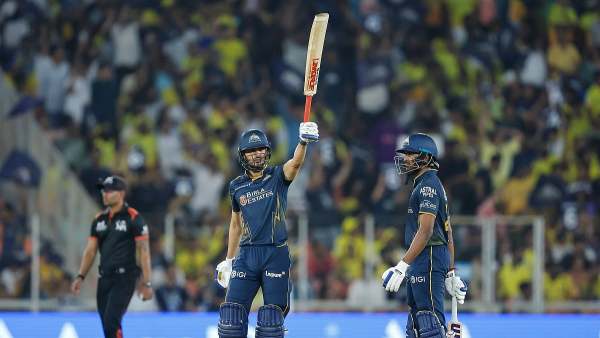
Gujarat Titans Captain Shubman Gill Smashes His Fastest Half-Century Of IPL 2026 Off Just 23 Balls Against CSK
-
Injury Scare For CSK: Sanju Samson Forced To Leave Field After Finger Injury; Urvil Patel Keeps Wicket
-
Tamil Nadu Engineering Admissions Cross 2.16 Lakh Registrations; Numbers Expected To Rise Further