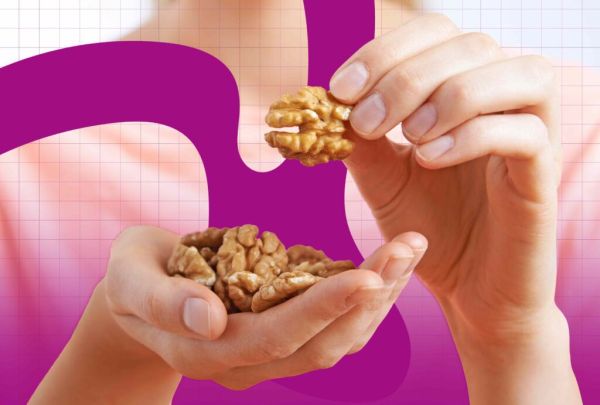
As long as you eat them regularly, you’ll get the benefits of their omega-3s.
Key Points
- There is no best time for maximizing omega-3 absorption; instead, focus on consistency.
- Walnuts can be enjoyed alone or paired with protein-rich snacks like yogurt to improve satiety.
- Omega-3 fatty acids are linked to better heart and brain health.
Walnuts may be small, but they bring a lot to the table. They’re convenient pantry staples and packed with nutrients like fiber, protein, magnesium and healthy fats. Walnuts are also one of the strongest plant-based sources of omega-3s to add to your diet, thanks to their alpha-linolenic acid (ALA) content.
You may know that some nutrients are absorbed better when they’re eaten with certain foods or at certain times. So if you’re eating walnuts for their omega-3 benefits, you may be wondering whether timing matters. We spoke to registered dietitians to find out whether there’s an ideal time to eat walnuts for omega-3 absorption, what affects how your body uses ALA and easy ways to incorporate walnuts into your routine.
The BestTime To Eat Walnuts for Omega-3 Absorption
Dietitians agree that there is no best time to eat walnuts for maximum omega-3 absorption. Instead, what matters most is including them consistently as part of a balanced diet. “The great news is that research suggests that no matter when they’re eaten, walnuts offer health benefits,” says Rachel Blaine, DSc, MPH, RDN.
Rebecca Love, MS, RDN, adds that “while timing isn’t necessarily important for nutrient absorption, it can help to eat them at certain times to unlock their full potential,” she says. Research suggests that adding walnuts to breakfast may support brain function, including reaction time and memory, while eating them with dinner or as an evening snack may support sleep quality. While these benefits aren’t necessarily about omega-3 absorption, they may be to walnuts’ mix of ALA, protein, flavonoids, tryptophan, melatonin, magnesium and B vitamins.
Walnuts can also be a smart choice between meals. Thanks to their combination of fiber, protein and healthy fats, they may help curb hunger and provide steady energy. “Eating a handful of walnuts can help you get through that post-lunch slump by boosting your energy levels and satisfying lingering hunger,” Love shares. They also pair well with other snacks, such as a side to a fruit-and-cheese snack plate or sprinkled on top of yogurt.
What Influences Omega-3 Absorption
What you eat alongside omega-3s can affect how well they’re absorbed. Since omega-3s are fats, your body digests them the same way it digests other dietary fats—with help from bile and digestive enzymes that break fat down so it can be absorbed.
Walnuts make this easy. “Walnuts come ‘pre-packaged’ for good absorption,” says Blaine. “They naturally contain the healthy fats your body needs to take in those omega-3s without any extra steps or special pairings.” A 1-ounce serving of walnuts provides about 18.5 grams of total fat, including 13 grams of polyunsaturated fat, 2.5 grams of monounsaturated fat and 2.5 grams of ALA. These other fats help boost bile secretion, which is necessary for fat absorption. In other words, you don’t need to pair walnuts with avocado, olive oil or another fat source to absorb their omega-3s.
The type of omega-3 matters, too. Unlike other forms of omega-3 fatty acids such as DHA and EPA, ALA is considered essential, meaning your body can’t make it on its own and you need to get it from food. The recommended daily ALA intake for adults is 1.1 to 1.6 grams, which can be easily achieved with just 1 ounce of walnuts.Research has even linked higher ALA intake with improved cardiovascular outcomes and better cognitive health.
Tips for Enjoying Walnuts
- Store them properly. Because walnuts are rich in healthy fats, they can go rancid if they’re stored too long at room temperature. You can extend their shelf life by storing them at cooler temperatures.
- Add them to foods you already eat. “Walnuts are incredibly versatile,” says Blaine. “I see them as the perfect enhancement to the foods we’re already trying to eat more often, like salads, fruit, yogurt and whole grains like oatmeal, quinoa or farro.”
- Try them in savory dishes, too. Walnuts are often added to oatmeal, muffins and baked goods, but they also work well in pesto, grain bowls, salads and coatings for fish or chicken. “If I want an extra omega-3 boost, I’ll often use walnuts as a crust on fish—it’s easy and delicious,” says Blaine.
- Keep preportioned servings ready for snacking. A small handful of walnuts can make an easy between-meal snack, especially when paired with sources of fiber and protein, like veggies and cheese sticks. The combination of healthy fats, fiber and protein can help satisfy hunger and provide steady energy between meals, says Love.
Our Expert Take
Walnuts are a simple, plant-based way to increase your intake of omega-3 fatty acids. If you’re trying to maximize absorption, there’s no need to eat them at a specific time of day since walnuts naturally contain the healthy fats needed to help your body absorb their ALA. But registered dietitians stress that consistency is key. Eating walnuts regularly, along with other omega-3 sources, can help you reap the benefits of these healthy fats.
-
Aston Villa Player Ratings vs Freiburg: Unai Emery Reigns Over Europa League as Tielemans, Buendia and Rogers Deliver Stunning Goals to End 30-Year Wait

-
‘We are kings together’ – Unai Emery wants Europa League triumph to be just the beginning for Aston Villa

-
Manuel Neuer, 40, returns from international retirement to join Germany’s World Cup squad

-
‘That kid always believed he’d make it’ – Martin Odegaard on his journey from Norway to leading Arsenal to Premier League glory

-
Mango Recipe: This 3-Ingredient ‘Aam Bhapa Doi’ Is The Perfect Summer Send-off!