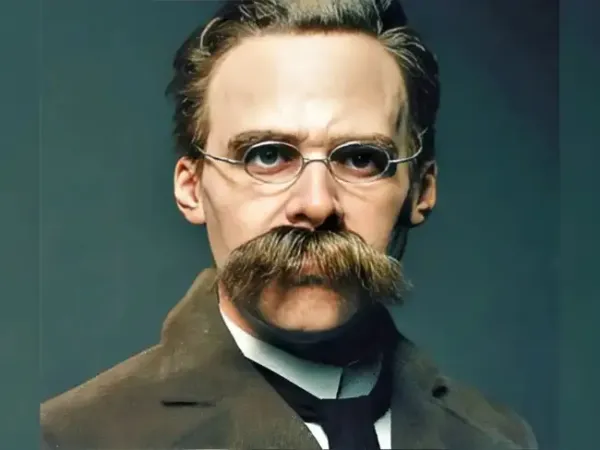
Friedrich Nietzsche is a German philosopher who has once shared his observations on the conversation one should have with oneself before marrying.
Friedrich Nietzsche, one of the most famous and influential German philosophers and writers of his time, started off his career as a classical philologist. At just 24, he was the Professor of Classical Philology at the University of Basel. His work has covered a wide range of topics which includes, history, music, religion, science, tragedy, and culture. He has reportedly drawn inspiration from Arthur Schopenhauer, Ralph Waldo Emerson and Richard Wagner.
About the quote
This quote is from his book titled Human, All Too Human: A Book for Free Spirits. This is the first book where the philosopher showcased his aphoristic style, which would become synonymous with his writings later. The books contain writings or sayings in short paragraphs discussing many topics.
Years later, the title Human, All Too Human also inspired a 1999 documentary television series produced by the BBC and RM Arts. The three-part series explored the lives and ideas of major European philosophers, including Friedrich Nietzsche, Martin Heidegger, and Jean-Paul Sartre. The documentary largely focused on existentialist thought and how these thinkers challenged conventional ideas about morality, freedom, identity, and human existence. Although existentialism became widely recognised much later, many of Nietzsche’s writings are considered foundational to the movement.
Quote of the day by Friedrich Nietzsche
While he is known to have never married, he has made several observations regarding marriage. He once said, “Marriage as a long conversation. When entering a marriage, one should ask the question: do you think you will be able to have good conversations with this woman right into old age? Everything else in marriage transitory, but most of the time in interaction is spent in conversation.”Meaning of the quote
According to Friedrich Nietzsche, marriage is not sustained merely by attraction, romance, or fleeting excitement, but by the ability of two people to continue talking to each other meaningfully over a lifetime. His quote compares marriage to a “long conversation,” suggesting that companionship, intellectual connection, emotional understanding, and communication ultimately become the foundation of a lasting relationship. Physical beauty, passion, and external circumstances may change with time, but the desire to still sit together, share thoughts, laugh, debate, and understand one another remains what truly keeps a marriage alive.Relevance of the quote today
The quote remains deeply relevant even today because many modern relationships struggle not due to lack of love, but because of emotional disconnect and poor communication. Nietzsche’s observation reminds people to look beyond temporary attraction while choosing a life partner. A strong marriage often depends on whether two individuals genuinely enjoy each other’s company and can continue having honest, engaging conversations through different stages of life, including difficult ones. In many ways, the quote highlights that friendship, mutual respect, and emotional compatibility are just as important as romance in building a long-lasting relationship.About the quote
This quote is from his book titled Human, All Too Human: A Book for Free Spirits. This is the first book where the philosopher showcased his aphoristic style, which would become synonymous with his writings later. The books contain writings or sayings in short paragraphs discussing many topics. Years later, the title Human, All Too Human also inspired a 1999 documentary television series produced by the BBC and RM Arts. The three-part series explored the lives and ideas of major European philosophers, including Friedrich Nietzsche, Martin Heidegger, and Jean-Paul Sartre. The documentary largely focused on existentialist thought and how these thinkers challenged conventional ideas about morality, freedom, identity, and human existence. Although existentialism became widely recognised much later, many of Nietzsche’s writings are considered foundational to the movement.