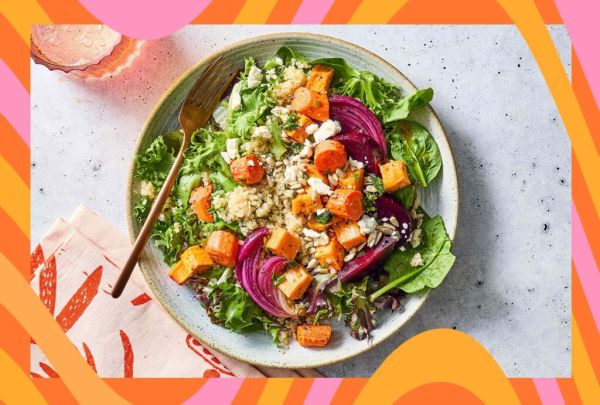
Hint: It’s not the Mediterranean diet.
Reviewed by Dietitian Jessica Ball, M.S., RD
Key Points
- Though most women experience menopause, it’s underresearched and often misunderstood.
- A study suggests the planetary health diet may support weight management during menopause.
- The planetary health diet is rich in fruits, veggies and whole grains and low in red meat.
Although the overwhelming majority of women will experience menopause at some point in their lives, the transition can still feel intimidating. Hallmark symptoms like hot flashes, sleep disruptions, mood changes and weight gain are incredibly common—yet menopause remains underresearched and widely misunderstood despite affecting roughly half the population.
That lack of understanding can make menopause feel unpredictable, especially when physical and metabolic changes seem to happen out of nowhere. But research suggests that education and awareness can help women feel more informed, prepared and empowered during this stage of life. Understanding what’s happening in your body—and what lifestyle habits may actually help manage the symptoms—can make the transition feel a little less overwhelming.
While many of the changes that happen during menopause impact metabolism and hormones, one of the more frustrating changes is weight gain—even when diet and exercise habits haven’t noticeably changed. Hormonal shifts during menopause can influence body composition, fat distribution, appetite regulation and metabolism, making weight management more challenging than it may have been a few years earlier.
As a result, many women search for dietary strategies to help them feel stronger, healthier and more like themselves again. And while there’s no single “perfect” menopause diet, researchers are starting to identify eating patterns that may support weight management and long-term health during this time of life. And that’s exactly what a new study published in JAMA Network Open explored. The findings suggest that a certain dietary pattern—one you may not have heard of—could offer meaningful benefits when it comes to weight management for women during menopause.
How Was the Study Conducted?
To examine how different dietary patterns were associated with weight gain during menopause, researchers turned to the Nurses’ Health Study II (NHS II)—a large ongoing study that has followed more than 110,000 women to better understand how diet and lifestyle factors influence women’s health. For this analysis, researchers included more than 38,000 women from NHS II with an average age of 45 who were followed during the years surrounding menopause.
Participants were observed over a 12-year window spanning menopause—specifically, the six years before and after menopause (defined as going at least one year without a menstrual cycle) was first reported. During that time, researchers collected information multiple times on both diet and body weight to better understand long-term patterns and changes over time.
Diet was assessed every four years using validated food frequency questionnaires, which asked participants about their usual intake of more than 130 foods and beverages. Researchers evaluated several dietary patterns to capture different aspects of diet quality. While many of the eating patterns emphasized nutrient-dense foods like fruits, veggies and whole grains, each had a slightly different focus:
- Plant-based diet: Emphasizes plant foods overall while distinguishing between healthier and unhealthy plant-based foods.
- Dietary approaches to stop hypertension (DASH) diet: Designed to support healthy blood pressure with an emphasis on lower-sodium foods.
- Mediterranean diet: Focuses on foods common in Mediterranean-style eating patterns, including olive oil and fish.
- Planetary health diet: A plant-forward eating pattern emphasizing human and environmental sustainability and cardiometabolic health.
- Low-carbohydrate diet: Evaluated based on both healthier low-carb patterns (higher in plant proteins and unsaturated fats) and less healthy low-carb patterns (higher in animal proteins and saturated fats).
- Empirical dietary index: Assesses both insulin levels and inflammation by measuring how likely a dietary pattern is to promote higher inflammation or insulin levels in the body.
- Ultra-processed food intake: Researchers also assessed how much ultra-processed food participants consumed.
In addition to tracking dietary habits, participants self-reported their weight every two years.
What Did the Study Find?
Among all the diets studied, the planetary health diet was associated with the lowest risk of obesity. This diet emphasizes a mostly plant-forward eating pattern to support both human and environmental health.
While this diet shares some core characteristics with other diets assessed, researchers believed this diet shined because it places a strong emphasis on high-quality plant proteins—like legumes and whole grains—and healthy unsaturated fats—like nuts and unsaturated oils—while minimizing refined carbohydrates and heavily processed animal foods.
Several of the other eating patterns were associated with better outcomes, too, including the Mediterranean diet, DASH diet and plant-based diet. Similar to the planetary health diet, these diets tended to emphasize fruits, vegetables, whole grains, nuts and legumes while limiting foods like red and processed meats, refined carbohydrates and excess sodium.
Notably, researchers also found that diets with a higher “insulinemic potential” (meaning diets more likely to cause frequent spikes in insulin levels) were associated with greater weight gain during menopause. These eating patterns tended to include more red and processed meats, sodium-rich foods and ultra-processed foods. This finding suggests that managing blood sugar levels and insulin responses with a healthy diet may help support weight management during menopause, too.
That said, this study does have limitations to consider. For one, dietary intake was measured using food frequency questionnaires, which rely on participants accurately remembering and reporting what they ate and drank over time. Weight measurements were also self-reported. Additionally, researchers did not have detailed data on menopausal symptoms, hormone levels or body composition changes, which means they couldn’t distinguish between changes in fat mass and lean muscle mass during menopause. And finally, because the study population was made up primarily of white women, the findings may not fully apply to more diverse populations.
How Does This Apply to Real Life?
While the findings may sound overwhelming, following a more menopause-supportive eating pattern doesn’t mean you need to completely overhaul your diet overnight—or give up every food you enjoy. In fact, one of the biggest takeaways from this study is that overall dietary patterns matter more than perfection.
The dietary patterns linked to the best outcomes during menopause emphasized more plant-forward foods like vegetables, fruits, legumes, nuts and whole grains while limiting foods typically associated with weight gain like processed meats and ultra-processed snacks. Additionally, researchers found that choosing foods that support steadier blood sugar levels and insulin responses may help support weight management and overall metabolic health during menopause, too.
If you’re interested in eating in a way that more closely aligns with the planetary health diet—and supports your blood sugar levels—you don’t need to change everything immediately. Small, sustainable shifts can result in meaningful changes over time. Here are some realistic ways to get started:
- Add more plant proteins slowly. You don’t need to become a vegetarian overnight. Instead, try swapping beans, lentils, tofu or edamame in place of meat for one or two meals each week. Even replacing animal proteins with plant proteins just a few times per week can help increase fiber intake while lowering saturated fat intake.
- Build balanced snacks. Pairing carbohydrates with healthy fats or protein can help keep blood sugar levels stable and can also keep you full for longer. Try pairing nuts with fruit, hummus with veggies or Greek yogurt with berries.
- Reduce ultra-processed foods. You don’t have to eliminate them completely, but look for opportunities to swap in less-processed options more often. That could look like choosing oatmeal at breakfast instead of pastries or nuts instead of chips at snack time.
- Prioritize protein throughout the day. In addition to changes in weight, menopause is also associated with changes in muscle mass. Including protein from sources like beans, lentils, eggs, Greek yogurt, tofu or fish may help support muscle maintenance alongside physical activity.
And of course, food is just one piece of the equation. Regular movement—especially strength training—along with getting enough calcium and vitamin D to support bone health, prioritizing sleep, managing stress and limiting smoking and alcohol intake can all play important roles in supporting overall health during menopause.
Our Expert Take
According to findings from a recent study published in JAMA Network Openeating patterns higher in plant-based proteins, fruits, vegetables, nuts, whole grains and healthy fats—and lower in foods that promote frequent blood sugar spikes—were associated with less weight gain and a lower risk of obesity during menopause. Small, realistic changes—like eating more fiber-rich fruits and vegetables, incorporating plant-based protein sources and limiting ultra-processed foods—can add up over time.
And while menopause can certainly bring frustrating and unfamiliar changes, staying informed about what’s happening in your body may help make the transition feel less intimidating. Rather than fearing this stage of life, research like this can help women approach menopause feeling more empowered, supported and equipped with practical strategies to support their long-term health.
-
Hyderabad-settled Telugu woman returns home after 12 years in Saudi Arabia

-
Air India plane makes emergency landing at Delhi airport

-
Umar Khalid moves Delhi High Court seeking interim bail

-
IPL 2026 Playoff Scenarios: CSK Out, Qualification Race Down To Four Contenders

-
Harpreet Brar Breaks Silence On Heated Exchange With Virat Kohli