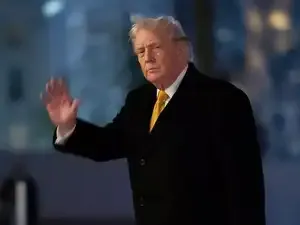
Presidential Records Act ruling: The fight over presidential records is back in the spotlight after a federal judge ordered the Trump administration to comply with the Presidential Records Act. The ruling pushes back against a recent Justice Department opinion that argued the law itself is unconstitutional. The case has now become another major legal clash involving presidential powers, government transparency and record preservation.
ALSO READ: NVDA stock price: Nvidia earnings beat expectations again but why did NVDA stock slip after hours? Here's what you need to know
Federal Judge John Bates ruled Wednesday that the Trump administration must continue complying with the Presidential Records Act, rejecting the Justice Department’s recent argument that the post-Watergate law is unconstitutional, as per a report by Reuters and ABC News.
The ruling marked a significant setback for the administration’s legal position after the Department of Justice’s Office of Legal Counsel issued an April 1 memo arguing that the law interferes with the “independence and autonomy” of the executive branch and that a president could disregard it.
According to the ruling, Bates said the plaintiffs had shown a “substantial risk” that the administration was likely not fully complying with the law governing presidential records.
“The Records Act follows in a tradition, dating back to the Founding, of laws promoting integrity in public service,” Bates wrote. “It is not the first, and it will not be the last.”
The judge also noted that the government had operated under the law for nearly five decades without major constitutional objections, including during Trump’s first administration and the early part of his current term, as per a report by Reuters and ABC News.
Bates granted a preliminary injunction directing White House officials and executive branch staff to comply with the statute and not rely on the Justice Department’s recent opinion declaring it unconstitutional.
However, the order stopped short of applying directly to President Donald Trump, Vice President JD Vance, the Justice Department or the National Archives and Records Administration.
ALSO READ: China wouldn't let Marco Rubio in, so he did something nobody in US politics has ever done
What does the Presidential Records Act require?
The Presidential Records Act was passed in 1978 in the aftermath of Watergate. The law established rules for preserving records connected to a president’s official duties and transferring them to the National Archives after an administration ends.
For decades, the law has served as the framework for ensuring presidential records eventually become public.
The lawsuits argued that weakening or ignoring the law could threaten the preservation of official government materials tied to presidential decision-making and public accountability, as per a report by Reuters.
ALSO READ: Nancy Guthrie case takes another twist: Why has the sheriff stopped speaking directly to Nancy Guthrie’s family? here's what you need to know
The lawsuits were brought by groups including the American Historical Association, American Oversight and the Freedom of the Press Foundation.
American Oversight Executive Director Chioma Chukwu described the ruling as “an important victory for presidential accountability” and said it reaffirmed “what decades of law and practice already established — the constitutionality of the Presidential Records Act.”
A White House spokesperson responded by saying the administration “has made it crystal clear we will maintain a rigorous records retention program.”
The court battle centers largely on the administration’s position outlined in the Office of Legal Counsel memo, which claimed the law improperly intrudes on presidential authority. Bates disagreed, writing that compliance with the act does not place a harmful burden on the government.
The ruling now keeps the Presidential Records Act in force for White House officials and executive branch staff as the broader legal fight over presidential authority and record preservation continues.
The judge ordered White House and executive branch officials to follow the Presidential Records Act.
Does the ruling apply directly to Trump?
No. The order does not directly apply to Donald Trump or JD Vance.
ALSO READ: NVDA stock price: Nvidia earnings beat expectations again but why did NVDA stock slip after hours? Here's what you need to know
Presidential Records Act ruling
Federal Judge John Bates ruled Wednesday that the Trump administration must continue complying with the Presidential Records Act, rejecting the Justice Department’s recent argument that the post-Watergate law is unconstitutional, as per a report by Reuters and ABC News.
The ruling marked a significant setback for the administration’s legal position after the Department of Justice’s Office of Legal Counsel issued an April 1 memo arguing that the law interferes with the “independence and autonomy” of the executive branch and that a president could disregard it.
Why did the judge reject the DOJ argument?
According to the ruling, Bates said the plaintiffs had shown a “substantial risk” that the administration was likely not fully complying with the law governing presidential records.
“The Records Act follows in a tradition, dating back to the Founding, of laws promoting integrity in public service,” Bates wrote. “It is not the first, and it will not be the last.”
The judge also noted that the government had operated under the law for nearly five decades without major constitutional objections, including during Trump’s first administration and the early part of his current term, as per a report by Reuters and ABC News.
Bates granted a preliminary injunction directing White House officials and executive branch staff to comply with the statute and not rely on the Justice Department’s recent opinion declaring it unconstitutional.
However, the order stopped short of applying directly to President Donald Trump, Vice President JD Vance, the Justice Department or the National Archives and Records Administration.
ALSO READ: China wouldn't let Marco Rubio in, so he did something nobody in US politics has ever done
What does the Presidential Records Act require?
The Presidential Records Act was passed in 1978 in the aftermath of Watergate. The law established rules for preserving records connected to a president’s official duties and transferring them to the National Archives after an administration ends.
For decades, the law has served as the framework for ensuring presidential records eventually become public.
The lawsuits argued that weakening or ignoring the law could threaten the preservation of official government materials tied to presidential decision-making and public accountability, as per a report by Reuters.
ALSO READ: Nancy Guthrie case takes another twist: Why has the sheriff stopped speaking directly to Nancy Guthrie’s family? here's what you need to know
Why are historians and watchdog groups concerned?
The lawsuits were brought by groups including the American Historical Association, American Oversight and the Freedom of the Press Foundation.
American Oversight Executive Director Chioma Chukwu described the ruling as “an important victory for presidential accountability” and said it reaffirmed “what decades of law and practice already established — the constitutionality of the Presidential Records Act.”
A White House spokesperson responded by saying the administration “has made it crystal clear we will maintain a rigorous records retention program.”
The court battle centers largely on the administration’s position outlined in the Office of Legal Counsel memo, which claimed the law improperly intrudes on presidential authority. Bates disagreed, writing that compliance with the act does not place a harmful burden on the government.
The ruling now keeps the Presidential Records Act in force for White House officials and executive branch staff as the broader legal fight over presidential authority and record preservation continues.
FAQs
What did the judge order?The judge ordered White House and executive branch officials to follow the Presidential Records Act.
Does the ruling apply directly to Trump?
No. The order does not directly apply to Donald Trump or JD Vance.