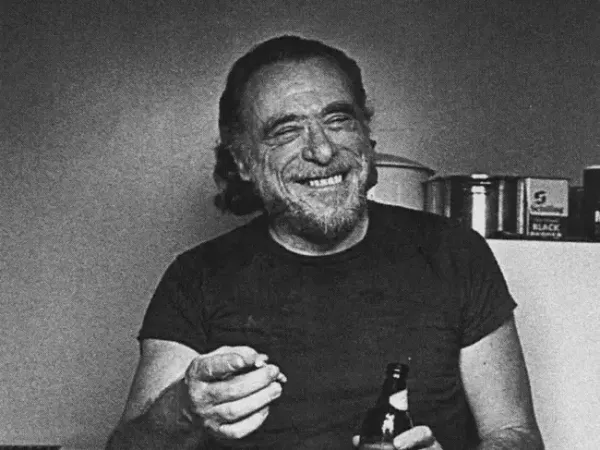
Poetry has long been a way for writers to express emotions that are difficult to explain in everyday language, and few modern poets did that as directly as Charles Bukowski. Known for his raw and unfiltered writing style, Bukowski often focused on loneliness, emotional exhaustion, broken relationships and the struggles of ordinary people trying to survive difficult lives. His poems and novels rarely tried to make life look beautiful or hopeful. Instead, he wrote about reality as he saw it.
“Some people never go crazy. What truly horrible lives they must lead.” - Charles Bukowski, The Crunch
The line is short, but readers have continued discussing it for years because it can be understood in many ways. Bukowski was not glorifying destruction or instability. Instead, the quote is often seen as a reflection on emotional repression. Many people move through life trying not to break down, trying not to lose control, trying to appear normal all the time. Bukowski suggests there is something deeply sad in living without passion, emotional risk or vulnerability.
The quote becomes even more powerful when viewed within the larger context of The Crunch. The poem explores profound loneliness and emotional isolation. Bukowski writes about people who have become exhausted by life itself. One of the poem’s most haunting ideas is his observation that loneliness can grow so heavy “that you can see it in the slow movement of the hands of a clock.” Through plain and direct language, he describes emotional suffering in a way that feels immediate and personal.
Bukowski also pays attention to people living difficult and overlooked lives. In one part of the poem, he writes about people so emotionally broken that “buying a bargain can of tuna / in a supermarket / is their greatest moment.” The lines capture the hopelessness that can slowly settle into ordinary life. Rather than writing about dramatic tragedy, Bukowski focused on quiet suffering and survival.
His style made the poem stand out. The Crunch is written in free verse with uneven lines and a conversational rhythm. Some lines are extremely short while others stretch longer, almost like scattered thoughts during a late-night conversation. Bukowski avoided polished literary language and instead used direct observations pulled from ordinary life.
Books and alcohol became his escape early in life. He briefly attended Los Angeles City College before leaving to pursue writing. For years, he drifted through low-paying jobs including dishwasher, mail sorter, stock boy and factory worker while struggling with alcoholism. Those years heavily influenced the characters and situations that later appeared throughout his novels and poetry.
Bukowski first began publishing stories during the 1940s, but repeated rejection discouraged him badly. He stopped writing for nearly a decade and spent years drinking heavily and moving across the country. Eventually he returned to Los Angeles and slowly found his voice again through poetry.
By the 1970s, his popularity had grown significantly. Black Sparrow Press publisher John Martin famously offered Bukowski financial support so he could leave his postal service job and focus completely on writing. That decision led to some of his most important works including Post Office, Factotum, Women and Ham on Rye.
Many of Bukowski’s stories centered around Henry Chinaski, his fictional alter ego. Chinaski was often portrayed as a struggling writer, alcoholic gambler and outsider trying to survive in an indifferent world. Readers connected with the honesty of those stories even when the content felt harsh or uncomfortable.
Critics remained divided on Bukowski throughout his career. Some dismissed his work as vulgar and overly bleak. Others praised him for writing honestly about people usually ignored in literature. Over time, his influence became impossible to ignore.
What separated Bukowski from many writers was that he rarely tried to sound inspirational. He wrote about failure openly. He wrote about damaged people without trying to clean up their stories. Yet beneath the anger and roughness in his work, there was often vulnerability and sadness.
That is part of the reason why “Some people never go crazy. What truly horrible lives they must lead” still resonates with so many people today. The quote feels less like a celebration of chaos and more like an observation about what it means to actually feel deeply in a world where many people spend their lives hiding emotion.
“Some people never go crazy. What truly horrible lives they must lead.” - Charles Bukowski, The Crunch
The line is short, but readers have continued discussing it for years because it can be understood in many ways. Bukowski was not glorifying destruction or instability. Instead, the quote is often seen as a reflection on emotional repression. Many people move through life trying not to break down, trying not to lose control, trying to appear normal all the time. Bukowski suggests there is something deeply sad in living without passion, emotional risk or vulnerability.
The quote becomes even more powerful when viewed within the larger context of The Crunch. The poem explores profound loneliness and emotional isolation. Bukowski writes about people who have become exhausted by life itself. One of the poem’s most haunting ideas is his observation that loneliness can grow so heavy “that you can see it in the slow movement of the hands of a clock.” Through plain and direct language, he describes emotional suffering in a way that feels immediate and personal.
The harsh reality inside The Crunch
The Crunch is widely remembered for its repeated line, “people are not good to each other.” That sentence becomes the emotional center of the poem. Bukowski repeats it again and again almost like someone trying to convince themselves of something they already know. The poem strips away comforting illusions and focuses instead on neglect, disappointment and everyday cruelty.Bukowski also pays attention to people living difficult and overlooked lives. In one part of the poem, he writes about people so emotionally broken that “buying a bargain can of tuna / in a supermarket / is their greatest moment.” The lines capture the hopelessness that can slowly settle into ordinary life. Rather than writing about dramatic tragedy, Bukowski focused on quiet suffering and survival.
His style made the poem stand out. The Crunch is written in free verse with uneven lines and a conversational rhythm. Some lines are extremely short while others stretch longer, almost like scattered thoughts during a late-night conversation. Bukowski avoided polished literary language and instead used direct observations pulled from ordinary life.
The difficult life that shaped Bukowski’s writing
Charles Bukowski was born on August 16, 1920, in Andernach, Germany. His family later moved to the United States and settled in Los Angeles, which became the backdrop for much of his work. His childhood was marked by violence and isolation. Bukowski later spoke openly about being beaten by his father and bullied during school years. Severe acne during his teenage years added to his loneliness and pushed him further inward.Books and alcohol became his escape early in life. He briefly attended Los Angeles City College before leaving to pursue writing. For years, he drifted through low-paying jobs including dishwasher, mail sorter, stock boy and factory worker while struggling with alcoholism. Those years heavily influenced the characters and situations that later appeared throughout his novels and poetry.
Bukowski first began publishing stories during the 1940s, but repeated rejection discouraged him badly. He stopped writing for nearly a decade and spent years drinking heavily and moving across the country. Eventually he returned to Los Angeles and slowly found his voice again through poetry.
How Bukowski became a cult literary figure
During the late 1950s and 1960s, Bukowski began building a loyal underground readership through small literary magazines and independent publishers. Collections like Flower, Fist and Bestial Wail and It Catches My Heart in Its Hands introduced readers to his blunt and deeply personal style.By the 1970s, his popularity had grown significantly. Black Sparrow Press publisher John Martin famously offered Bukowski financial support so he could leave his postal service job and focus completely on writing. That decision led to some of his most important works including Post Office, Factotum, Women and Ham on Rye.
Many of Bukowski’s stories centered around Henry Chinaski, his fictional alter ego. Chinaski was often portrayed as a struggling writer, alcoholic gambler and outsider trying to survive in an indifferent world. Readers connected with the honesty of those stories even when the content felt harsh or uncomfortable.
Critics remained divided on Bukowski throughout his career. Some dismissed his work as vulgar and overly bleak. Others praised him for writing honestly about people usually ignored in literature. Over time, his influence became impossible to ignore.
Why readers still return to his words today
Bukowski died in 1994, but his work continues finding new audiences, especially online. Readers still share his poems and quotes because many of the themes he wrote about remain familiar — loneliness, burnout, emotional numbness and the struggle to find meaning in ordinary life.What separated Bukowski from many writers was that he rarely tried to sound inspirational. He wrote about failure openly. He wrote about damaged people without trying to clean up their stories. Yet beneath the anger and roughness in his work, there was often vulnerability and sadness.
That is part of the reason why “Some people never go crazy. What truly horrible lives they must lead” still resonates with so many people today. The quote feels less like a celebration of chaos and more like an observation about what it means to actually feel deeply in a world where many people spend their lives hiding emotion.