
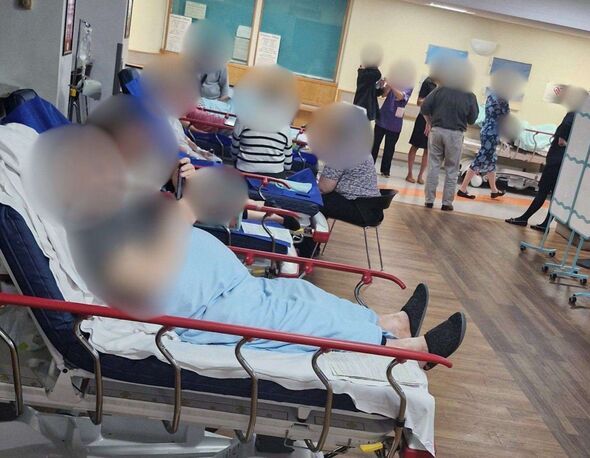
Every day, across every hospital in the NHS, the same issues exist. A patient is declared medically fit to go home, yet they are in a bed needed by another patient. Wards must improve flow, but community teams are disconnected from the pressures faced by their hospital colleagues and can't receive new patients who require community support. We have spent decades debating what happens inside our hospitals. It is now time we got equally serious about what happens when patients leave them.
Empower Clinicians to choose differentlyWalk into any busy Emergency Department and you will find clinicians making decisions under extraordinary pressure. What many lack is the confidence to choose a community pathway over a hospital admission because, in many instances, admissions avoidance pathways simply do not exist.
Increasingly evidence suggests a significant proportion of A&E attendances could be safely managed at home, with the right support. But "the right support" has historically been an abstract promise rather than a guarantee. When a clinician cannot be certain a patient will have timely access to physiotherapy or a social care review at home, patients are admitted, when they clinically need not. This is not a failure of clinical judgement - it's a failure of our National Health Service's design.
To reduce avoidable admissions, we must give A&E clinicians real-time visibility of community capacity and confidence that the pathway they are choosing is safe for their patients. We need community services that are digitally connected to hospitals and that are able to receive patients within hours, not days and weeks.
For patients who require a period of recovery and rehabilitation, the default has too often been a care home placement or a community hospital bed. They make sense for patients who require intensive therapy, but all too often, we are over-prescribing therapy and physio for patients who simply require independence and autonomy. Therapy can, and in many cases should, be delivered at home.
Patients recover faster in familiar environments, are less susceptible to hospital-acquired infection, and are simply more engaged in their own rehabilitation. Physiotherapists, occupational therapists, and nursing teams can and do deliver effective recovery programmes in people's homes. Families can be meaningfully involved too, in ways that bedded settings rarely allow.
Despite this, home-based Pathway 2 rehabilitation services are mostly non-existent and where they are available, are inconsistently funded. The NHS has built a system that defaults to bedded care not because it produces better outcomes, but because it is easier to commission.
We should be measuring success not by whether a bed was filled, but by whether a person got better, faster, at home. This requires effective insights reporting in respect of clinical outcomes, which is simply not currently available.
We must put patients In chargeThe transition from hospital to home is still something that happens to people rather than something they actively engage with. Many patients have limited support when they leave hospital and are simply discharged with a letter and perhaps a follow-up appointment, which is weeks away. When their mobility deteriorates or they feel worse, they have to return to A&E.
Digital monitoring and wellbeing technologies can change this, allowing patients and families to track recovery, flag early warning signs, and access support, before a crisis develops. At ilarna, our platform connects patients, families, and community providers in real time. Predictive analytics identify early signs of deterioration and enable proactive intervention before a crisis develops.
28-day readmission rates have fallen at Buckinghamshire Healthcare NHS Trust, and the feedback from patients and families about the confidence that comes from being monitored and supported at home, has been consistently positive.
This process can be applied at scale and across all patients in the NHS who require support at home post-discharge. Patient outcomes can improve exponentially and the NHS can save a fortune.
 Is the next Health Secretary Going to Consider Change?
Wes Streeting made hospital discharge a priority during his tenure - yet the impact was minimal. James Murray should look closely at community-based, technology-enabled services that are already delivering results and ask what it would take to commission them properly, for all patients, not just those who can fund their own care?
A patient entering A&E should be assessed against a live picture of available community support. A medically optimised patient should leave hospital within hours, with rehabilitation coming to them. And once home, they should have the tools to monitor their wellbeing and stay out of hospital for good.
This is already happening in pockets across the country. The challenge is to make it the norm, thus reducing health inequalities across the NHS.
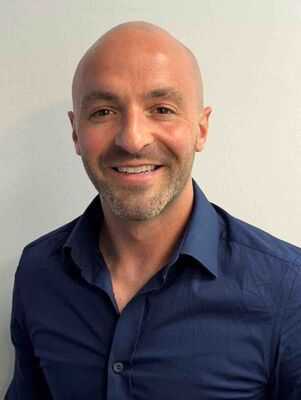
- Alex Moran is CEO and Co-Founder of ilarna, an AI-powered health technology platform helping NHS Trusts reduce bed pressures through data-enabled transitions home. He is Chair of the NSPCC's Business Board and a former Non-Executive Director at Worcestershire Acute Hospitals NHS Trust
-
ISL Final Day Drama: Punjab, Mumbai City And Jamshedpur Battle For Title As Simultaneous Kickoffs Decide Destiny

-
KKR Beat MI By 4 Wickets To Keep IPL 2026 Playoff Hopes Alive; Veteran Manish Pandey Stars In Chase

-
India Leads Global Workplace AI Adoption With 41% Daily Users: Report

-
IIM Rohtak IPMAT Result 2026 Declared At admission.iimrohtak.ac.in; Direct Link Here
-
Sanjay Dutt In US For A Routine Medical Check?