India’s expanding defence cooperation with Israel has come under renewed focus following allegations that military-grade steel shipments from India were linked to Israeli military manufacturing facilities amid the wars in Gaza and Lebanon.
The claims were raised by the Boycott, Divestment and Sanctions (BDS) movement and No Harbour for Genocide, which tracked six cargo consignments they said were carrying specialised steel intended for ammunition production in Israel, according to a report by the Middle East Eye (MEE).
The shipments originated from RL Steels and Energy Limited in Aurangabad and were allegedly destined for a weapons manufacturing facility operated by IMI Systems, now known as Elbit Systems Land, in Ramat Hasharon.

The activist groups alleged that the consignments contained around 806 tonne of military-grade alloy steel, which could potentially be used to manufacture up to 17,458 artillery shells of 155mm calibre for the Israeli military.
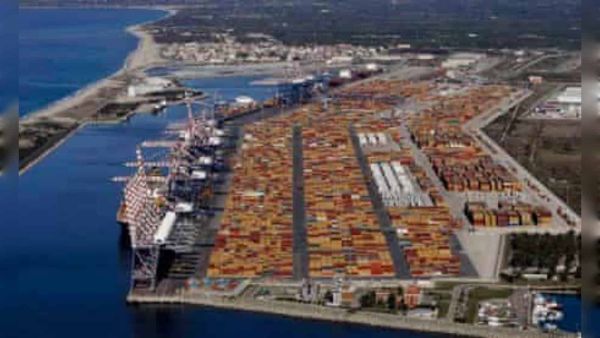
MEE reported that three shipments transported by the Geneva-based Mediterranean Shipping Company (MSC) are currently being held at the Italian ports of Gioia Tauro and Cagliari for inspection.
The report said the consignments, valued at an estimated USD 1 million, departed between January and March this year from Nhava Sheva, also known as Jawaharlal Nehru Port, in Maharashtra.
Activists track shipping routes
According to the activist groups, two additional shipments were also under review in Gioia Tauro, while another consignment carrying around 206 tonne of steel was allegedly rerouted to Sri Lanka following disruptions along Mediterranean shipping routes.
In a statement released in April 2026, the BDS movement alleged that a shipment aboard the MSC Danit had been unloaded at Egypt’s Abu Qir port and was awaiting onward transfer to Israel despite public pressure campaigns urging Cairo authorities to intervene.
The groups further alleged that some shipping operators altered routes and destinations after the vessels came under public monitoring.
Dockworkers and trade unions across several European ports have also staged protests against suspected military cargo linked to Israel, calling for tighter restrictions on arms-related shipments.
India-Israel military ties deepen
The controversy has drawn renewed attention to India’s growing defence partnership with Israel, which spans drones, missile systems, aerospace technology, surveillance equipment and joint weapons manufacturing.
One of the most significant collaborations is the joint venture between Adani Defence and Aerospace and Israeli defence company Elbit Systems, which established a drone manufacturing facility in Hyderabad in 2018.
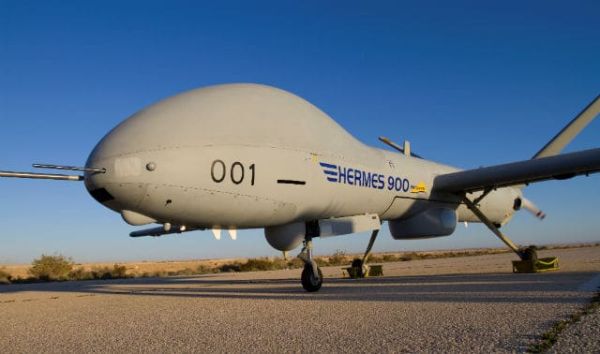
The facility became the first site outside Israel to manufacture the Hermes 900 unmanned aerial vehicle, designed for surveillance and combat operations.
The Stockholm International Peace Research Institute (SIPRI) has previously documented Indian involvement in supplying components connected to missile systems developed with Israeli technology.
India accounted for nearly 34 per cent of Israel’s arms exports between 2020 and 2024, according to SIPRI data cited in multiple reports.
Israel is regarded as one of India’s major defence suppliers, alongside Russia, France and the United States, with bilateral military trade covering missile systems, drones, surveillance platforms and electronic warfare equipment.
India has procured a range of Israeli-origin military systems over the years, including Barak air defence missile systems, Heron drones, Phalcon airborne warning and control systems and SPICE precision-guided bomb kits.
Israeli defence companies have increasingly viewed India as a key export market, while cooperation between the two countries has expanded from arms purchases to joint production and technology partnerships.
Defence cooperation between the two countries has increasingly shifted towards joint production and technology transfer under India’s “Make in India” initiative, with Israeli companies expanding partnerships in missile development, radar systems and drone manufacturing.
In April 2026, Israel Weapon Industries announced the delivery of the first batch of NEGEV light machine guns manufactured in India through a partnership with the Adani Group.
Since 2017, India and Israel have also expanded military exchanges, joint exercises and training cooperation involving defence and security personnel from both countries.
Security and intelligence coordination between India and Israel also expanded after the 2008 Mumbai attacks, with both countries increasing cooperation in counterterrorism, border security and strategic consultations.
High-level visits between officials from both countries have also increased in recent years as New Delhi and Tel Aviv expanded cooperation in defence, trade and strategic affairs.
India and Israel have steadily strengthened diplomatic, military and strategic ties over the past decade, including cooperation in aerospace technology, surveillance systems and defence manufacturing.
Prime Minister Narendra Modi, during a February 2026 address to Israel’s parliament, the Knesset, said “Israel is the fatherland and India is the motherland,” reflecting the deepening political relationship between the two countries.
Modi became the first Indian prime minister to visit Israel in 2017, while Israeli Prime Minister Benjamin Netanyahu visited India the following year as bilateral defence and strategic cooperation accelerated.
Israeli Finance Minister Bezalel Smotrich has also visited India for meetings linked to economic and defence cooperation as both countries continue expanding bilateral strategic ties.
-
The FA Cup Missed Its Chance to Stay Free of VAR – But It Might Still Find a Way

-
Japan’s Squad for FIFA World Cup 2026: Full List of Players Heading to USA, Mexico, and Canada

-
‘It was the best season of my career!’ – Lyon skipper Corentin Tolisso responds defiantly after missing out on France’s 2026 World Cup squad

-
‘Leo Messi Way’ Inaugurated Near New York: Inter Miami Star Honoured as 2026 World Cup Excitement Builds Across the US

-
World Cup 2026 Power Rankings: Dominant France Impress as England and the USMNT Reveal Weaknesses, While Sweden Complete the Qualifier Line-up